Half of businesses still feel like beginners in managing sustainability in their supply chains, yet 65 percent of those that are more advanced say it has improved their brand reputation.
This year, the Gartner Supply Chain Top 25 revealed that retailers are placing an increased emphasis on corporate social responsibility. The average CSR score for the top 10 retailers in the report was 6.8 in 2017, compared with 5.8 last year. Furthermore, four companies (Inditex, H&M, Gap and Wesfarmers) scored a maximum of 10 this year, whereas the highest ranking by any company last year was nine, also achieved by four companies. -John Johnson, Senior Content Specialist, Gartner
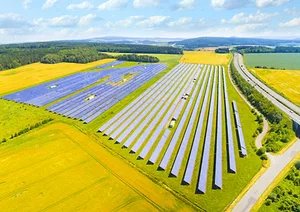
Some people call it the "sunrush": a 25-year period in which solar power has grown exponentially, transforming the technology from rarefied oddity to the world’s fastest-growing energy source.
The star of Daimler shines bright over Stuttgart, Germany — literally. The giant illuminated emblem of its most famous car, the Mercedes, towers above the main train station, greeting visitors. It is visible for miles.
Eighteen percent of all electricity in the United States was produced by renewable sources in 2017, including solar, wind, and hydroelectric dams. That’s up from 15 percent in 2016, with the shift driven by new solar and wind projects, the end of droughts in the West, and a dip in the share of natural gas generation.
Every year, 12.7m tonnes of plastic ends up in our oceans. Supply functions are in a unique position to make a difference and drive changes that will benefit the world for generations to come.