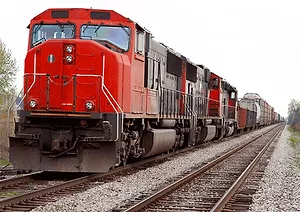
Challenge: A leading perishable foods brand was experiencing high transportation costs, extended delivery times and loss of selling time, when shipping product lines from multiple manufacturing locations to a network of food distributors.
Analyst Insight: Inventory is the most visible dimension of supply chain performance. It is scrutinized on the balance sheet by the CFO and external analysts. However, inventory performance is more than a financial metric. Supply chain leaders who are charged to act as stewards for inventory performance must ensure sound planning and supply execution while collaborating to influence and align with demand and product managers. - Paul Lord, Research Director, Gartner Supply Chain
Analyst Insight: Industrial manufacturing includes a broad range of sub-verticals. Given the current global uncertainties, these companies are focusing on manufacturing and supply chain excellence while trying to grow their top lines. This will not stop the leaders from looking at many exciting new technologies that are emerging. The "manufacturing renaissance" going on is as likely to be around new technologies adopted as around where the manufacturing takes place. - Robert Eastman, Senior Analyst, Technology Evaluation Centers
Analyst Insight: Getting a grip on global trade management means mastering the three T's: taxes, tariffs and terms. These elements, which can easily amount to 20 percent of the final product cost in extreme cases, are more than capable of swamping everything we do with leaner inventories, optimised transportation and lower component costs. Despite this fact, many companies still approach this problem as a bit of an afterthought. - Kevin O'Marah, Chief Content Officer and Head of Research, SCM World
Analyst Insight: Supply chain transformation requires a business-aligned supply chain strategy and change management prowess. At its core, it is about change. Gartner defines supply chain transformation as a step function change in supply chain performance that is sustained for more than one year. Data from 30 in-depth interviews, hundreds of inquiries and interactions with Gartner clients during the past 18 months revealed the key drivers of supply chain transformations. - Michael Dominy, Research Director, Gartner Supply Chain Leaders
Analyst Insight: Best-in-class companies are evolving to meet their customers' needs by reverse engineering their supply chains to align with overall sales strategies and customer desires. This process involves integrating and working various verticals within a company in order to achieve the desired outcome. Supply chain professionals are taking a different look at their companies' operations through the lens of customers' perspectives and expectations, and organizing the supply chains around those focal points. - Rodrigo Cambiaghi, Principal, Ernst & Young LLP and EY US Leader for E2E Supply Chain practice; and Dieter Bölzing, Principal, Ernst & Young LLP and EY Supply Chain Strategy & Planning, EMEIA
Analyst Insight: Sherman's Law of Forecast Accuracy states that forecast accuracy improves in direct correlation to its distance from usefulness. It's time to stop being driven crazy by demand variability. Don't be driven by demand; sense, shape and respond to demand. Your company can better predict and respond to demand variability through integrating forecasting techniques with demand planning techniques; in a word, collaboration! - Rich Sherman, Principal Essentialist, Trissential
Oracle Corp. has introduced Oracle Global Trade Intelligence, a trade-analytics module designed to help companies make better use of global trade data.
Tri Global Energy is poised to build a wind empire in West Texas and will partner with Burlington Northern Santa Fe Logistics to build a shipping and receiving hub for the turbines.