While Chinese and American officials enter heated trade negotiations this week, companies that have built the technology industry’s global supply chain aren’t waiting to see how the talks turn out.
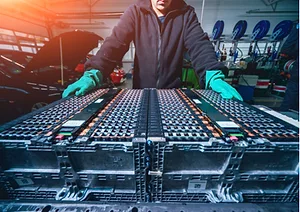
The U.S. push to challenge China’s dominance in the production and sale of electric vehicles has at least one weak link: Most of the raw materials needed to make the batteries are dug elsewhere.
A 2014 Deloitte survey found that 69 percent of chief procurement officers saw cost reduction as their main priority over the following 12 months. In 2018, the same survey showed that the number had jumped to 78 percent.
Challenge: A global third-party logistics provider (3PL) was looking for distance calculations between fixed locations to be used for cost analysis, bid response and rate quoting. The company also wanted predictive calculation capabilities for shipment delivery delays based on real-time traffic incident data.
The tariff cross-fire has been seized as an opportunity by President Tsai Ing-wen, whose government last year started an “Invest Taiwan” campaign to lure companies away from China.
U.S. companies including Coca-Cola Co., Whirlpool Corp. and Caterpillar Inc. confront the need to reverse bloated stockpiles of products after inventories surged across corporate America.
The measure comes as the London Metal Exchange carries out a supply-chain review to address concerns that cobalt stored in its warehouses may be linked to child labor.