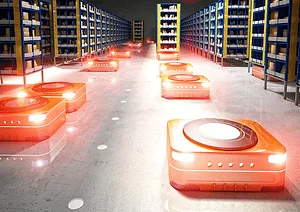
Analyst Insight: Robotic process automation has the potential to transform organizations by helping to optimize back-office and repetitive functions. It can increase productivity and quality while reducing costs, and in many cases it requires minimal investment. In fact, organizations are finding that it can pay for itself in less than a year. - Sean Harapko, principal, Ernst & Young LLP
Analyst Insight: As technology solutions providers improve their offerings, companies are taking another look at integrated business planning (IBP). New scalable workflow and collaboration tools are automating the capture and integration of data across functions, allowing for the development of actionable insights that link day-to-day decisions to overall business strategy. - Can Dogan, principal, Ernst & Young LLP
Analyst Insight: In today's unpredictable pharmaceutical business climate, supply chains must be synchronized to deliver adequate supply to capture new sales while reducing costs. This is a classic case of balancing risk and opportunity, whereby synchronization allows all required parties to operate in a coordinated and flexible manner resulting in seamless delivery to the customers. Getting this right can drive millions of dollars in value, and there are ways to do this today. - Jay Welsh, principal, Ernest & Young LLP, and Srihari Rangarajan, manager, Ernst & Young LLP
Analyst Insight: After 13 years of conducting the Warehousing Education and Research Council’s (WERC) annual DC Measures Study of key warehousing and distribution performance metrics, a pronounced gap remains between "Best-in-Class" and "Major Opportunity" facilities within several key performance indicators. To close that gap by 2020, Major Opportunity warehouses must understand both qualitative and quantitative metrics as they relate to performance improvement. In other words, move beyond the numbers and focus on their processes. –Karl Manrodt, Georgia College & State University; Joseph Tillman, APQC; Steve Murray, Warehousing Education and Research Council; and Michael Mikitka, WERC
Analyst Insight: The need to enable omnichannel capabilities has driven significant capital investments and will continue to do so. We are seeing the first wave of omnichannel investments reach maturity and paying dividends. Those companies whose investments were too little or came too late are struggling. But as e-commerce growth continues, steadily carving out more of the retail sales pie, companies will need to re-evaluate their networks and make additional investments to drive competitive advantage. - Jason Denmon, retail industry leader, Fortna Inc.
Many of America's biggest corporations including Apple Inc. and Wal-Mart Stores Inc. are sticking by their pledges to fight climate change even as President Donald Trump guts his predecessor's environmental policies.
The Trump administration appears poised to cement China's unfavorable status in trade cases, making Chinese goods eligible for higher U.S. tariffs well into the future.
Analyst Insight: As consumers' relationship with retailers changes, supply chains need to become more agile and responsive to fulfill the promise of an omnichannel world. Wholesale, retail and e-commerce supply chains, which have grown independently over the years, are merging - but significant transformation is necessary to help make omnichannel execution more profitable. - Parag Jategaonkar, performance improvement principal, Ernst & Young LLP
Analyst Insight: Drug Supply Chain Security Act (DSCSA) requirements for serialization, verification and traceability are driving investments in distribution. But leaders are looking beyond compliance for real ROI and competitive advantage. They are looking at different applications and new technologies that enable compliance and allow the business the flexibility to scale with increasing return on additional investment. - Roger Counihan, life sciences industry leader, Fortna Inc.