Despite the continued buzz around the potential for blockchain technology to enhance data security in the supply chain, the airfreight industry has seen a slow start to creating tangible application. But last week, Chinese e-commerce giant Alibaba put its word into action by premiering its own blockchain-encrypted platform, the Food Trust Framework.
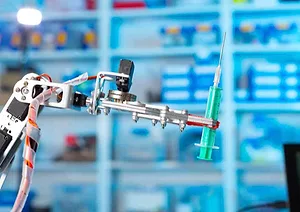
At its high-tech laboratories in the Chinese manufacturing hub of Shenzhen, Beike Biotechnology is developing medical robots that could help treat cancer. It has big plans to export these to markets like the United States.
The supply chain is about much more than simply getting products from point A to point B. In many cases, it’s a company’s lifeblood of success — something that can make or break a corporate image. When a supply chain is customer-focused, well-leveraged, and cost-effective, the financial benefits can move from simply good to extraordinary.
When it comes to determining the optimal price of a product, component or raw material, artificial intelligence can do more than come up with the answer. It can help you to understand the questions you ought to be asking.
Challenge: A company's engineering and sourcing departments were siloed and lacking access to historical information and accurate market data (pricing, availability and risk). The engineering department partially designs based on performance, but the bills of materials (BOMs) sent to the sourcing department were not procurable. The company needed access to the right data to increase contract negotiating power and reduce product launch risks due to inventory and manufacturing issues.
The rapid expansion of discounters Aldi and Lidl — whose share of the grocery market has rocketed from less than 4 percent a decade ago to nearly 13 percent today — has hit all traditional supermarkets. But the industry’s biggest fear is Amazon.