The University of Miami's School of Business Administration has developed a mathematical model for price optimization and customized negotiation support.
Nick Finia, senior manager of energy management and infrastructure capital investment at The Walgreen Co., describes the company's aggressive efforts to achieve energy cost savings in its supply chain.
The NGO Shipbreaking Platform has just published its fifth South Asia Quarterly Update re-igniting the on-going debate about the practice of breaking ships on beaches in Southern Asia. In it, China looks pretty good.
Vehicles with stop-start capability will account for 55 percent of all light-duty vehicles sold by 2024, increasing from 22 percent in 2015, according to Navigant Research.
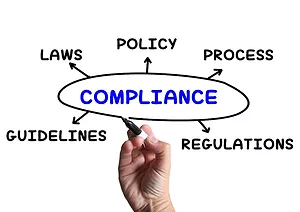
Project Passport, launched by SPI: The Plastics Industry Trade Association, is intended to provide companies in the food packaging supply chain with a suite of communication tools and educational resources to help convey relevant information about their products to ensure compliance and address the concerns of consumers and customers.
Over the past couple of decades, supply chain management has become a crucial concern for multinational firms. In our super-connected world, firms must maintain a handle on the way products, supplies and people are zipping around the planet. Companies that streamline the links between their suppliers, manufacturers, distributors and subsidiaries can realize a distinct advantage over rivals that have not yet caught on to the importance of high-functioning logistics and purchasing departments. Indeed, research has identified several aspects of supply chain management that can boost firms' bottom line.
Sitting still flies in the face of everything Kathleen Hale's company stands for. Started less than two years ago in Washington, Rebel Desk sells treadmills and desks for professionals who prefer to stand and move while they work. It's ironic, then, that Hale’s company feels a bit stuck.
For the past five years, the Pyhäsalmi mine in central Finland has been using passive high-frequency RFID tags to record when workers enter or leave a mine shaft. Since that time, says Kimmo Luukkonen, the mine's managing director, the technology has improved management's visibility into who is underground and when, and hence has increased its safety program's efficiency and accuracy. The company plans to expand that RFID solution to monitor who carries explosive detonators into the mine.