• Advertise
  • Contact Us
  • Supplier Directory
  • SCB YouTube
  • About Us
  • Login
  • Subscribe
  • Logout
  • My Profile
  • LOGISTICS
    • Air Cargo
    • All Logistics
    • Facility Location Planning
    • Freight Forwarding/Customs Brokerage
    • Global Gateways
    • Global Logistics
    • Last Mile Delivery
    • Logistics Outsourcing
    • LTL/Truckload Services
    • Ocean Transportation
    • Parcel & Express
    • Rail & Intermodal
    • Reverse Logistics
    • Service Parts Management
    • Transportation & Distribution
  • TECHNOLOGY
    • All Technology
    • Artificial Intelligence
    • Cloud & On-Demand Systems
    • Data Management (Big Data/IoT/Blockchain)
    • ERP & Enterprise Systems
    • Forecasting & Demand Planning
    • Global Trade Management
    • Inventory Planning/ Optimization
    • Product Lifecycle Management
    • Robotics
    • Sales & Operations Planning
    • SC Finance & Revenue Management
    • SC Planning & Optimization
    • Supply Chain Visibility
    • Transportation Management
  • GENERAL SCM
    • Business Strategy Alignment
    • Customer Relationship Management
    • Education & Professional Development
    • Global Supply Chain Management
    • Global Trade & Economics
    • Green Energy
    • HR & Labor Management
    • Quality & Metrics
    • Regulation & Compliance
    • Sourcing/Procurement/SRM
    • SC Security & Risk Mgmt
    • Supply Chains in Crisis
    • Sustainability & Corporate Social Responsibility
  • WAREHOUSING
    • All Warehouse Services
    • Conveyors & Sortation
    • Lift Trucks & AGVs
    • Order Management & Fulfillment
    • Packaging
    • RFID, Barcode, Mobility & Voice
    • Warehouse Automation
    • Warehouse Management Systems
  • INDUSTRIES
    • Aerospace & Defense
    • Apparel
    • Automotive
    • Chemicals & Energy
    • Consumer Packaged Goods
    • E-Commerce/Omni-Channel
    • Food & Beverage
    • Healthcare
    • High-Tech/Electronics
    • Industrial Manufacturing
    • Pharmaceutical/Biotech
    • Retail
  • THINK TANK
  • WEBINARS
    • On-Demand Webinars
    • Upcoming Webinars
    • Webinar Library
  • PODCASTS
  • WHITEPAPERS
  • VIDEOS
Home » Blogs » Think Tank » Digitalization: The Key to Reducing Material Waste in the Fashion Industry

Think Tank
Think Tank RSS FeedRSS

Digitalization: The Key to Reducing Material Waste in the Fashion Industry

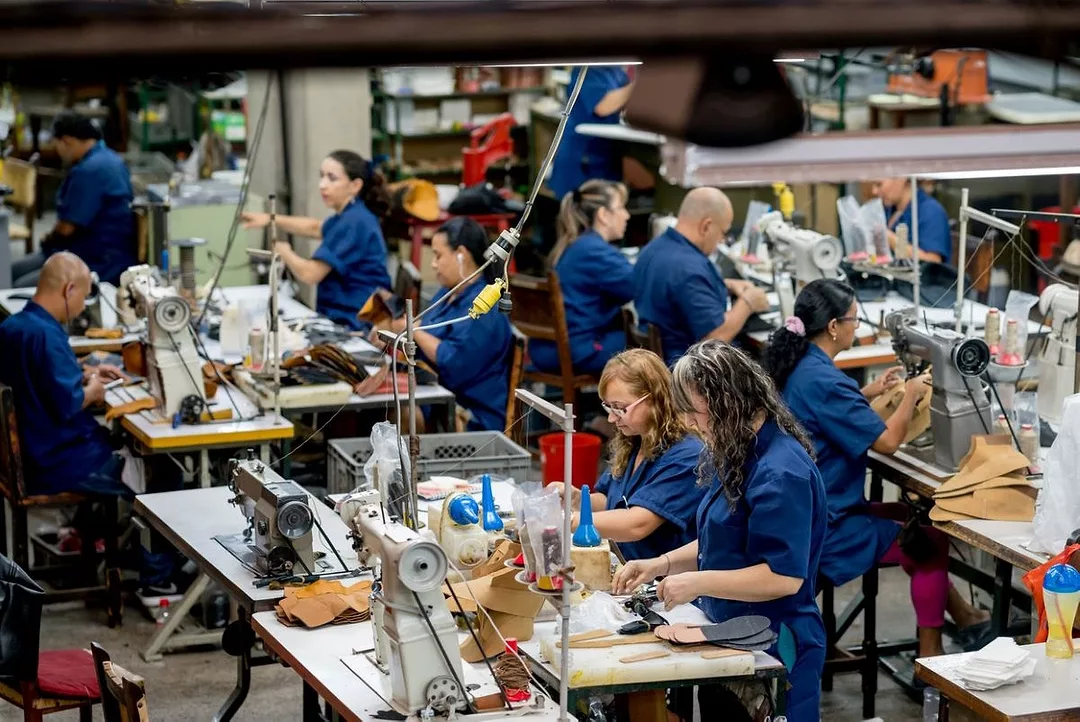
Manual workers working at a clothing factory

Photo: iStock.com/andresr

February 12, 2024
Leonard Marano, SCB Contributor

While fashion is by nature ephemeral, its environmental impact is long-term. Regularly criticized for the waste it generates on a global scale, the fashion industry is also called out for pollution caused by garment production. Attention surrounding these issues is growing, not only among consumers, but also among industry players, for whom limiting material waste, overstocking and unsold inventory is also a financial concern. By integrating new technologies, including artificial intelligence, Industry 4.0, and better connections between supply chain players, the fashion industry can significantly reduce its material consumption and limit the risk of unsold stock. 

Less Material to Produce a Garment: The Cutting Room Challenge

Material consumption has a significant impact on the environmental footprint of fashion manufacturers. For most production models, materials account for over 90% of the CO2 emissions generated during the entire lifecycle of a cutting room. When we think of the textile waste generated by the fashion industry, our first thought is unlikely to be fabric offcuts during garment production, and yet these account for between 10 and 15% of total material consumption. 

Every millimeter of fabric saved counts for manufacturers looking to limit fabric waste in order to reduce their environmental footprint. For example, by reducing the spacing between the pieces of fabric to be cut and by optimizing the layout (nesting) of these pieces on the textile to be used, significant material savings can be achieved. 

For large volumes, the slightest additional percentage of fabric used represents much less waste. It is therefore essential to adopt the right technologies, with software and equipment that enable material savings to be made throughout the workflow. 

During production preparation, artificial intelligence can be used to optimize the nesting of pieces to be cut. Fashion companies that rely on automated nesting software can not only reduce the quantity of material used, but also estimate, upstream of production, the exact quantity of fabric they will need, avoiding excess inventory and material shortages. These technologies offer the possibility of using 3D prototyping to encourage remote collaboration and avoid unnecessary material consumption and transport. 

During the cutting process, the same software can be used to limit - or even eliminate - the spacing required between pieces. The most technologically advanced cutting machines also play a key role in material savings. A wide range of functions are available to manufacturers to reduce material waste. With integrated scanners and state-of-the-art image sensors, the equipment is capable of facilitating the management of patterns on printed fabrics and anticipating possible distortions in the material to optimize cutting and reduce waste.  

Finally, by adapting to all spread thicknesses (i.e., the overlay of material plies, or layers, waiting to be cut), cutters make it easier to adapt production volumes to fluctuations in demand and volumes ordered. 

On-Demand Manufacturing to Combat Unsold Stock

Reducing material waste also involves reducing the volume of unsold clothing, or clothing produced in excess of demand, which will either be stored for a long time before being purchased (known as "dead stock") or destroyed (incinerated) or discarded in countries around the world where regulations do not yet prohibit this. In the United States alone, 11.3 million tons of clothing waste are thrown away every year. The financial and environmental impact of such waste is colossal and is not acceptable. The industry needs to rethink the way it manufactures, and to stick as closely as possible to real demand — in other words, produce only what will be sold, or even what has already been sold (on-demand production). 

Technological advances are opening up possibilities that were previously unthinkable. Automated competitive analysis solutions, which work using artificial intelligence algorithms, provide fashion brands with accurate information in abundance that could not be achieved with manual benchmarking alone. They can find out which categories, models and colors of clothing and accessories sell best, enabling brands to optimize their positioning and pricing in relation to the competition and make the most informed decisions. This comprehensive monitoring is key when avoiding over-production. 

Solutions for automating on-demand production, from order reception to cutting, and for managing customized, made-to-measure and small-series production, are now available. The key lies in the flexibility of production systems and equipment capable of adapting to any order type and volume. Automatic detection of defects in a fabric as early as possible in the manufacturing cycle will also avoid using unsuitable pieces to assemble a garment, for which the final product would most likely end up being thrown out. 

Adopting these technologies is crucial for fashion companies that want to increase their margins, reduce their environmental footprint, and slash unsold inventory. These solutions will also help them to make the most of trends, by detecting them at an early stage, increasing the agility of their supply chain and reducing their time to market. 

Leonard Marano is president, Americas at Lectra.

Business Strategy Alignment Quality & Metrics Regulation & Compliance Sustainability & Corporate Social Responsibility Apparel E-Commerce/Omni-Channel Retail

RELATED CONTENT

RELATED VIDEOS

Subscribe to our Daily Newsletter!

Timely, incisive articles delivered directly to your inbox.

Featured Product

Popular Stories

  • Businessman using AI agent system on laptop computer.

    AI in Supply Chain Can’t Succeed Without Foundational Systems

    Artificial Intelligence
  • A LARGE CYLINDRICAL OBJECT SHRINK-WRAPPED IN WHITE PLASTIC IS LOWERED BY CRANE ONTO A FLAT BED TRUCK ON A DOCK

    AI Boom Has European Buyers Paying Extra to Secure Gas Turbines

    Technology
  • 016_ai_and_data_transformation_in_distribution_v1-(540p).png

    Watch: AI and Data Transformation in Distribution

    Artificial Intelligence
  • DOMINO EFFECT FINANCIAL MONEY KNOCK-ON CONSEQUENCES iStock-Devrimb-1500012566.jpg

    Podcast | The Tariff Conundrum for Supply Chains: Pass Along, or Absorb?

    Supply Chain Finance & Revenue Management
  • TWO WORKERS DISCUSS DATA SHOWN ON COMPUTER SCREENS

    Gartner: Gap in SC AI Talent Cannot Be Closed by Hiring Alone

    Artificial Intelligence

Digital Edition

2026 esg cover main scb q2 2026 cover

SupplyChainBrain 2026 ESG Guide: ESG — The Supply Chain’s Biggest Secret

VIEW THE LATEST ISSUE

Case Studies

  • Recycled Tagging Fasteners: Small Changes Make a Big Impact

  • A GRAPHIC SHOWING MULTIPLE FORMS OF SHIPPING, WITH A HUMAN STANDING AT THE CENTER, TOUCHING A SYMBOLIC MAP OF THE WORLD

    Enhancing High-Value Electronics Shipment Security with Tive's Real-Time Tracking

  • A GRAPHIC OF INTERLACING HONEYCOMBED ELEMENTS REPRESENTING GLOBAL BUSINESS TRANSACTIONS

    Moving Robots Site-to-Site

  • JLL Finds Perfect Warehouse Location, Leading to $15M Grant for Startup

  • Robots Speed Fulfillment to Help Apparel Company Scale for Growth

Visit Our Sponsors

4flow Arkieva Blue Yonder
Carton Cloud CoEnterprise Dassault
Duravant E2Open General Logistics Systems
Hy-Tek iGPS Korber
Lyngsoe Procurability Quinyx
SAP Sikick Systech
S&P Global Mobility TADA TransImpact
US Bank Werner Enterprises WSI
  • More From SCB
    • Featured Content
    • Video Library
    • Think Tank Blog
    • SupplyChainBrain Podcast
    • Whitepapers
    • On-Demand Webinars
    • Upcoming Webinars
  • Digital Offerings
    • Digital Issue
    • Subscribe
    • Manage Email Preferences
    • Newsletters
  • Resources
    • Events Calendar
    • 2026 Event Coverage
    • SCB's Great Supply Chain Partners
    • Supplier Directory
    • Case Study Showcase
    • Supply Chain Innovation Awards
    • 100 Great Partners Form
  • SCB Corporate
    • Advertise on SCB.COM
    • About Us
    • Privacy Policy
    • Contact Us
    • Data Sharing Opt-Out

All content copyright ©2026 Keller International Publishing Corp All rights reserved. No reproduction, transmission or display is permitted without the written permissions of Keller International Publishing Corp

Design, CMS, Hosting & Web Development :: ePublishing