RSS
RSS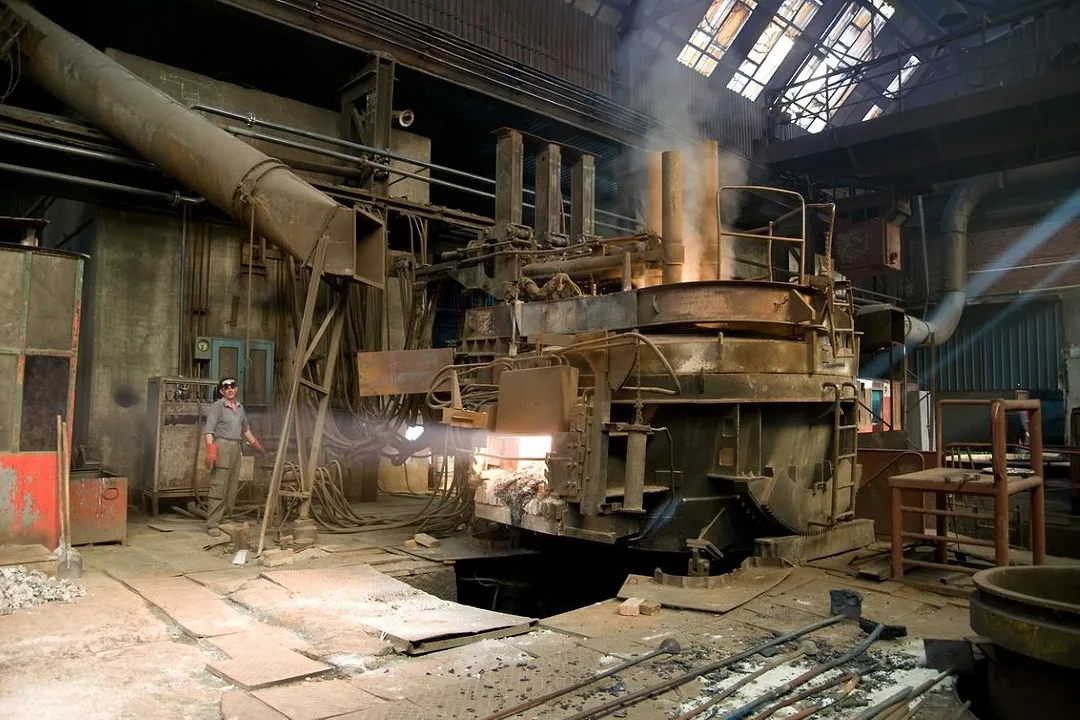
.webp?height=100&t=1782792122&width=150 "005_veteran_winemaker_gallo_embarks_on_an_ai_journey_v2-(540p).jpg")
Auto manufacturers have long optimized their supply chains for cost and quality. Today, they are confronting a far more complex environment where tightening emissions mandates, stricter high recycled content requirements, and calls for greater transparency are converging to reshape supply strategies.
These regulatory variables are changing how automotive OEMs source materials. Specifically, when it comes to steel ⎯ by far the most prevalent material in an automobile ⎯ OEMs are increasingly prioritizing a strategic shift to steel made here in the United States that uses higher levels of recycled content, and leaves a verifiably lower carbon footprint.
There are two primary ways to make steel: the blast furnace-basic oxygen furnace (BF-BOF) process and the electric-arc furnace (EAF) process.
The BF-BOF steelmaking process relies primarily on extracted raw materials to convert iron ore into new steel. It is a highly carbon-intensive process. In contrast, EAF steelmaking uses electricity and recycled scrap metal as the primary feedstock to make new steel, resulting in steel with a fraction of the greenhouse gas (GHG) intensity of the BF-BOF process.
By sourcing domestic EAF steel, OEMs can dramatically reduce a vehicle’s embodied carbon and the emissions generated over its full life cycle, not just the emissions from its tailpipe.
Decarbonization Imperatives
The push for decarbonization is no longer optional. Global regulators, investors and customers are all demanding measurable action — and a major source of embodied carbon emissions is hiding in plain sight: steel.
According to a report from the International Council on Clean Transportation (ICCT), automotive-grade steel contributes significantly to Scope 3 emissions — the indirect emissions from a company’s value chain. Replacing steel produced via BF-BOF methods, with Nucor’s high-recycled content lower embodied carbon steel made via EAF, can cut that footprint by as much as 60%.
And when that steel is produced with carbon-free or renewable energy, a vehicle’s carbon footprint continues to shrink. Some steel is already being produced using up to 100% renewable electricity.
This kind of innovation aligns directly with regulatory trends in the U.S., Europe and Asia, which increasingly favor low-embodied carbon materials. By sourcing EAF steel today, OEMs not only reduce current emissions but position themselves to comply with future sustainability mandates.
High Recycled Content
OEMs are also increasingly putting an even greater premium on sourcing steel that’s made with higher levels of recycled content. In fact, this is fast becoming a compliance requirement in certain markets. The European Union, for example, is moving toward regulations that would mandate higher levels of recycled materials in vehicles.
American-made EAF steel can meet these mandates through the use of both pre-consumer and post-consumer scrap. And because American-made EAF steel can now be used in a wide variety of applications, “buying American” is now a win-win for companies looking to meet international content standards without compromising performance or cost efficiency. And at the same time, some manufacturers are continuing to pursue process improvements that incorporate recycled content even more.
Durability and Product Performance
Automotive-grade recycled steel meets the same rigorous standards as conventionally produced material, offering top-tier strength and formability.
The U.S. also maintains a reliable and robust supply of high-quality scrap drawn from decommissioned vehicles, appliances and buildings, supporting the production of automotive steel grades produced with the EAF steelmaking process.
U.S.-based EAF mills can supply steel for a variety of applications, including frame rails and components that are critical for improved stiffness, crash management and intrusion protection. Steel grades with a higher recycled content are source-approved, and used in the production of electrified vehicles and luxury models by OEMs such as Mercedes-Benz, General Motors and Honda.
Supply chain transparency is another industry imperative, and a significant competitive differentiator for American steelmakers. Automotive OEMs are now demanding clear, reliable data on the materials they source to make informed decisions and meet increasingly stringent emissions and circularity mandates.
Some steelmakers now provide third-party verified environmental product declarations (EPDs) for many of their steel products. These EPDs clearly communicate critical environmental metrics, including global warming potential (GWP) and recycled content percentages, allowing OEMs to track and report on Scope 3 emissions with confidence. Some steelmakers even offer mill-specific EPDs in certain cases, providing a new level of granularity and accountability that supports lifecycle assessments and sustainability audits.
This level of transparency is essential as OEMs work to meet evolving regulatory requirements in the U.S., the EU and Asia, which increasingly require accurate reporting on embodied carbon and material sourcing. Transparent reporting from suppliers also helps OEMs validate their environmental claims, avoid greenwashing, and build trust with stakeholders — from regulators and investors to consumers.
As sustainability continues to be an important factor for vehicle material sourcing, automotive OEMs are facing a convergence of challenges. American-made EAF steel can help them meet the moment, but only if they can shift their perspective of steel from a commodity to a strategic imperative.
Dean Kanelos is market development and product applications manager at Nucor.

.webp?height=100&t=1782739023&width=150 "003_the_future_of_ai_in_transportation,_warehousing_and_logistics_v1-(540p).png")