RSS
RSS
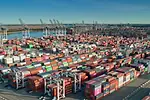
For years, the “middle mile” has been retail logistics’ quiet workhorse. It’s the unseen bridge connecting finished products to stores, repositioning inventory dynamically to meet shifting customer demand, and transporting goods from fulfillment centers to last-mile carriers.
Historically, the conversation has revolved around trucks, lanes, and linehaul routes. Middle-mile strategy revolved around zone skipping, consolidation and reducing miles between facilities.
But that playbook is changing. Even as offline sales declined in 2024, e-commerce volume continued to surge, accounting for 136% of total global retail sales growth, according to Euromonitor data. The next frontier is sortation: the ability to segment, sequence and route freight and parcels closer to their final destination. This evolution is reshaping how retailers design their networks, allocate freight, and gain flexibility in the last mile.
Traditionally, freight networks ended at “injection.” Once a shipment reached a parcel carrier’s hub, the shipper’s influence effectively stopped. Most transportation management systems were designed for single-mode operations (FTL, LTL, and parcel), each with its own data streams and dashboards. That model worked when delivery expectations were measured in days, and “omnichannel” was a retail buzzword, not a fulfillment mandate. Today, it’s too rigid for the speed and diversity that modern retail requires. According to a recent Gartner survey, only 29% of supply chain organizations have built the necessary capabilities to deliver future performance.
The deeper challenge lies in the fragmentation of visibility and control. Disconnected systems make it difficult for shippers to see across modes or anticipate disruptions before they ripple downstream. The result is a network that reacts instead of anticipates, a costly limitation in an environment where every hour and every mile matter.
The Smart Infrastructure
The next phase of middle-mile evolution isn’t about building more facilities; it’s about making existing infrastructure smarter. Across the country, third-party cross-docks are being reimagined as sortation-enabled nodes. These aren’t new warehouses or owned assets; they’re strategically located facilities that already touch thousands of parcels every day. By layering in software, automation and real-time visibility tools, these nodes can now function as dynamic sortation centers, capable of segmenting freight by destination, carrier, or delivery speed, before it hits a last-mile delivery network. According to McKinsey, investment in automation will increase significantly over the next five years. The logistics and fulfillment sector is expected to exceed all other sectors in investment, including retail and consumer goods, life sciences, automotive and food and beverage.
This approach eliminates the need for capital-heavy construction, and instead turns underutilized real estate into intelligent, flexible links in the retail supply chain.
Once a pallet lands in a sortation-enabled cross-dock facility, the ability to decide how it flows, not simply receive and forward, is what separates modern middle-mile networks from legacy ones. The technology underpinning this shift spans hardware, software, and data orchestration.
Physical Sortation Systems
So what does the cross-dock of the future look like? Depending on volume, parcel-size variability, and throughput targets, different types of hardware can be deployed at cross-docks to help with sortation. The following systems allow retailers to take advantage of the current infrastructure without needing to rent or build out another sort facility:
- Conveyor belt integration. Traditional conveyor or roller-belt systems are evolving into modular, sensor-driven networks that can divert parcels based on size, destination or carrier code. Equipped with barcode scanners or vision sensors, these belts automatically route cartons into chutes or zones for specific carriers or delivery windows. Cross-belt or sliding-shoe conveyors can be configured in compact footprints, making them ideal for retrofitted third-party facilities. The result is faster throughput, fewer manual touches and greater consistency in outbound sequencing.
- Robotic sortation. Autonomous robotic arms and mobile units are increasingly handling picking, placement and sequencing within cross-docks. These systems use artificial intelligence-enabled vision to recognize parcel dimensions and labels, determine the right bin or rack location, and transfer freight accordingly. For small to mid-volume operations, collaborative robots (“cobots”) can work alongside human operators to improve speed and reduce ergonomic strain. Robotic sortation is especially useful for variable-size or irregularly shaped freight, enabling the same node to process both parcel and big-and-bulky goods.
- Automated guided vehicles. AGVs and autonomous mobile robots (AMRs) move freight between inbound docks, sorting zones and outbound staging areas without fixed conveyor infrastructure. They navigate via QR codes, LiDAR, or SLAM mapping, dynamically adjusting paths based on congestion and priority. This flexibility lets operators scale throughput up or down with demand, deploying more robots during peak periods or reallocating them across nodes in a distributed network. In a cross-dock setting, AMRs can also feed pallets or gaylords directly into sort lanes, enabling true “flow-through” operations where freight never sits idle. Deloitte notes that these types of robots have the potential to increase productivity, reduce risk, decrease cost, and improve data collection.
Software and Data Orchestration
Cross-docking creates massive data trails that can be fed back into the system to make it smarter. Smart operators use analytics to spot patterns in order flow and truck arrival times, forecast peak periods to allocate labor more efficiently, monitor key performance indicator trends, and simulate “what-if” scenarios using digital twins. Gartner identified scenario modeling as one of the top trends in logistics technology in 2024. When paired with hardware, visibility and orchestration software tie it all together. Elements include:
- Warehouse execution system (WES) or warehouse control system (WCS), which act as the “traffic cop,” directing material handling subsystems (conveyors, sorters, robots) and providing real-time decisioning.
- Predictive analytics and AI models, which forecast volumes, plan routing and pre-allocate parcels to downstream carriers or nodes based on service level, geography and cost.
- Real-time visibility across pallets, cartons, and packages, which ensures that each freight unit arrives tagged (barcode, RFID, or vision-identified) and enters the system as a data point. From there it can be re-segmented for national carriers, regional couriers or hyperlocal delivery. That allows sortation centers to flex and sequence freight not just by route but by business rule.
Putting It All Together: Smart Cross-Docks
When these elements are combined, third-party cross-docks can evolve into sortation-enabled nodes. They accept pallets from regional hubs; scan and break them down into pallets, cartons or parcels; sequence by destination or carrier; reroute as needed, and dispatch into the last-mile network.
This transformation delivers:
- Greater agility. Carriers can be changed, modes can be flexed and freight can be reconfigured mid-flow.
- Lower capital investment. Rather than erecting new sortation centers, existing facilities are retrofitted with modular tech and orchestration layers.
- Data-driven routing. With real-time parcel-level data feeding the sortation logic, network decisions become proactive.
For retail brands and omnichannel players, partnering with a logistics provider that implements this level of technology enables them to:
- Shift between store replenishment, e-commerce fulfillment and returns handling via the same node;
- Adapt to seasonal and promotional volume spikes by dynamically reconfiguring sort flows;
- Achieve better cost control by routing freight to the best-fit carrier or delivery mode at the point of sortation, and
- Improve sustainability by reducing re-handling, optimizing loads and minimizing empty miles.
Modern-day sortation technologies — including hardware, software and data— at middle-mile cross-docks give retailers and shippers the tools to transcend the “transportation-only” mindset. They turn freight networks into intelligent delivery networks, where every pallet and parcel is directed not just toward a carrier, but toward the best possible path to the customer.
Daniel Sokolovsky is chief executive officer and co-founder of Warp.