RSS
RSS

On February 11, 2026, the Federal Motor Carrier Safety Administration (FMCSA) finalized its "Restoring Integrity to the Issuance of Non-Domiciled CDLs" rule. The intention of the new rule is to tighten the requirements for obtaining a non-domiciled commercial driver’s license.
According to different sources, there are between 194,000 and 200,000 holders of this license in the U.S. The strict guidelines of the new rule are expected to shrink this workforce dramatically. Shippers and carriers will have to navigate the challenges it could bring. Potential impacts include the following:
Tightened capacity. Many carriers rely on non-domiciled CDLs to ship freight around the country. With these truckers out of work, carriers are already experiencing labor shortages. This will lead to overall tightened capacity across the country. As a result, shippers are left to compete for the portion of trucks still available.
Higher freight costs. Carriers will struggle to meet existing freight volumes when the number of drivers they have on staff is reduced. The scarcity of drivers on the road is causing a rise in spot and contract rates.
Harsher insurance coverage. Some insurance companies are already refusing to provide coverage for carriers that have non-domiciled drivers, even though their licenses haven’t expired. Insurers themselves are getting stricter about compliance. They see carriers that don’t adhere to the new rule as a risk.
This is forcing trucking company executives to take truckers off the road that are technically still allowed to drive. The adoption of the new FMCSA rule will only cause insurance companies to follow the same trend.
Reduced service reliability. Transportation services extend past standard truckload shipping. Services can include white-glove delivery, expedited shipping and refrigerated transport.
Without the manpower of non-domiciled CDL holders, extended services might become more difficult to obtain. They could be delayed in their deliveries and have to cancel certain routes.
States where many non-domiciled CDL holders work, such as Texas, California and New York, will experience more operational disruptions now that the new rule is in effect.
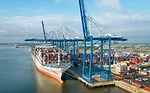
Drayage and port-adjacent operational disruptions. Non-domiciled CDL holders are concentrated in drayage and port operations. Services such as these are essential to supply chain continuity. The loss of these drivers will make moving freight in and out of ports more difficult. Port congestion inevitably slows the entirety of the supply chain.
Decline in cross-border shipping. Cross-border shipping services in particular could be hindered by the new rule as well. As mentioned above, there are many non-domiciled CDL holders in Texas. Most cross-border freight shipments occur in Texas, but other states along the southern border such as Arizona and California have plenty as well.
The FMCSA’s non-domiciled rule will certainly reduce drivers in these states, which means carriers that provide cross-border shipping are going to be hindered. A disruption in cross-border shipments brought on by a lack of drivers would lead to delays in the flow of goods between the U.S., Mexico and Canada.
Higher administrative burden on supply chain leaders. Supply chain leaders and executives at transportation companies will need to see to it that their staff familiarizes themselves with the regulations under the new rule. The same applies to any drivers already on their roster with this type of license.
This increases administrative responsibilities of supply chain leaders and executives within smaller transportation companies. It also puts these businesses at risk of being fined if they don’t maintain compliance with the new rule.
Disproportionate effects on smaller carriers. In general, complying with DOT regulations is more difficult for smaller trucking companies. Most have limited manpower, which makes it difficult to hire staff and implement technology that only focuses on compliance.
With the implementation of the non-domiciled rule, smaller trucking companies are likely to experience more strain when abiding by the new regulations.
Attracting and retaining drivers is also more difficult for small carriers. This is largely due to their limited financial resources. The non-domiciled rule could exacerbate this problem by forcing them to let go of drivers with this type of CDL.
Larger trucking companies can better weather these challenges thanks to their financial resources, while small carriers could be left fighting for their existence.
Drivers with non-domiciled CDLs aren’t expected to drop from the trucker workforce all at once. Instead, drivers will leave the workforce over the course of five years as their credentials begin to expire. About 40,000 drivers per year are projected to leave over the next five years.
This means the effects of the new FMCSA rule won’t be felt all at once. Supply chain leaders and executives will have room to adjust to the new challenges they’ll face, and find solutions that will help their company overcome them.
Practices companies can adopt prior to the non-domiciled rule being implemented include updating hiring and onboarding practices, training HR on the new requirements, and auditing current non-domiciled CDL holders
Hiring and onboarding practices should align with the non-domiciled CDL rule to ensure your company is selecting drivers that are compliant with FMCSA requirements. If they don’t, you can end up hiring unqualified truckers and suffer severe penalties.
To assist with hiring and onboarding practices, HR departments within transportation companies must be familiarized with the new rules. This will help them in their recruiting efforts and when writing job postings.
Auditing current non-domiciled CDL holders is also important. Visas, CDL expiration dates, Form I-94/94As, and other documents will need to be vetted. Your company will need this information to verify if your drivers are compliant.
To be fair, we still don’t know what the FMCSA’s rule on non-domiciled CDLs will look like once implemented. There’s a chance that it could look different in its final form.
Supply chain leaders should take the time between now and the year anniversary of the FMCSA non-domiciled rule to re-evaluate their capacity assumptions. Doing so can avoid reactive decision-making later, and identifying shortcomings will help make the necessary changes when regulations are altered.
By proactively assessing exposure and building resilience, transportation companies are in a better position to manage disruptions the rule could cause. With these changes, supply chain continuity can be preserved.
Jacob E Lee is SEO content editor with R+L Global Logistics.