 RSS
RSS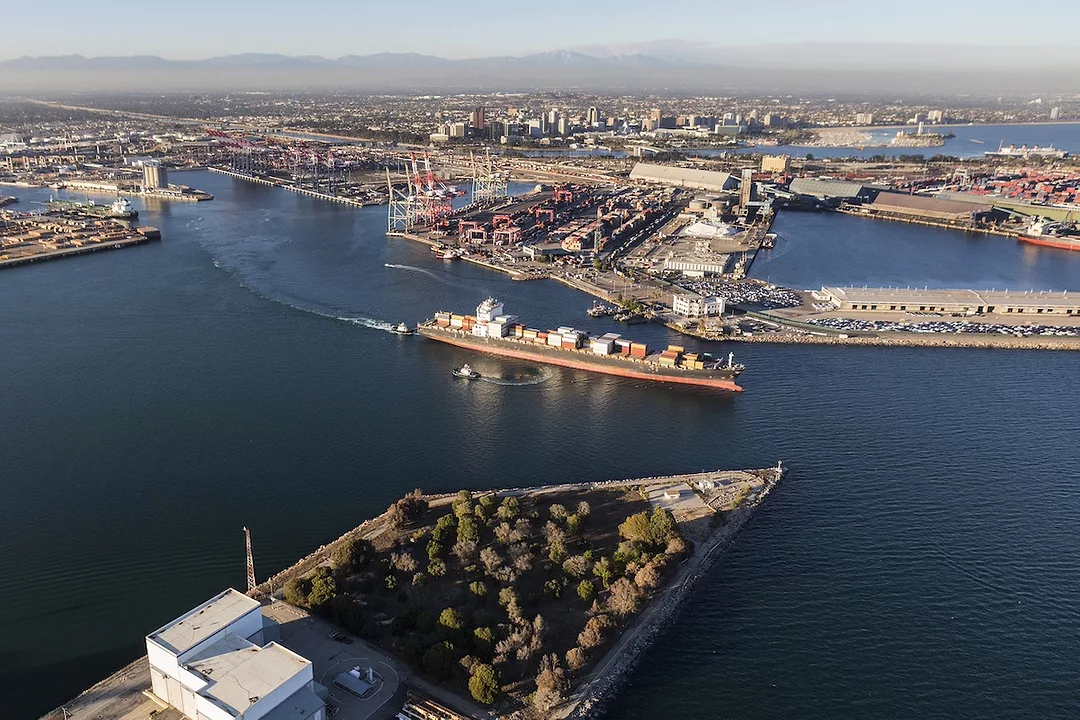
.webp?height=100&t=1783959879&width=150 "014_how_ai_is_transforming_the_transportation_back_office_v1-(540p).jpg")
West Coast ports are the linchpin of supply chains originating in Asia. This is where containerized shipments transition from ocean freight to domestic ground transport. If traffic through the ports is delayed or handoffs are missed, the downstream effects are costly.
Arrival at a port initiates a complex chain of events, from customs clearance to drayage, warehousing and fulfillment, that must be synchronized and flow seamlessly to meet cost and delivery expectations.
For transpacific trade, the San Pedro Bay port complex, comprising the ports of Los Angeles and Long Beach, is the primary gateway. Together, they account for roughly 31% of containerized shipments entering the U.S.
A “port-to-door” logistics strategy ensures that shippers engaged in transpacific trade have their freight move seamlessly through Southern California ports, on time and without errors, to their final destinations. The term refers to how a third-party logistics (3PL) provider coordinates the movement of freight from a seaport to intermediate and final destinations, such as distribution centers, retail locations and end customers.
On-time execution requires tight coordination of steps, including vessel discharge, terminal handling, customs clearance, drayage, and inland transportation by rail or truck (or both). Any delay can trigger ripple effects throughout the supply chain.
The process of port-to-door logistics begins with pre-arrival planning, which secures inland transportation before cargo arrives at the port, minimizing dwell time and improving transit speed.
The necessary steps vary based on customer needs. In Southern California, for example, a 3PL might perform the following steps:
- Process orders and provide seamless tracking and visibility;
- Use drayage partners to move containers from the ports of Los Angeles and Long Beach to nearby cross-docks;
- Move freight directly to West Coast customers for urgent orders, and
- Transload and consolidate 40-foot oceangoing containers into 53-foot trailers for inland distribution to the customer’s warehouse.
West Coast ports are built for high throughput. The Port of Los Angeles alone handles more than 10 million 20-foot equivalent units (TEUs) annually, while combined monthly volumes at Los Angeles and Long Beach can approach one million containers during peak periods.
This density creates persistent congestion and increases the likelihood of delays. Customs clearance introduces another layer of variability. Inaccurate or incomplete documentation can trigger inspections or holds, delaying cargo at a critical point in its journey.
Additionally, fragmentation among multiple service providers often leads to delays and errors. A single shipment often involves ocean carriers, terminal operators, drayage providers, rail networks, warehouses, and motor carriers.
Several challenges consistently affect port-to-door logistics and require real-time coordination, planning, and decision-making throughout the process:
- Congestion. High volumes can overwhelm terminals, necessitating flexible routing and intermodal options.
- Customs delays. Accurate documentation and pre-filing help reduce inspections and holds.
- Detention and demurrage. Efficient container retrieval minimizes costly delays
- Capacity constraints. Securing trucking and rail capacity in advance helps prevent bottlenecks.
Fully integrated port-to-door logistics is especially critical for industries that share a common dependency: predictable inbound flow. These industries include retail and e-commerce, consumer packaged goods, and light manufacturers.
Retail and e-commerce companies depend on a reliable inbound flow to keep shelves stocked and fulfill customer orders. CPG companies require predictable delivery schedules to maintain distribution networks. Manufacturers need timely arrival of imported components to keep production lines running. In all cases, port delays can quickly cascade into broader operational disruptions, making efficient port-to-door execution essential.
Port-to-door logistics doesn’t end with delivery. For many businesses, the next step is equally important: preparing goods for distribution.
Integrated solutions often include deconsolidation, cross-docking, warehousing and value-added services such as labeling, kitting and quality checks. These services streamline the transition from import to distribution, reducing handling and accelerating time-to-market.
When aligned with transportation, they enable a more efficient end-to-end supply chain.
Port-to-door logistics, as provided by 3PLs, serves as the most critical part of transpacific supply chains. An integrated approach that coordinates every handoff through centralized planning, warehousing, real-time visibility and access to a large-scale transportation network helps to ensure that freight moves efficiently from the port to final destination.
Brant Seaton is president of Knight-Swift Supply Chain.


.webp?height=100&t=1784001702&width=150 "013_what's_really_needed_for_'lights-out'_capability_v1-(540p).png")


