
Could Consumer Boom in China, India Spark Food Shortages in U.S., Other Regions?
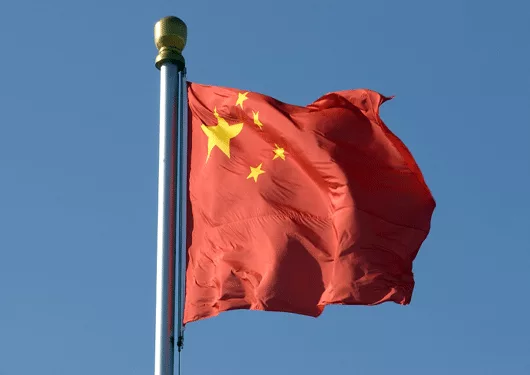
Without smart, quick action by the private sector and government alike, surging Chinese and Indian demand for premium foods will lead to commodity volatility, runaway food prices, and worldwide water shortages as the "boomerang effect" brings the unexpected impact of Asian growth to U.S. shores.
That's the conclusion of research by The Boston Consulting Group. The main findings are presented in The Boomerang Effect, a BCG perspective, and The $10 Trillion Prize: Capturing the Newly Affluent in China and India (Harvard Business Review Press, October 2012), a book by BCG consultants Michael J. Silverstein, Abheek Singhi, Carol Liao, and David C. Michael.
"Chinese and Indian consumers are celebrating their newfound wealth by eating like Americans: they're shifting their diets from grain to meat," Silverstein said. "Their wealth is a good thing. It creates new markets and new opportunities. But it can also lead to global traumas: highly inflated food prices across the U.S., as well as dangerous worldwide shortages of key natural resources, especially water.
The Boomerang Effect Brings Surprising Outcomes from Asia to the U.S.
"This is an example of what we call the boomerang effect -- a set of hard-to-foresee outcomes that come home to roost as a result of developments far away," Silverstein said. "We have seen it before. In the early 1990s, direct investment in China led to a flood of cheap goods and permanent shifts in the U.S. labor market. This time, it's different. The Chinese and Indian middle-class consumers have developed new food preferences that will lead to hypercompetition for commodities such as feed, corn and water. Climate change is already creating droughts worldwide and bringing the threat of famine, food riots and water wars in Asia. This new surge in consumer demand will worsen the strain in Asia and the U.S. as well."
But the boomerang effect doesn't necessarily lead to chaos, Silverstein added. "Crisis can always lead to opportunity. Smart investments and policies can limit the impact of inflation and shortages."
Step by Step: How Changing Food Tastes in China and India Could Spark Crisis
According to BCG, there are only a few steps between booming wealth and changing tastes in China and India and global crisis:
"¢ Wealth -- and consumption -- is skyrocketing in both India and China. By 2020, there will be 2 billion economically able Chinese and Indian consumers -- 1 billion of them new to the middle class. In both nations, lifetime consumption patterns are changing radically. Chinese born in 2009 will consume 38 times more than those born in 1960. Indians born in 2009 will consume 13 times more than those born in 1960.
"¢ Doing well means eating well, and that means eating meat. Consumers in China are celebrating their wealth by abandoning their traditional diets, shifting from grain toward chicken and pork. Chicken and pork accounted for 4 percent of daily calories in China in 1960; by 2020 they could account for as much as 28 percent. The surge in demand is forcing China to become a net importer of chicken and pork.
"¢ For meat, you need livestock. For livestock, you need feed. Feed is in short supply. Demand for chicken and pork means demand for feed grain -- lots of it. It takes 2 kilograms of feed to produce 1 kilogram of chicken and 6 kilograms of feed to produce 1 kilogram of pork. In 2010, 99 percent of China's corn production went for feed -- a figure that also represents 20 percent of global corn production for that year. The result is that China is no longer self-sufficient when it comes to corn. China's corn imports will increase from 1.7 million tons in 2010 to 15 million tons in 2015 -- the equivalent of U.S. exports of 600 million bushels.
"¢ Put a strain on the global feed supply? You're going to pay for it. All the figures above mean that China's corn consumption will have significant global impact, and prices will surge well beyond current levels. Global corn consumption is projected to rise 3.2 percent per year from now through 2020. That means a 40-percent increase in overall consumption. And that means corn prices could increase as much as 57 percent from 2010 through 2020.
"¢ Expensive corn means expensive food -- including here at home. Demand for corn in China drives up beef prices in the U.S. Feed is 55 percent of the cost of raising cattle. And grain is 60 percent of the total cost of feed. So a 57-percent increase in the cost of feed by 2020 could lead to a 20-percent increase in beef prices. That hits home. A Big Mac, which cost about $3 in 2003 and goes for just over $4 today, could, by 2015, easily cost $5 -- or even more.
"¢ There's no meat without feed and no feed without water. To grow feed grain, you need large quantities of water. China's shift to meat consumption leads to a tenfold increase in the need for water. And the water supply is already in crisis. Worldwide, water consumption is already ahead of sustainable supply and is growing at 2.2 percent a year. In China and India (which depends on China for much of its water), water supplies are strained by drought. India could have 600 million people without water in 25 years.
"¢ The water crisis brings it all back home. Water is a problem in the U.S., too. It is becoming difficult to irrigate land there, and a new dust bowl is a real possibility. Water restrictions are already in place in Western states, and the price of water in some U.S. cities is already equivalent to those in Israel. U.S. water riots aren't out of the question. But short of that, scarce water means costlier food. The last dust bowl -- from 1931 through 1936 -- killed off 30 percent of corn production and drove corn prices up 115 percent. Right now, U.S. food exports to China require an 18-percent annual increase in water consumption. Higher corn prices, the result of drought alone -- leaving out other factors -- could double the price of chicken by 2018.
Getting Ahead of the Crisis: Policies Can Help, and Companies Can Prosper
Is the worst-case scenario inevitable? Not necessarily, Silverstein said. "Famine and food riots are a reality in India, and water wars between China and India are a genuine risk. But innovation can help. Smart policy decisions can mitigate the worst effects and create opportunities for companies that are sharp and nimble."
A copy of the report can be downloaded click here.
Source: Boston Consulting Group
Popular Stories





SupplyChainBrain 2026 ESG Guide: ESG — The Supply Chain’s Biggest Secret
VIEW THE LATEST ISSUECase Studies


Visit Our Sponsors |
|
|
| |
|
|
|
|
|
|
|
|
|
|
|
|
|
|
|
|
|
|
|
|
|
|
|
|
|
|
|
|