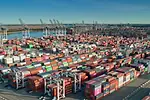
How to Manage Complexity Across the Supply Chain

Supply chain complexities are constantly evolving. Increasing logistics demands, such as enabling tighter delivery windows and ensuring product availability, can drive longer and more variable lead times, force more inventory into the pipeline, and increase landed costs. These complexities can seriously disrupt a company's operations - particularly if their supply chain is rigid or obsolete. To better manage supply chain complexity, it is imperative to gain visibility into logistics operations and eliminate informational blind spots. Only then can continuous improvement projects be implemented to optimize the supply chain for specific business needs and objectives.
Defining Supply Chain Visibility
Supply chain visibility is a term that is used across the third-party logistics (3PL) industry, yet it is seldom clearly defined. When we discuss visibility at GENCO, A FedEx Company, we are referencing the ability to track, trace and access real-time supply chain information that might otherwise go unobserved. The greater the supply chain’s visibility, the greater a company’s capacity for adapting to changing business needs.
There are many examples of both inbound and outbound metrics across the supply chain that can provide insight into operations and enable better planning and execution. For inbound shipping, advance shipment notices and in-transit status events provide real-time information about where specific products are located along the logistics pipeline — in addition to how quickly those assets can be utilized. Outbound shipping metrics, such as carrier pick-up and proof of delivery, can help companies understand delivery timelines and drive better consistency for customers.
Improved supply chain visibility also sheds light on reverse logistics operations. By understanding what products have been returned, retailers and manufactures can maximize the value of that inventory through the best available channel — whether it is redeployment, recycle or re-commerce. Once enough data has been gathered on past events, predictive analysis can then be used to identify and implement best practices for returns, further adding to the value that can be realized through supply chain visibility.
Leveraging Supply Chain KPIs for Continuous Improvement
By collecting information across the supply chain, companies can monitor the operational metrics necessary to establish a baseline for continuous improvement initiatives. Key performance indicators (KPIs), such as inventory on hand, are important for understanding your company’s efficiency. As many of those KPIs have substantial capital consequences, gaining access and analyzing that information is vital for improving overall capital asset utilization.
For instance, holding inventory where it cannot be utilized is one of the largest costs for manufacturers and retailers — regardless of whether the product is being manufactured, being transported, or being held in a distribution center. If you have visibility into those processes, you can better understand drivers of inefficiency and adjust processes accordingly. High levels of visibility, for example, could provide real-time inbound notifications about the occurrence of customs clearance events. You could then proactively allocate those goods to a specific region, rather than simply waiting for the shipment’s arrival at an inland hub. This can help rebalance inventory levels according to changes in demand per specific geographic areas, eliminating wasted inventory movements and streamlining inventory levels within the supply chain.
Integrating WMS and ERP Systems for Comprehensive Visibility
Visibility begins with an organization’s enterprise resource planning (ERP) system. An ERP manages company resources throughout the entirety of the organization. However, to enable last-mile visibility and analytics, you need to have a warehouse management system (WMS) in place. From a WMS, you can access additional information, such as customer ordering behavior and the actual costs of order fulfillment, at the stock keeping unit (SKU) level. In addition, you can use that information from a demand planning and transportation perspective to optimize the mode of inbound shipment execution. While some ERP systems feature their own WMS, tier-one systems can integrate with a company’s ERP to enable cross-business collaboration and information sharing. Finally, the WMS can be synchronized with a transportation management system (TMS) to provide comprehensive vision into all supply chain operations.
Postponement Strategies
The more actionable information a company has about its supply chain, the more sophisticated the strategies that company can implement to adapt to business challenges. One great example involves postponement, which allows for nimble business-to-business fulfillment at lower costs. In a traditional supply chain, product is manufactured, packaged and sent into distribution. If a manufacturer miscalculates demand for the product and overproduces, the miscalculation could result in costly repackaging and potential liquidation. Greater visibility into demand can enable the business to utilize a postponement strategy, where product can be staged and tailored to customer requirements close to the region of high demand.
By implementing a postponement strategy, a manufacturer can create gross quantities of product in non-packaged form. The product can then be stored at a forward stocking location or a display packaging center, where batches can be customized to specific customer requirements. This provides greater flexibility and agility for the manufacturer, as they can provide quicker turnaround and greater customization. In the end, postponement helps eliminate forecasting by allowing the manufacturer to move product as needed within tighter timeframes. However, it is difficult to implement without visibility into the last-mile operations of the supply chain.
Managing Supply Chain Complexity Through Visibility
In the world of supply chain management, complexity can take many forms — whether it is swings in customer demands or the proliferation of SKUs and fulfillment channels. It is our job to manage supply chain complexity by optimizing logistics operations to best address those complexities. Gaining visibility into supply chain processes is the first step in the long road of continuous improvement. With better access to information, inefficiencies can be identified, and processes can be formalized around best practices for optimal efficiency and effectiveness.
Andy Smith is senior vice president and chief operating officer of GENCO, a FedEx Company.
Resource Link:
GENCO
Popular Stories



100 Great Supply Chain Partners 2026: The Secret to Supply Chain Success
VIEW THE LATEST ISSUECase Studies


Visit Our Sponsors |
|
|
|
|
|
|
|
|
|
|
|
|
|
|
|
|
|
|
|
|
|
|
|
|
|
|
|
|
|
|
|
|
|
|
|
|
|
|
|
|
|
|
|
|
|
|
|
|
|
|
|