
• Advertise
  • Contact Us
  • Supplier Directory
  • SCB YouTube
  • About Us
  • Login
  • Subscribe
  • Logout
  • My Profile
  • LOGISTICS
    • Air Cargo
    • All Logistics
    • Facility Location Planning
    • Freight Forwarding/Customs Brokerage
    • Global Gateways
    • Global Logistics
    • Last Mile Delivery
    • Logistics Outsourcing
    • LTL/Truckload Services
    • Ocean Transportation
    • Parcel & Express
    • Rail & Intermodal
    • Reverse Logistics
    • Service Parts Management
    • Transportation & Distribution
  • TECHNOLOGY
    • All Technology
    • Artificial Intelligence
    • Cloud & On-Demand Systems
    • Data Management (Big Data/IoT/Blockchain)
    • ERP & Enterprise Systems
    • Forecasting & Demand Planning
    • Global Trade Management
    • Inventory Planning/ Optimization
    • Product Lifecycle Management
    • Robotics
    • Sales & Operations Planning
    • SC Finance & Revenue Management
    • SC Planning & Optimization
    • Supply Chain Visibility
    • Transportation Management
  • GENERAL SCM
    • Business Strategy Alignment
    • Customer Relationship Management
    • Education & Professional Development
    • Global Supply Chain Management
    • Global Trade & Economics
    • Green Energy
    • HR & Labor Management
    • Quality & Metrics
    • Regulation & Compliance
    • Sourcing/Procurement/SRM
    • SC Security & Risk Mgmt
    • Supply Chains in Crisis
    • Sustainability & Corporate Social Responsibility
  • WAREHOUSING
    • All Warehouse Services
    • Conveyors & Sortation
    • Lift Trucks & AGVs
    • Order Management & Fulfillment
    • Packaging
    • RFID, Barcode, Mobility & Voice
    • Warehouse Automation
    • Warehouse Management Systems
  • INDUSTRIES
    • Aerospace & Defense
    • Apparel
    • Automotive
    • Chemicals & Energy
    • Consumer Packaged Goods
    • E-Commerce/Omni-Channel
    • Food & Beverage
    • Healthcare
    • High-Tech/Electronics
    • Industrial Manufacturing
    • Pharmaceutical/Biotech
    • Retail
  • THINK TANK
  • WEBINARS
    • On-Demand Webinars
    • Upcoming Webinars
    • Webinar Library
  • PODCASTS
  • WHITEPAPERS
  • VIDEOS
Home » Inventory Planning/ Optimization » Tariff Fears Caused a U.S. Import Surge. Now Warehouses Are Full.

Tariff Fears Caused a U.S. Import Surge. Now Warehouses Are Full.
Business Inventories
August 7, 2019
Bloomberg

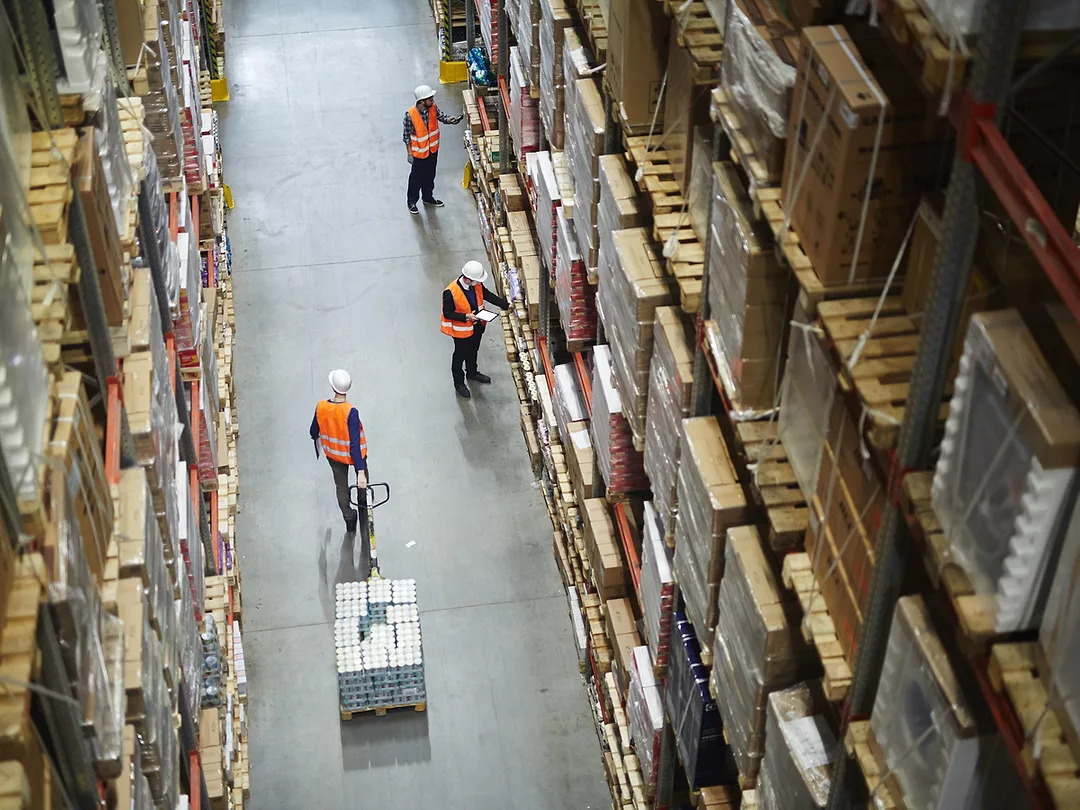
A short drive outside Los Angeles lies one of the world’s biggest warehouse complexes. Gene Seroka says its 1.8 billion square feet of capacity — enough room to house 9 million cars — is “bursting at the seams.”

The warehouse district is part of the Inland Empire, serving the port of Long Beach and the twin port of Los Angeles, where Seroka is executive director. Together they handle almost half of American’s maritime trade with China. If you live in the U.S., especially the western half, your toothbrush, television or shoes may well have passed through the Empire.

Bloated storage facilities are a consequence of President Donald Trump’s trade war with China and an illustration of how it’s throwing supply lines into disarray, forcing business to improvise. But as the tariffs keep mounting, they’re running out of solutions to avoid them.

Imports have been piling up there over the past year or so — offering a kind of safety valve for the more than 200,000 U.S. businesses, from Home Depot to Walmart, that use the California ports.

They could rush goods through customs anytime Trump threatened new charges on imports, saving millions of dollars in some cases. Then they could keep the stuff in the Empire until delivery time, sometimes for weeks or months longer than normal.

Now, Seroka says that spare room is down to an unprecedentedly low level of about 1 to 2 percent. Try to squeeze in more stuff, in other words, and it’ll be impossible to drive forklifts around or even walk the aisles.

Sept. 1 Deadline

So companies won’t be able to repeat this cost-saving strategy when the next tariff deadline arrives. And Trump just said it’s less than a month away, on Sept. 1. He tweeted last week that the U.S. will start charging 10 percent on about $300bn of Chinese imports that have escaped tariffs so far. The U.S. on Monday formally labeled China a currency manipulator in a rapid escalation of the trade war.

For importers, “the ability to front-load, as they did last year, to a large extent is taken off the table,” said Jock O’Connell, an international trade adviser at Beacon Economics.

It’s not just near ports that storage space is strained, he said. “The surge in imports late last year, driven by anxieties over higher tariffs, coincided with the continued explosion of e-commerce in generating a largely unprecedented demand for warehouse space.”

That’s been a boon to owners of industrial real estate such as Prologis, one of the world’s biggest warehouse landlords and a major owner of space in the Inland Empire. Its shares have soared more than 35 percent this year.

Sellers have been amassing inventory — it rose at a 7.9-percent annual pace in June, the fastest for six years — and now face pressure to clear it. That’s creating some “head-scratching puzzles,” said O’Connell. He recalls visiting a store in Sacramento during a 95-degree heatwave, and finding winter jackets on prominent display.

The congestion may intensify, as new China tariffs coincide with back-to-school shopping — and, if Trump escalates them as he’s threatened to do, potentially the holiday season.

The California ports themselves aren’t handling as much shipping as they did last year, when imports surged to a record in the rush to beat tariffs.

But the pressure on storage space means the system is getting gummed up in other ways, Seroka said. Shipping lines are stuck with empty containers waiting for cargo to export back to Asia, and wait times are long for containers to reach railways and trucks from the shore.

“We’re running pretty fluid now, but it’s not economically fluid,” he said.

While the crammed warehouse reflects short-term strategies adopted by U.S. importers, the ports’ shipping logs reflect what may turn out to be more important long-run effects of Trump’s crackdown.

For example, the drop in arrivals this year reflects a sharp slowdown in China trade — but traffic with other Asian nations, especially Vietnam, is rising, a trend that pre-dates Trump but may accelerate on his watch.

“Last year, it was like ‘Oh my gosh, the tariff is going to hit at the end of the year, let’s get it in,’” said Jason Tolliver, head of Americas logistics and industrial research at Cushman & Wakefield.

Now, he said, companies are asking: “Do we want to manufacture in China, or somewhere else in Southeast Asia?”

    RELATED CONTENT

    RELATED VIDEOS

    Inventory Planning/ Optimization Global Supply Chain Management Global Trade & Economics All Warehouse Services Order Management & Fulfillment Retail
    KEYWORDS Global Trade & Economics Inventory Planning/ Optimization order fulfillment Retail
    • Related Directories

      Tecsys, Inc.

    Bloomberg

    Chery Eyes Canada Production as Chinese Carmakers Circle U.S.

    More from this author

    Subscribe to our Daily Newsletter!

    Timely, incisive articles delivered directly to your inbox.

    Featured Product

    Popular Stories

    • A cartoon illustration of a man sitting at a desk in front of a laptop, surrounded by five faceless humanoid robots

      The Productivity Story Everyone is Missing

      Technology
    • Planet earth from space showing realistic earth surface and world map as in outer space point of view

      Beyond Traditional Trade Agreements: A Proposal for Creating ‘Rules of Resilience’

      Global Supply Chain Management
    • A red and black container ship in open ocean

      Hormuz Attacks Against Commercial Shipping Reach Record Highs

      Global Gateways
    • An overhead view of a collection of multicolored lithium-ion batteries

      Building a Resilient U.S. Battery Supply Chain

      Green Energy
    • A blue container ship stacked with multi-colored containers sinking into an ocean of red tape that reads "tariffs"

      From Russian Oil to U.S. Supply Chains: The Hidden Risk of Secondary Tariffs

      Regulation & Compliance

    Digital Edition

    Scb q3 26 cover

    100 Great Supply Chain Partners 2026: The Secret to Supply Chain Success

    VIEW THE LATEST ISSUE

    Case Studies

    • Recycled Tagging Fasteners: Small Changes Make a Big Impact

    • A GRAPHIC SHOWING MULTIPLE FORMS OF SHIPPING, WITH A HUMAN STANDING AT THE CENTER, TOUCHING A SYMBOLIC MAP OF THE WORLD

      Enhancing High-Value Electronics Shipment Security with Tive's Real-Time Tracking

    • A GRAPHIC OF INTERLACING HONEYCOMBED ELEMENTS REPRESENTING GLOBAL BUSINESS TRANSACTIONS

      Moving Robots Site-to-Site

    • JLL Finds Perfect Warehouse Location, Leading to $15M Grant for Startup

    • Robots Speed Fulfillment to Help Apparel Company Scale for Growth

    Visit Our Sponsors

    4flow Amazon Freight Anaplan
    Arkieva AutoStore Blue Yonder
    Canadian National Railway Company Carton Cloud CoEnterprise
    Dassault Descartes Dexory
    Duravant E2Open EPG
    General Logistics Systems GEP Hy-Tek
    iGPS Knapp Korber
    Lyngsoe Odyssey Logistics OMP
    PeakAI Procurability Quinyx
    SAP Sikick Staples
    S&P Global Mobility Systech TADA
    Tive TransImpact US Bank
    Werner WSI
    • More From SCB
      • Featured Content
      • Video Library
      • Think Tank Blog
      • SupplyChainBrain Podcast
      • Whitepapers
      • On-Demand Webinars
      • Upcoming Webinars
    • Digital Offerings
      • Digital Issue
      • Subscribe
      • Manage Email Preferences
      • Newsletters
    • Resources
      • Events Calendar
      • 2026 Event Coverage
      • SCB's Great Supply Chain Partners
      • Supplier Directory
      • Case Study Showcase
      • Supply Chain Innovation Awards
      • 100 Great Partners Form
    • SCB Corporate
      • Advertise on SCB.COM
      • About Us
      • Privacy Policy
      • Contact Us
      • Data Sharing Opt-Out

    All content copyright ©2026 Keller International Publishing Corp All rights reserved. No reproduction, transmission or display is permitted without the written permissions of Keller International Publishing Corp

    Design, CMS, Hosting & Web Development :: ePublishing