
The Trade War Spurs China’s Technology Innovators Into Overdrive
In Shenzhen’s glitzy financial district, a five-year-old outfit creates a 360-degree sports camera that goes on to win awards and draw comparisons to GoPro Inc. Elsewhere in the Pearl River Delta, a niche design house is competing with the world’s best headphone makers. And in the capital Beijing, a little-known startup becomes one of the biggest purveyors of smartwatches on the planet.
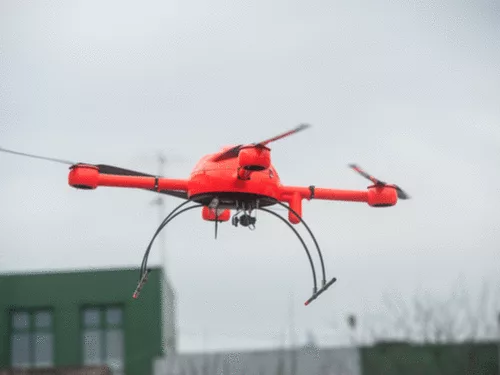
Insta360, SIVGA and Huami join drone maker DJI Technology Co. among a wave of startups that are dismantling the decades-old image of China as a clone factory — and adding to Washington’s concerns about its fast-ascending international rival. Within the world’s No. 2 economy, Trump’s campaign to contain China’s rise is in fact spurring its burgeoning tech sector to accelerate design and invention.
The threat they pose is one of unmatchable geography: by bringing design expertise and innovation to the place where devices are manufactured, these companies are able to develop products faster and more cheaply.
“Ninety percent of the world’s headphones are produced in China, 90% of China’s headphones are produced in Guangdong, and 90% of Guangdong’s headphones are made in Dongguan,” explains SIVGA co-founder and product chief Zhou Jian, an 18-year audio industry veteran who has done work for global brands like Sennheiser Electronic GmbH & Co., Sony and Bose. His company is based in Dongguan because, he says, “Dongguan’s industrial chain is near perfect.” Zhou estimates there are hundreds of specialist factories in the area focusing on a particular component, such as screws, and his network of contacts among those suppliers has been invaluable. It was “support from these good friends” that got SIVGA, short for Sound Impression Via Genuine Artwork, off the ground.
Now employing more than 30 people and offering a premium brand called Sendy Audio, SIVGA sells a luxury pair of $599 headphones called Aiva. Featuring handcrafted wooden ear cups and intricately detailed metal grilles, the Aiva have shipped more than 2,000 units into a niche, high-margin market that’s usually reserved for U.S. boutique outfits like Audeze and Campfire Audio. “As far as we know, we are the only company in Dongguan with a woodworking department,” Zhou says, while also pointing out that at SIVGA “the development time is short and many decisions can be made on the spot.” This instant design responsiveness is a signature feature of China’s new tech upstarts, and Zhou sums it up with an old Chinese proverb: “small boats change course easier than big boats.”
DJI is the pioneer that proved Chinese tech companies could aspire to be more than just manufacturing contractors or fast copiers. “DJI leads the industry with features like automatically avoiding obstacles in flight, which it implemented first,” notes Techsponential lead analyst Avi Greengart. “Rivals in the U.S., France and Taiwan have not been able to catch up.” DJI’s lead is based on the same geographic synergies as SIVGA’s. When a U.S. rival suffers a manufacturing hitch or defect, its ability to identify and react to the problem is hampered by the distance between its designers and manufacturers. DJI doesn’t have that problem, which has helped propel it to being the top drone maker in the world.
“These are Chinese companies that want to be industry leaders and innovators. DJI and Insta360 are perfect examples of that movement,” says Anshel Sag, mobile industry analyst for Moor Insights & Strategy. “A big part of it comes from the entrepreneurial spirit of Shenzhen.”
Like Dongguan, which this year saw a large new Huawei Technologies Co. campus open, Shenzhen is a nexus of component makers and suppliers eager to find new customers for their wares. The cacophonous Huaqiangbei bazaar in the city exhibits a wild array of gadgets from smartphone-electric shaver hybrids to neon-lit unicycles with Bluetooth speakers. That commoditized fray offers inspiration but also an impetus to rise above it with genuine innovation. The successful companies are the ones who make the most of the rabid production and iteration around them.
“In Shenzhen, there’s a well-established supply chain system,” says Insta360 founder Liu Jingkang. “From a research perspective, in-house R&D may only contribute 60% of a product, the rest needs to be finished in factories.” The CEO of OnePlus, another company based in the city, has expressed pride in its ability to prototype new devices at great speed because he’s just a 45-minute drive away from its assembly lines.
Even without being Apple Inc., Chinese companies are now building world-class, premium products, though China’s signature feature of undercutting the established market remains. Whether or not a Chinese company is first to a technology, it makes sure to be first to a breakthrough price.
Backed by Xiaomi Corp. in 2014, Huami is responsible for creating the massively popular Xiaomi Mi Band, which has flooded the China market at a $20 price. The Mi Band offers most of the features of a Fitbit fitness tracker — including step counting and heart-rate monitoring — at a fraction of the cost. After expanding to sales in the U.S. and launching its own Amazfit brand, Huami is now shipping in excess of 5 million devices per quarter, and its chief executive talks openly about “taking out” at least some of its larger rivals, including Apple and Samsung Electronics Co.
“The operating models for Garmin and other European and U.S. smart device vendors are flawed. Their retail price is very high,” Huami CEO and founder Wang Huang says. “You will only be able to sell very expensive products to a very small group of customers because mainstream and lower-end markets will be eroded by companies like us.”
Evidence for the Huami chief’s words abounds in the smartphone market, where the top group of manufacturers is increasingly dominated by Chinese names like Xiaomi, Oppo and Huawei. 2018 saw these brands make major inroads into the European market, relying on better pricing and faster feature introductions. Xiaomi “consistently produces budget flagship phones with first-to-market implementations,” says Techsponential’s Greengart. Along with SIVGA, Huami and Insta360, they’re following in the footsteps of companies like Lenovo Group Ltd., which was among China’s early breakout successes after buying IBM Corp.’s PC business in 2004. Their global ambitions and innovation pose a serious threat to the leadership of a plethora of U.S. tech products in areas from design to functionality, whether they be GoPro cameras, Apple iPhones or HP laptops.
China’s rapidly rising tech creators are not without commercial savvy. Many of them are planning to seek capital on Shanghai’s new trading venue for startups, locally known as the Star board. Ninebot Inc., the Xiaomi-backed outfit that acquired Segway in 2015, aims to raise $300 million there. In unicorn territory, the Google-backed Mobvoi, which creates natural language translation algorithms for its Wear OS smartwatches, is also said to be seeking a high-value listing on the Star market.
Royole, the startup that earned a measure of notoriety by beating Samsung to selling the world’s first foldable device in 2019, has managed to secure a deal with Louis Vuitton that will see the two companies putting flexible screens on handbags of the future. Like Huami initially leaning on the Xiaomi brand to build itself up, Royole stands a chance to be a luxury goods player with the help of a bigger company. The differences between California’s Silicon Valley startups, which have tended to do a better job of marketing and deal-making, and China’s new generation of homegrown businesses are gradually disappearing.
American critics, such as President Donald Trump, commonly point to a track record of Chinese companies copying features from abroad, and one of their bits of evidence is the way Apple’s iPhone software and design seem to be habitually recreated by Huawei, Xiaomi and others. There’s not much that a Western company can do in such situations. When Segway filed a complaint against a number of Chinese brands for IP violations, it ended up conceding the fight and getting acquired by one of its defendants.
The observable change now is that a new generation of innovative companies aren’t waiting for someone else to show them the blueprint. China’s rapid ascent in innovation goes beyond anecdotal evidence from startups like DJI and Huami, and the country’s corporations now rank among the world’s most prolific patent applicants.
“The trend of China moving to high-end manufacturing, research and design is unstoppable,” said Jia Mo, a Shanghai-based analyst with consultancy Canalys.
Popular Stories




100 Great Supply Chain Partners 2026: The Secret to Supply Chain Success
VIEW THE LATEST ISSUECase Studies


Visit Our Sponsors |
|
|
|
|
|
|
|
|
|
|
|
|
|
|
|
|
|
|
|
|
|
|
|
|
|
|
|
|
|
|
|
|
|
|
|
|
|
|
|
|
|
|
|
|
|
|
|
|
|
|
|