.webp?height=100&t=1782792122&width=150 "005_veteran_winemaker_gallo_embarks_on_an_ai_journey_v2-(540p).jpg")
Trump Is Investing Millions to Bring Drugmaking Back to the U.S.
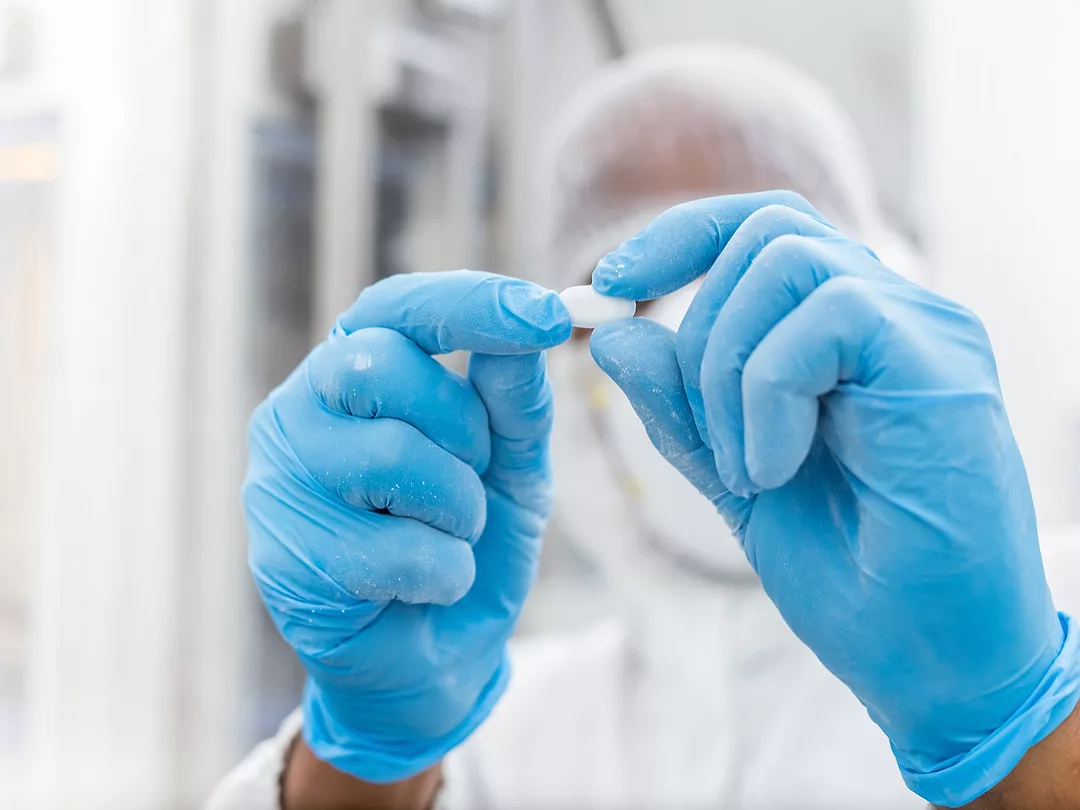
The Trump administration plans to pump millions of dollars into producing more medications in the U.S. as the coronavirus pandemic heightens longstanding concerns about the fragility of the global drug supply chain.
On Tuesday, the Biomedical Advanced Research and Development Authority awarded a $345 million contract to a group led by Virginia-based drug company Phlow Corp. to make medicines that have fallen into short supply. BARDA is an agency within the Department of Health and Human Services that’s responsible for developing medical countermeasures to emergencies.
About 80% of the active ingredients in medications taken in the U.S. come from overseas, mainly from India and China. A spike in demand for some drugs and supplies during the pandemic has increased concerns about shortages in the U.S. BARDA made streamlining drug and vaccine production to fight COVID-19 a priority in March, part of a wider effort to make it easier for companies to manufacture in the U.S. rather than in countries with lower labor costs.
“Working with the private sector, HHS is taking a significant step to rebuild our domestic ability to protect ourselves from health threats by utilizing American-made ingredients and creating new American jobs in the process,” HHS Secretary Alex Azar said in a statement Tuesday.
Before COVID-19 sickened millions worldwide and shut down much of the global economy, policy makers had already been concerned about China’s growing dominance of the pharmaceutical supply chain. A Pentagon official told a congressional U.S.-China advisory panel in August that the issue is a national-security risk.
Since then, the pandemic has highlighted how disruptions in trade can interrupt the U.S. drug supply. In the early stages of the outbreak, China’s ability to manufacture drugs was hobbled as it put far-reaching quarantines in place. India temporarily blocked the export of some medications to ensure its own citizens had enough.
BARDA officials say the agency plans to invest heavily in efforts that would bring more drug production back to the U.S.
“BARDA expects to make strategic and substantial investments in this area,” Gary Disbrow, the acting agency director, said in an email. Rick Bright, the agency’s former director, was recently re-assigned in what he has said was retaliation for criticizing the Trump administration’s handling of hydroxychloroquine.
Executive Order
The Trump administration has been mulling an executive order that would require certain essential drugs and medical treatments for a variety of conditions be made in the U.S. The generic-drug lobby has said such a move wouldn’t be feasible, saying in a letter to Trump in March that “a diverse pharmaceutical supply chain is precisely what enables the industry to respond quickly and make adjustments in its supply chain sourcing during natural emergencies and global public health crises.”
United States Pharmacopeia Chief Executive Officer Ron Piervincenzi, whose organization helps drugmakers meet quality standards, said in an interview that investments in continuous manufacturing would go a long way toward encouraging drug companies to invest in infrastructure in countries with higher quality standards.
“It can be done with one-tenth the number of people manufacturing,” he said. “This is good if a country has higher labor costs.”
The U.S.-China panel’s focus when it met in August was on recalls of millions of blood pressure pills that are widely used in the U.S. and made largely in China and India. The drugs had been contaminated with a probable carcinogen.
“We wouldn’t have our aircraft carriers and nuclear submarines built in China, and for very important medications, we really should look at what it takes to purchase based on value not just price,” Rosemary Gibson, who wrote a book titled “China Rx” about the global pharmaceutical supply chain, told the panel in August. “We want cheap, we can buy cheap. But what’s missing from the whole equation is quality.”
Gibson is on the board of Phlow, the Richmond, Virginia-based public-benefit company that was granted the BARDA contract to deliver 1.6 million doses of generic medications to the Strategic National Stockpile. The stockpile has been depleted during the COVID-19 response. The four year-contract could be extended to as many as 10 years and total as much as $812 million, according to a statement from HHS.
“The current pharmaceutical system is broken,” Phlow says on its website. “The production of active pharmaceutical ingredients (API) is currently centered in countries like China and India, where labor costs are relatively low. To overcome these challenges, we need a modern approach to pharmaceutical manufacturing.”
Continuous Manufacturing
Current drug manufacturing, particularly for generic-drug makers that don’t have as much money as brand-name companies to invest in updates, is a long process that requires a lot of equipment and manpower. The Food and Drug Administration has been trying to push drugmakers to move to a more flexible approach it calls “continuous manufacturing.” The process can be run on a much smaller scale, requiring fewer workers and less reliance on adding equipment to respond to market demands. It also decreases the potential for quality problems, according to the FDA.
In addition to Gibson, Phlow’s board also includes Martin Van Trieste, chief executive officer of Civica Rx, a nonprofit generic-drug manufacturer founded in 2018 by a group of large U.S. health systems. Civica Rx as well as Virginia Commonwealth University’s Medicines for All Institute; and AMPAC Fine Chemicals, will help Phlow fulfill the BARDA contract.
Phlow’s chief executive officer is Eric Edwards, who was co-founder of Kaleo Inc. Kaleo attracted criticism in 2018 for having increased the price of its opioid-overdose antidote 600%, costing the federal Medicare and Medicaid health programs $142 million from 2014 to 2017.
Kaleo and Phlow are both based in Richmond, Virginia, where BARDA’s contract will help Phlow build a new drug-manufacturing plant.
Popular Stories





SupplyChainBrain 2026 ESG Guide: ESG — The Supply Chain’s Biggest Secret
VIEW THE LATEST ISSUECase Studies


Visit Our Sponsors |
|
|
|
|
|
|
|
|
|
|
|
|
|
|
|
|
|
|
|
|
|
|
|
|
|
|
|
|
|
|
|
|
|
|
|
|
|
|