
Unlocking the Value of Real-Time Visibility at Every Operational Level
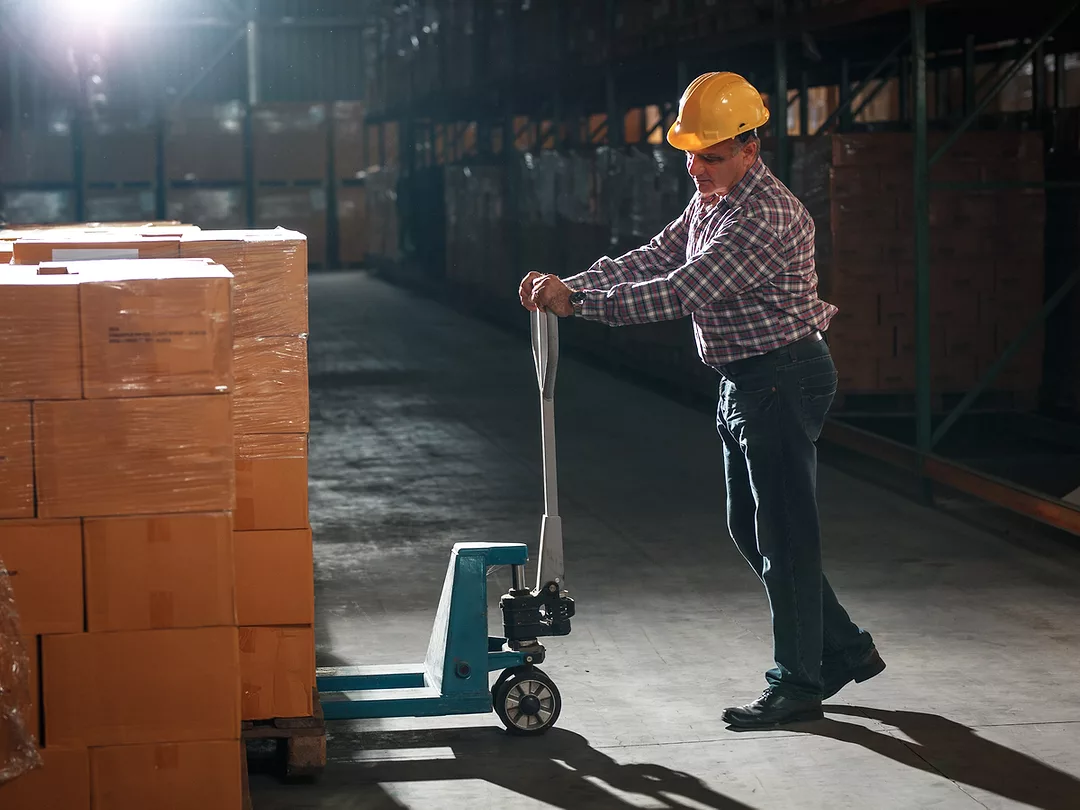
Over the last couple of years, the relationship between warehouses and end consumers has drastically changed due to the increase in online shopping. Goods need to get to their final destination faster than ever, and warehouses and distribution centers are often the last staging post for consumer goods before they are delivered. As a result, visibility into what’s going on inside the warehouse— where, when and how — is more critical than ever.
True visibility, however, goes far beyond understanding what’s coming in and out of the warehouse, and means different things to different levels of warehouse employees. Maximum visibility is achieved only when you take into account the needs of three levels of warehouse operations: executives who are making strategic decisions; managers who are keeping an eye on real-time workflow optimization; and team members on the floor in need of labor direction.
Data-driven decision-making at every level of the organization, in combination with an intelligent universe of operational excellence, widely increases operational flexibility and builds the resilience needed to protect against future disruptions. With labor shortages rife, and unpredictable peaks and troughs in demand, good visibility and the flexibility offered by autonomous mobile robots (AMRs), sourced on a robots-as-a-service (RaaS) model, can deliver a killer competitive edge.
Start at the Top
An RaaS approach allows executives to maintain the necessary operational capacity to ride the waves of volatile demand, reduce capital expenditure and keep labor levels and worker training times steady. “The labor crisis means that supply chain executives want a solution that they can rely on that reduces labor requirements, particularly at peak periods,” says Dan Coote, global product manager at Locus Robotics. “That solution might cost a bit more than manual picking or other functions, but what’s important is certainty. If you have an unreliable, unpredictable supply chain, that’s where we see heavy investment in automation.”
Coote points to the fact that some apparel companies, for example, make 60% of their annual revenue over a mere six-week period, making it impractical to hire and train workers to cover the spike, only to let them go shortly after. Further, buying AMRs to cover this seasonal spike means expensive assets are sitting idle for most of the year.
For warehouses and fulfillment centers, RaaS is a game-changer in a couple of ways. First, businesses can scale the solution; with the RaaS model, there’s no attrition related to labor. Once you have the robots for a period of time, you’re sure of them, whereas labor can ebb and flow. Secondly, robots gather rich troves of detailed data, available immediately for visibility. Once a business has set out its plan — using both real-time and historical data — they can see where they might be off-mission, hour by hour.
In comparison, manual systems tend to offer only historical data, making proactive, responsive management problematic. “With a manual system, it’s difficult to know why we aren’t performing,” says Coote. “Why aren’t we getting that volume out the door?” He compares it to the way we might be accustomed to tuning into a local radio station to get current traffic information, whereas now we can get alerts from Waze about an accident two miles ahead, and instead make an earlier turn. “It’s the same here,” he says. “If you see that you’re not performing at the right level in a particular area, you can immediately send in more bots or people into that area.”
Exciting Opportunities in the Warehouse
AMRs fundamentally change the level of engagement with minute-by-minute operations in a warehouse at every level. Mike Johnson, founder, president and chief operating officer of Locus Robotics, points to a DHL site in Memphis that’s deploying 450 robots. “They’re running around in this three-level site, and to me, the data becomes so key in that type of environment,” he says. “There’s so much going on. Bots are moving. People are moving. They have a command center there. For the first time, they can see what’s going on. It’s a bit like a NASA space command.”
With autonomous mobile robots, additionally, users not only know where all the robots are, they know where all the people are, even in a huge space. “The top-down executives and next-level-down directors and managers who are managing the building can see it all,” Johnson explains. “It’s actionable intelligence. You see a dashboard of where people are working and where there are density hotspots. You can see how well you’re managing across your whole building. To me, that’s really special.”
A Different Kind of Relationship
The autonomous mobile robot system also makes it easier for warehouse managers to manage their associates, says Coote. “You not only have more in-depth and more enjoyable conversations with your associates; you’re also grabbing real-time data that was difficult to get before. So operations managers on the floor can see each worker’s performance in real time. They can see if someone is struggling, and intervene and give them tips.”
The system also allows for a responsive and flexible strategy for labor deployment. “Managers can experiment,” says Coote. “Because they have so many data points, they can run something for a couple of weeks to see how it’s working out.”
With enormous pressures to operate efficiently, saving even 10 minutes of travel time per day can make a significant difference. That’s visibility at a granular level. “It’s tangible data you can take to the executive leadership to quantify the benefits of these solutions,” Coote says.
From the point of view of associates who work the warehouse floor, Coote and Johnson say, AMRs are good at simplifying tasks and getting people invested in the process. “With manual solutions, it can take a week to train someone, and by that time they’ve lost interest in that process,” says Coote. Training with AMRs can be more engaging, often through gamification. For example, U.K.-based retail pharmacy Boots runs competitions in its facilities with AMRs, where associates get points for picking fast and accurately.
Another big benefit, of course, is that AMRs literally do the heavy lifting. “Now, associates don’t have to push a heavy cart around,” says Coote. Associates also benefit from improved visibility. “The user interface shows you how you’re doing and how your input makes a difference. That then helps when it comes time for a review with a supervisor.”
Johnson says AMR solution adoption is growing, and not just because of the self-evident benefits. “In the last three or four years, the market has become so hot and there’s such a demand and labor pressure, it’s been quite easy to convince people to adopt these solutions,” he says. “One surprising thing is that it’s an easy discussion at all three levels, even with associates. People really love it, and the reason is they know the old method well — which is to push around a 300-pound cart, and operate a heavy device you have to hold or wear on your wrist. It’s physically demanding. You’re walking 15 miles a day.”
With an AMR helping out, most associates are typically walking two miles, and all tasks become easier. AMRs also provide a significant uptick in productivity. Pick rates can go from 50 units an hour to 130 units an hour, says Johnson. “People like being part of the record the warehouse just hit.”
The Future of Warehouse Visibility
With the ability of AMRs to gather enormous amounts of useful data, the role of visibility into warehouse operations will only increase in the future. “One of the things we’re trying to do is encourage more proactive management that doesn’t rely on Excel spreadsheets,” says Coote. An example is the use of a digital twin, which creates an exact electronic replica of the warehouse management scenario that can then be used to play out “what-if” scenarios before making actual changes. “You can have confidence in the benefits of proactively managing warehouse activities, and confidence that your actions are actually going to make a difference,” Coote says.
Among the biggest challenges remaining in the push to combine AMRs with humans for better visibility inside the warehouse is getting people to understand how to use the data to manage groups of people as well as robots. “Our solution is dependent on the success of the management team at the site doing a great job,” says Coote. “We’re reliant on customers and partners investing in good management to make it work in their sheds.”
Whatever the future holds, another important type of visibility is on the rise: public awareness of supply chain and distribution issues. “I think people are much more attuned to the supply chain because they see it on the news,” says Johnson. “When you order a product on the web, you have an expectation of how fast it will arrive. It feels like magic, but behind the scenes there are hardworking people in these facilities. It’s so great when you see the people in these warehouses who are working so hard to deliver for customers. They’re getting 100,000 products out per day, and that’s a big effort. The constant goal is to do this better and be more efficient. People understand this is what drives the world now.”
Popular Stories


.webp?height=100&t=1782273749&width=150 "037_a_roadmap_for_the_ai_journey_v1-(540p).png")

SupplyChainBrain 2026 ESG Guide: ESG — The Supply Chain’s Biggest Secret
VIEW THE LATEST ISSUECase Studies


Visit Our Sponsors |
|
|
| |
|
|
|
|
|
|
|
|
|
|
|
|
|
|
|
|
|
|
|
|
|
|
|
|
|
|
|
|