
Five Ways to Avoid, Absorb and Recover from Supply Chain Disruptions
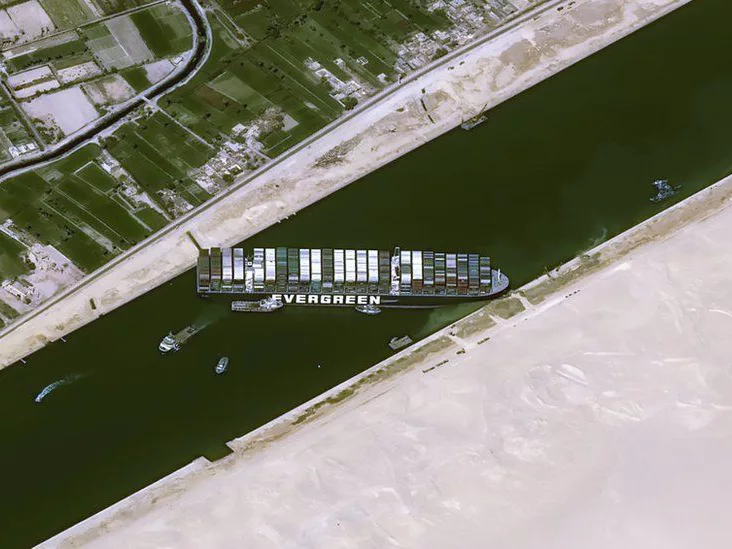
According to a January 2022 Gartner Supply Chain Executive Report, 68% of supply chain leaders have constantly been responding to disruptions since the beginning of 2019. It’s hardly news that we need to build greater resiliency into our supply chain management strategies.
But what is resiliency, exactly? Supply chain resiliency is the ability of an organization to avoid, absorb and recover from the business impact of disruptions through a risk-balanced approach to product, supply chain strategy and network design.
Consider the outdoor summer game Rock the Pool. The idea is for children to make enough cannonballs into a pool, in rapid succession, in order to get the water lapping over the edge of the pool. In this scenario, each child is creating what you might call a disruptive event. But it could be the smallest child that finally causes the water to go over the edge.
The same is true in supply chains. Of course, there are going to be more big and unpredictable events, and we must build resiliency for those. But a good organization builds resiliency for all disruptions.
Here are five ways you can increase resiliency in your supply chain.
1 |
Gain visibility of your multi-enterprise supply chain.
There’s no escaping it — you need visibility of your entire supply chain. And that potentially goes back five levels or more, deep into your supply network, then forward, perhaps four levels, into your distribution network. You need this depth and breadth of visibility in order to anticipate problems, deal with them proactively and perform course corrections. It shouldn’t be news to you that many disruptions occur at the level of a Tier 2 supplier or lower. If you have visibility, you get advance warning and can consider pivoting to an alternative, drawing on safety stock or some other timely solution.
Good visibility also gives you the ability to add machine learning capabilities to your supply side, in order to provide predictive analytics. With this form of artificial intelligence (AI), you can instantly see the impact from a single supplier or machine going down; it will tell you which orders are going to be late and even suggest a prescriptive action. It also helps you anticipate lead times with such accuracy that you can match the supply pipeline with orders and see where you’re going off track so you can course-correct sooner rather than later.
It’s tough to build a visibility ecosystem. You need data from all over – from supply chain data providers as well as all internal departments, including marketing and sales. You also need a detailed view of what’s going on with your trading partners, in order to gain real-time visibility.
2 |
Incorporate agility into your network design.
Many companies today go through a network design process that takes months, straining to incorporate multiple data points from a multitude of sources, and end up with a system that’s very rigid, making it impossible to plan and execute against disruptions.
Agility is an essential part of resiliency. Fast fashion, for example, is currently under intense consumer pressure to bring social responsibility into its sourcing strategies, and those companies can’t wait 18 months while they put the right model together. They need to quickly build multiple regional supply chains, which means going out and sourcing new suppliers on the fly. Companies also need to be able to respond quickly to changes in taxes, tariffs and trade rules such as embargoes.
When it comes to sourcing, most companies find that they can no longer be focused purely on what costs the least. Environmental, Social and Governance (ESG) consideration might be just nibbling at the edges for now but will become core objectives for most organizations in the not-too-distant future. Gaining agility in your network design process will allow you to continually balance these types of objectives with costs. In the future, expect to see the demise of companies spending a lot of time sourcing and onboarding suppliers. Instead, there will be an agile network design that comes already loaded with a pre-certified pool of suppliers that can be quickly onboarded.
3 |
Proactively perform risk assessments.
Don’t wait for a problem to find you. You need to actively anticipate the most disruptive things that could happen in the most vulnerable parts of your supply chain network. Do you have a single source for a critical raw material? Are a large number of suppliers in a flood-prone region? You should also be looking at nodes of high unpredictability, where you have a supplier with great quality, say, but unreliable output. And, of course, you need a clear-eyed assessment of whether any of your suppliers (or their suppliers) are using forced labor or are deploying environmentally damaging processes. It seems very likely that, in the not-too-distant future, a consumer will be able to pick up a garment in a store, scan a QR code and determine the total carbon footprint of that item.
You can’t predict everything, but you can look at a risk point and throw some scenarios at it. Part of this risk assessment involves calculating the total time you can survive before a problem becomes a disruption, and the total time to recover.
4 |
Build buffers into your inventory.
The supply chain management industry is currently having a profound debate about whether we’re shifting from a just-in-time to a just-in-case inventory management strategy. While your competitors are mulling this over, it’s a good time to look across your entire enterprise and determine, both holistically and by specific locations and product lines, where you should be placing inventory and how much.
Many companies make the mistake of performing this assessment by treating each node in the supply chain separately. It’s not enough to look at your four factories, three distribution centers and 10 suppliers and arrive at a determination of how much safety stock each one needs. You should be looking at your supply chain as a whole, taking into account variability in lead times and demand, so that you can determine within the network exactly where you should be storing safety stock and how much. This approach keeps you lean while helping you to withstand events before they become disruptive.
Another strategy to reduce the risk of holding excess inventory is to switch to a manufacturing postponement model. That way, when there’s a shift in demand, assembly can be adjusted.
5 |
Execute to plans that recognize variability.
Today, operational plans are created by deterministic values such as a single demand signal, or a fixed supply lead time or production rate. Inherently, we will fail to execute to that plan because it didn’t take multiple variabilities into account. Demand forecasts need to have a range between optimistic and pessimistic. It’s no use having a plan that a certain item is going to take five days to ship, when you already know that particular supplier takes between four and eight. That range needs to be reflected in the plan.
Run multiple scenarios, so that there’s confidence that the plan you produce has a good chance of meeting objectives — one that has an 80% chance of being met rather than a 35% chance. Artificial intelligence, especially the deployment of machine learning, has much to offer in this regard, and it needs to be applied across everything the supply chain touches.
Accuracy in planning is critical in building supply chain resiliency, and it builds confidence across your entire network that you know what you’re doing and can deliver on promises.
How Logility Helps Clients Build Supply Chain Resiliency
Based on a survey that we conducted recently, 88% of companies lack the tools to proactively map out a supply chain that is designed around resilience and managing risk, in order to sustain service levels and financial goals during disruptions. That’s where Logility comes in.
It is time to rethink supply chain processes that are currently failing to make the most of technological advances. There are too many patchwork supply chain management systems out there, with functions siloed and failing to feed one another. Logility offers a holistic, integrated, AI-powered digital platform that allows easy flow of critical data upstream from suppliers and downstream through distribution and delivery. We help our clients reimagine their supply chains as a single, continuous process.
The obstacles to adopting this transformational approach aren’t just technological or financial. There’s a lot of change management involved, too. We help you carve out the time and headspace to begin your journey toward supply chain resiliency. We can guide you through the short-term pain points and get you, quickly, to the long-term gain. And, as seasoned practitioners, we know that adopting any one of these five points will help build resiliency. You don’t have to eat the whole elephant at once. Put a stake in the ground, claim victory, then move on to the next.
Popular Stories





SupplyChainBrain 2026 ESG Guide: ESG — The Supply Chain’s Biggest Secret
VIEW THE LATEST ISSUECase Studies


Visit Our Sponsors |
|
|
| |
|
|
|
|
|
|
|
|
|
|
|
|
|
|
|
|
|
|
|
|
|
|
|
|
|
|
|
|