
SPECIAL REPORT
The Importance of Investing in Ports for the Future of the Supply Chain
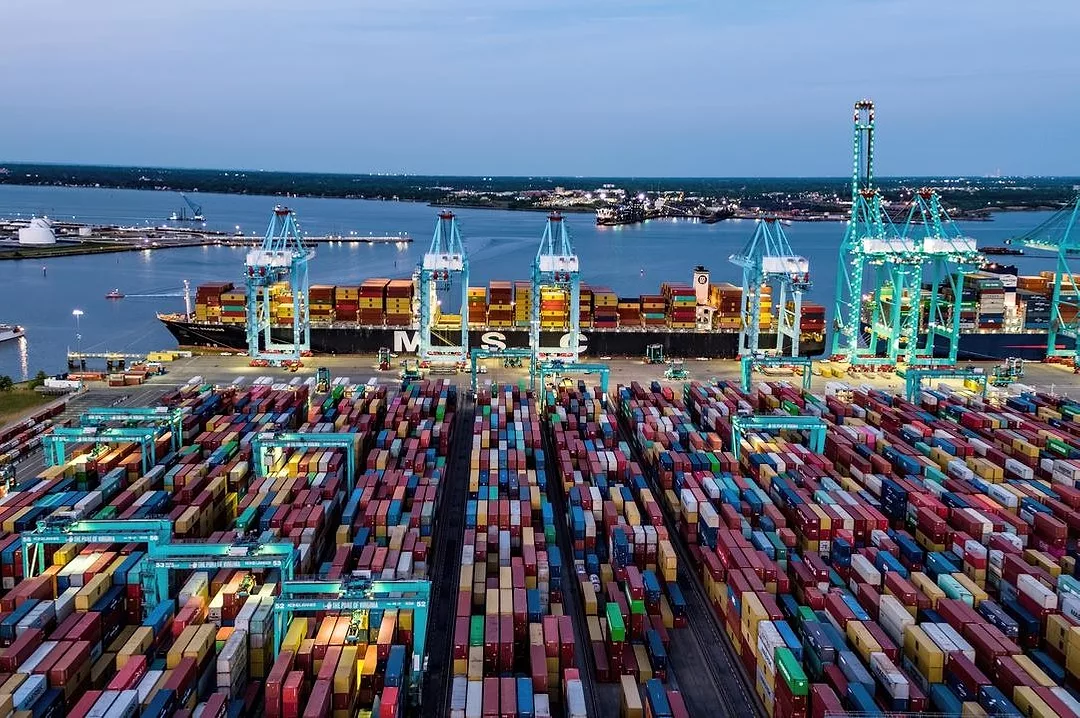
Photo: Port of Virginia
The nation’s economy depends on the reliable delivery of goods. But for shipments to arrive on time, seaports must process their containers timely and reliably. To do so, they must deal effectively with a dramatic surge of cargo from Ultra Large Container Vessels (ULCV). That requires investments in deeper channels, taller cranes, and more sophisticated support systems that allow for operation efficiency.
“Investments in ports are critical to maintaining and growing a healthy supply chain,” says Stephen A. Edwards, chief executive officer and executive director of the Virginia Port Authority. “Modern conveyance systems and infrastructure that can handle and process cargo swiftly and safely are absolutely critical to operational success.”
Here are five principles that are driving today’s seaport investments:
1. Ocean Cargo Efficiency
More containers than ever before are moving through the nation’s seaports. One reason is a rapid increase in global commercial activity. Another is the increasing size of containerships to ULCVs.
In order to efficiently process a rapidly growing cargo load, ports need to invest in the modernization of their operations.
“Ports must eliminate non-productive activity in which a crane is forced to move a number of containers out of the way to get to the cargo that is needed for a certain truck,” says Tom Capozzi, chief sales and marketing officer for The Port of Virginia, “and implement modern technology that grooms stacks overnight into patterns that coincide with the following morning’s truck reservation schedules.” New technology has resulted in industry-leading turn times that provide port customers with more reliable and faster delivery.
“Ports must efficiently manage the flow of trucks to avoid a ‘free for all’ in which drivers park their trucks all over the street overnight, and sleep in them to get an early start the next morning,” says Rich Ceci, senior vice president of technology and project management for The Port of Virginia. “The old way of doing business is a recipe for costly delays.”
2. East Coast Port Solutions
West Coast ports have long been the dominant gateway for America’s imports, thanks to the West Coast’s geographic proximity to Asia, the world’s leading manufacturing market. Times, however, are changing.
A number of market forces are contributing to a shift in trade. China’s manufactured goods are becoming more expensive because of wage escalation and import tariffs instituted by the U.S. Rising political tensions are increasing the risk of supply disruption, causing America’s businesses to look for alternative sources. “In recent months, many companies that had long sourced over 90% of their inbound freight from China have reduced that figure to 60%,” says Capozzi.
More imports are now coming from the Indian subcontinent and from countries such as Vietnam, Malaysia and Thailand. “The shortest route to the major U.S. population areas for goods from Southeast Asia is the Suez Canal,” says Capozzi. “And the closest U.S. ports to that canal are on the East Coast.” Ports from New York to Florida must meet the demands of burgeoning container traffic.
3. Alignment in Sustainability Efforts
“Ports want to be good environmental citizens and are developing plans to operate in a sustainable manner,” says Ceci. “We want to meet the decarbonization and zero-emissions objectives of our customers, vendors and the community.”
Green efforts are proceeding apace, with many ports aiming to achieve net-zero carbon status by 2035 or 2040. Ports are taking steps such as purchasing power from clean energy sources and acquiring all-electric versions of stacking and ship-to-shore cranes, as well as shuttle trucks that move containers around the terminals.
In many cases, ocean carriers are supporting the drive to a green future. “Ports that can undertake environmental efforts are more likely to gain customers,” says Ceci.
4. Accommodation of ULCVs
Ocean carriers are building ULCVs to reduce slot costs and create scalable economies, but these ships put enormous strain on ports. “Containers that used to come off several vessels are now, more often than not, coming off just one,” says Capozzi. “As a result, ports need to expand their capacity.”
Since the Suez Canal lacks the same ship-size restrictions as the Panama Canal, East Coast ports are getting more ULCVs than ever before. To service the larger vessels and handle increasing workloads, ports should be proactively purchasing bigger cranes, deepening and widening their channels, and creating diversified pathways for container movement.
To increase yard density, automated stacking cranes are replacing straddle carrier operations. These semi-automated, rail-mounted gantry cranes allow for efficient stack operation and overnight “stack grooming” that maintains exports to be positioned closer to the berth, and imports readied for pick-up by truck or moved to the rail ramp. All of these facility enhancements require supporting investments in rail capabilities, berths and truck gates.
5. Technology Integration
Many shippers require visibility of their cargo from the time it leaves a foreign country to the time it arrives at its final destination. This means real-time visibility on the cargo’s arrival at the port and when it departs the terminal, either by truck or rail.
Reliable logistical information depends on seaports with technological systems that move containers without delays. “When gateways are unable to efficiently process their containers, it becomes very difficult to get to the boxes customers need,” says Capozzi. “Things can quickly snowball, and terminals lock up.”
Integrated systems allow for denser yards, normal staffing requirements, and more efficient transactions. And expanding use of technology helps keep the workflow efficient and consistent while keeping labor costs in check. It all comes together to get cargo in and out of the yards faster, and provide the services shippers need to please their customers and maintain profitability.
“The end result of a thoroughly modernized port is a smooth, consistent and economical flow of goods to manufacturers, retailers and, ultimately, consumers,” says Edwards. “In the bigger picture, investments in ports are vital to the growth and health of the national economy.”
Resource Link:
Port of Virginia, www.portofvirginia.com
Popular Stories





SupplyChainBrain 2026 ESG Guide: ESG — The Supply Chain’s Biggest Secret
VIEW THE LATEST ISSUECase Studies


Visit Our Sponsors |
|
|
| |
|
|
|
|
|
|
|
|
|
|
|
|
|
|
|
|
|
|
|
|
|
|
|
|
|
|
|
|