
• Advertise
  • Contact Us
  • Supplier Directory
  • SCB YouTube
  • About Us
  • Login
  • Subscribe
  • Logout
  • My Profile
  • LOGISTICS
    • Air Cargo
    • All Logistics
    • Facility Location Planning
    • Freight Forwarding/Customs Brokerage
    • Global Gateways
    • Global Logistics
    • Last Mile Delivery
    • Logistics Outsourcing
    • LTL/Truckload Services
    • Ocean Transportation
    • Parcel & Express
    • Rail & Intermodal
    • Reverse Logistics
    • Service Parts Management
    • Transportation & Distribution
  • TECHNOLOGY
    • All Technology
    • Artificial Intelligence
    • Cloud & On-Demand Systems
    • Data Management (Big Data/IoT/Blockchain)
    • ERP & Enterprise Systems
    • Forecasting & Demand Planning
    • Global Trade Management
    • Inventory Planning/ Optimization
    • Product Lifecycle Management
    • Robotics
    • Sales & Operations Planning
    • SC Finance & Revenue Management
    • SC Planning & Optimization
    • Supply Chain Visibility
    • Transportation Management
  • GENERAL SCM
    • Business Strategy Alignment
    • Customer Relationship Management
    • Education & Professional Development
    • Global Supply Chain Management
    • Global Trade & Economics
    • Green Energy
    • HR & Labor Management
    • Quality & Metrics
    • Regulation & Compliance
    • Sourcing/Procurement/SRM
    • SC Security & Risk Mgmt
    • Supply Chains in Crisis
    • Sustainability & Corporate Social Responsibility
  • WAREHOUSING
    • All Warehouse Services
    • Conveyors & Sortation
    • Lift Trucks & AGVs
    • Order Management & Fulfillment
    • Packaging
    • RFID, Barcode, Mobility & Voice
    • Warehouse Automation
    • Warehouse Management Systems
  • INDUSTRIES
    • Aerospace & Defense
    • Apparel
    • Automotive
    • Chemicals & Energy
    • Consumer Packaged Goods
    • E-Commerce/Omni-Channel
    • Food & Beverage
    • Healthcare
    • High-Tech/Electronics
    • Industrial Manufacturing
    • Pharmaceutical/Biotech
    • Retail
  • THINK TANK
  • WEBINARS
    • On-Demand Webinars
    • Upcoming Webinars
    • Webinar Library
  • PODCASTS
  • WHITEPAPERS
  • VIDEOS
Home » How Military Service Benefits Private-Sector Supply Chain Management
SCB FEATURE

How Military Service Benefits Private-Sector Supply Chain Management
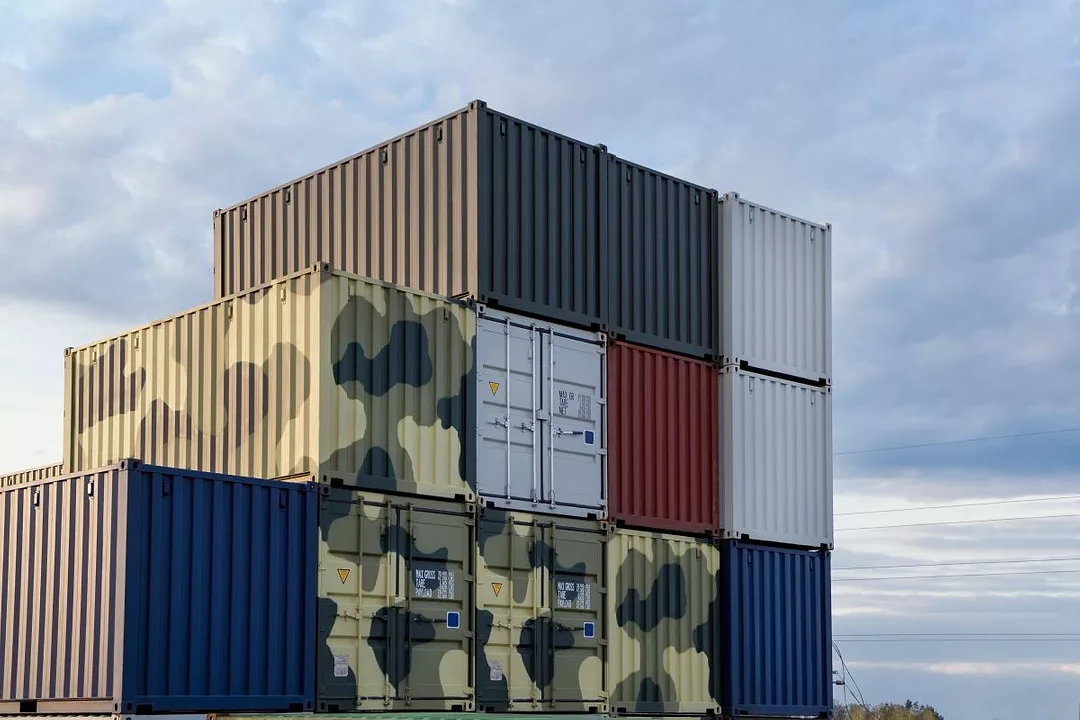
A STACK OF CONTAINERS CONTAINS FOUR PAINTED IN MILITARY CAMOUFLAGE

Photo: iStock/Roman Mykhalchuk

January 6, 2025
Robert J. Bowman, SupplyChainBrain

Many have drawn parallels between the skills required for managing a business supply chain and military operations. But Todd Skiles already knew that at the very beginning of his career.

The year was 1986. Skiles was commissioned into the U.S. Army directly out of college, where he earned a degree in pre-law government studies. But he had a couple of months before entering officer basic training, specializing in logistics. Informed by his father that “this was not vacation time,” he took a job as a rental manager with Ryder System, Inc.

Skiles ended up serving in the military for seven years, until 1993, during which time he rose to the rank of captain, and company commander in Operation Desert Storm. He remained in the Reserves and National Guard upon resuming his career with Ryder, where he took on a series of roles with increasing responsibility, ultimately becoming senior vice president of global sales and supply chain solutions.

For Skiles, transportation and logistics were “an area of interest from the start.” He says the training he received in the military ended up being directly applicable to his job at Ryder, especially when he moved into the supply chain and logistics side of the house.

The synergy worked both ways. At the time — the mid to late eighties — the activation of American soldiers into wartime service wasn’t a common occurrence. “Ryder was a good company,” Skiles says. “It was similar to what I experienced as company commander, not just as employees or soldiers but as people. My Ryder family kept me afloat in many ways.”

Professionally, the driving force of both worlds was a shared reliance on the art and science of logistics — an area that didn’t have as big a public profile in those pre-COVID-19 days. “It was an emerging field,” Skiles says, one that sought to apply military practices to the world of business to ensure the most efficient movement of product around the world. (The term “logistics” is, after all, military in origin.)

In the Persian Gulf, Skiles was responsible for supporting the 3rd Armored Division, including its redeployment to the U.S. upon conclusion of the war. The same skillset helped him during his time in the National Guard stateside, where his team would be activated four to five times a year in response to local weather emergencies such as floods and snowstorms.

“What I learned in the military, and what I had the opportunity to demonstrate in-country, set the tone for the next 20 to 30 years of my time at Ryder,” Skiles says. His soldiering skills provided hands-on experience in managing truck fleets and warehouses — “tangible things that I could take into my civilian career.”

There were numerous intangibles as well, including a strong work ethic and lessons in leadership that apply equally well to the military and private sector.

Over the years, Skiles has worked closely with other former military officers and enlisted individuals in various roles at Ryder, which brought some 16,000 veterans into the organization between 2011 and 2024. He believes that strong hiring record demonstrates the value of drawing on ex-military for key roles in logistics and the supply chain.

Some adjustment to life in the private sector is, of course, necessary. “As a generalization,” Skiles says, “businesses have to understand what it’s like to come out of a military career, for those looking to serve in a civilian role.” To help ease the transition, he adds, companies need to consider not just the needs of the former soldier, but their family as well.

Organizations exist to smooth the path, including the Veteran Employment Advisory Council, part of a “Hiring Our Heroes” effort launched by the U.S. Chamber of Commerce. There’s also the Advisory Committee on Veterans Employment, Training and Employer Outreach (ACVETEO), a program within the U.S. Department of Labor.

Hiring a vet is a good move for any business, but it makes particular sense in the realm of supply chain and logistics, where the skills overlap is notable. Skiles offers himself as proof.

“I love what I do,” he says. “I’ve been afforded opportunities that allowed me to grow, helped me mentor, and work with some really great people.”

    RELATED CONTENT

    RELATED VIDEOS

    Logistics Education & Professional Development HR & Labor Management
    • Related Articles

      Supply Chain Innovation Center to Develop Supply Chain Management Service Offerings

    • Related Directories

      ProcureAbility

    Robert J. Bowman, SupplyChainBrain

    Watch: A Roadmap for the AI Journey

    More from this author

    Subscribe to our Daily Newsletter!

    Timely, incisive articles delivered directly to your inbox.

    Featured Product

    Popular Stories

    • HANDS TYPE ON A KEYBOARD UNDER A SUPER IMPOSED DIGITIZED MAP OF THE WORLD, ALONG WITH IMAGES OF A SHIP, A SHOPPING CART AND OTHER SYMBOLS OF INTERNATIONAL LOGISTICS

      Five Demand-Forecasting Mistakes Supply Chain Leaders Are Rethinking

      Technology
    • TWO WORKERS IN HI-VIS VESTS AND HARDHATS CONSULT A BANK OF COMPUTER SCREENS

      How a Poor Hiring Process Leads to High Turnover in Supply Chain

      HR & Labor Management
    • The outside of Oracle Corporation's corporate headquarters located in Silicon Valley. Photo: iStock.com/Sundry Photography

      Oracle Cuts 21,000 Jobs, More to Come From AI

      Technology
    • 037_a_roadmap_for_the_ai_journey_v1-(540p).png

      Watch: A Roadmap for the AI Journey

      Artificial Intelligence
    • U.S. Treasury Secretary Scott Bessent in a navy blue suit, speaking into a microphone with one arm raised

      Bessent Calls for Overhaul of U.S. Supply Chains

      Global Supply Chain Management

    Digital Edition

    2026 esg cover main scb q2 2026 cover

    SupplyChainBrain 2026 ESG Guide: ESG — The Supply Chain’s Biggest Secret

    VIEW THE LATEST ISSUE

    Case Studies

    • Recycled Tagging Fasteners: Small Changes Make a Big Impact

    • A GRAPHIC SHOWING MULTIPLE FORMS OF SHIPPING, WITH A HUMAN STANDING AT THE CENTER, TOUCHING A SYMBOLIC MAP OF THE WORLD

      Enhancing High-Value Electronics Shipment Security with Tive's Real-Time Tracking

    • A GRAPHIC OF INTERLACING HONEYCOMBED ELEMENTS REPRESENTING GLOBAL BUSINESS TRANSACTIONS

      Moving Robots Site-to-Site

    • JLL Finds Perfect Warehouse Location, Leading to $15M Grant for Startup

    • Robots Speed Fulfillment to Help Apparel Company Scale for Growth

    Visit Our Sponsors

    4flow Arkieva Blue Yonder
    Carton Cloud CoEnterprise Dassault
    Duravant E2Open General Logistics Systems
    Hy-Tek iGPS Korber
    Lyngsoe Procurability Quinyx
    SAP Sikick Systech
    S&P Global Mobility TADA TransImpact
    US Bank Werner Enterprises WSI
    • More From SCB
      • Featured Content
      • Video Library
      • Think Tank Blog
      • SupplyChainBrain Podcast
      • Whitepapers
      • On-Demand Webinars
      • Upcoming Webinars
    • Digital Offerings
      • Digital Issue
      • Subscribe
      • Manage Email Preferences
      • Newsletters
    • Resources
      • Events Calendar
      • 2026 Event Coverage
      • SCB's Great Supply Chain Partners
      • Supplier Directory
      • Case Study Showcase
      • Supply Chain Innovation Awards
      • 100 Great Partners Form
    • SCB Corporate
      • Advertise on SCB.COM
      • About Us
      • Privacy Policy
      • Contact Us
      • Data Sharing Opt-Out

    All content copyright ©2026 Keller International Publishing Corp All rights reserved. No reproduction, transmission or display is permitted without the written permissions of Keller International Publishing Corp

    Design, CMS, Hosting & Web Development :: ePublishing