
BYD Shelves Plans to Build Major Mexico Car Plant Over Trump’s Trade War
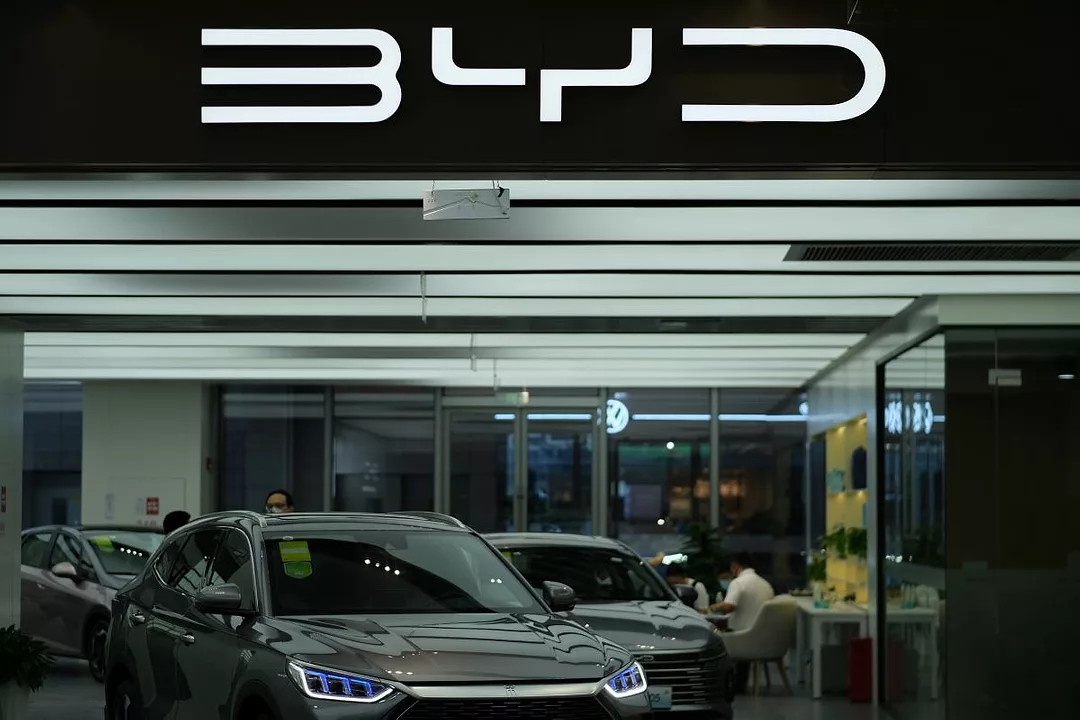
Fatal for the competition? Photo: iStock/Robert Way
China’s top electric vehicle maker, BYD Co., has shelved plans to build a major plant in Mexico over geopolitical tensions and uncertainty stemming from U.S. President Donald Trump’s trade policies.
The company remains interested in expanding in the Americas but has no timeline to make a new investment, BYD executive vice president Stella Li said in an interview July 1 in the Brazilian state of Bahia, where the company is opening its first factory outside Asia.
“Geopolitical issues have a big impact on the automotive industry,” Li said. “Now everybody is rethinking their strategy in other countries. We want to wait for more clarity before making our decision.”
BYD had been scouting three locations in Mexico for the new car plant before it stopped actively searching last year as it awaited the results of the U.S. presidential election, Bloomberg News reported in September.
Mexico President Claudia Sheinbaum in March said BYD hadn’t made a formal offer to invest in the country. China’s commerce ministry delayed approval of BYD’s Mexico plant over concerns that the company’s technology could be accessed by the U.S., the Financial Times reported in March.
That was before Trump announced sweeping tariffs on dozens of U.S. trading partners, and separate taxes on certain imported goods including autos, upending industry supply lines.
U.S. carmakers have warned that the tariffs will impose billions of dollars in additional costs. General Motors Co. last month said it would spend $4 billion, in a plan to shift production of several pickup and SUV models from factories in Mexico to the U.S.
The company still plans to expand its production footprint, but it’s unclear when that decision will be made, due to the uncertain global trade environment, Li said.
Brazil Factory
Li spoke on the sidelines of a ceremony to mark the opening of its plant in Brazil, the company’s first outside Asia. Brazilian labor prosecutors in May sued the Chinese automaker and two contractors over allegations of slave labor and human trafficking during the construction of the plant in Camaçari, in the state of Bahia.
BYD at the time reiterated its “non-negotiable commitment to human and labor rights” and said that it would adhere to Brazilian legislation and international labor protections.
Li said the episode has prompted the company to reassess its approach to international expansion by carrying out future projects more gradually, and with deeper local engagement.
“We should slow down, step back from the focus on speed. We need to work more with local companies,” she said. “It will take longer, but that’s OK.”
Once operational, BYD’s factory in Camaçari will be capable of producing 150,000 vehicles annually, with plans to expand capacity to 300,000 cars about two years later. The plant will perform final assembly of partially built vehicles that are shipped from China, with commercial production expected to begin in less than two months, Li said.
Li said the company already has plans to double the plant’s capacity again in the future, without providing additional details.
BYD has asked the Brazilian government to reduce import tariffs for 12 months on the vehicle kits that it plans to assemble during plant’s initial phase, said Alexandre Baldy, senior vice president of BYD Auto Brasil.
If the partially built cars BYD plans to complete in Brazil are taxed at the same rate as finished vehicle imports, “it makes no sense for you to import a semi-assembled car,” Baldy told reporters.
The Brazilian government has yet to take a position on the matter.
Popular Stories





SupplyChainBrain 2026 ESG Guide: ESG — The Supply Chain’s Biggest Secret
VIEW THE LATEST ISSUECase Studies


Visit Our Sponsors |
|
|
| |
|
|
|
|
|
|
|
|
|
|
|
|
|
|
|
|
|
|
|
|
|
|
|
|
|
|
|
|