.webp?height=100&t=1784121195&width=150 "018_what's_holding_back_ai_initiatives-_v1-(540p).png")
Nvidia, AMD to Pay 15% of China AI Chip Sales to U.S. in Deal
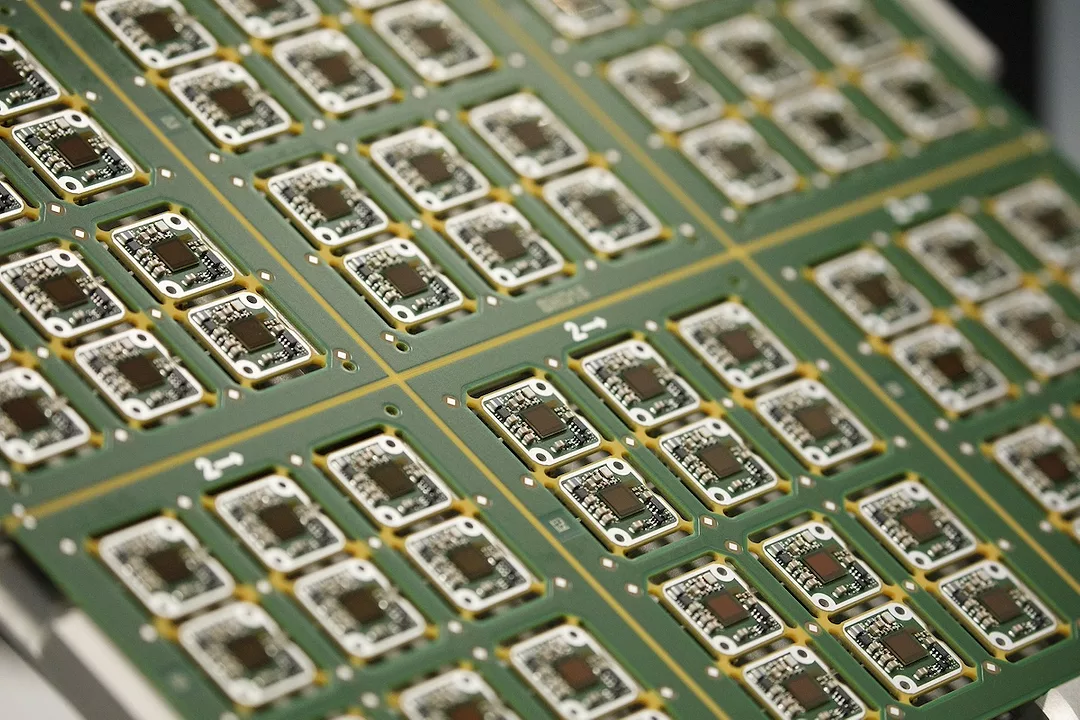
Nvidia Corp. and Advanced Micro Devices Inc. agreed to pay 15% of their revenues from Chinese AI chip sales to the U.S. government in a deal to secure export licenses, an unusual if not unprecedented arrangement that stands to unnerve U.S. companies and Beijing alike.
Nvidia plans to share 15% of the revenue from sales of its H20 AI accelerator in China, according to a person familiar with the matter. AMD will deliver the same share from MI308 revenues, the person said, asking not to be identified discussing internal deliberations.
The arrangement reflects U.S. President Donald Trump’s consistent effort to engineer a financial payout for America in return for concessions on trade. His administration has shown a willingness to relax trade conditions like tariffs in return for giant investment in the U.S. — as with Apple Inc.’s pledge to spend $600 billion on domestic manufacturing. But such a narrow, select export tax has little precedent in modern corporate history.
Beijing, which has grown increasingly hostile to the idea of Chinese firms deploying the H20, is unlikely to warm to the idea of a chip tax. Yuyuantantian, a social media account affiliated with state-run China Central Television that regularly signals Beijing’s thinking about trade, on August 10 slammed what it described as security vulnerabilities and inefficiencies of Nvidia’s chip.
AMD shares gained 2.6% to $177.33 in New York on August 11. Nvidia shares were up about 0.1%. “Both Nvidia and AMD already said they would start shipping to China, so that market reaction already happened,” said Jay Goldberg, an analyst at Seaport Global Securities. The big question is exactly when they’re going to start delivering to China again, especially now that there are strings attached, Goldberg said.
“This seeming quid pro quo is unprecedented from an export control perspective. The arrangement risks invalidating the national security rationale for U.S. export controls,” said Jacob Feldgoise, a researcher at the DC-based Center for Security and Emerging Technology.
When the Trump administration first decided to grant export licenses to Nvidia and AMD in July, Treasury Secretary Scott Bessent said exports of H20 chips were part of trade talks with China and were used as “a negotiating chip.” White House AI adviser David Sacks emphasized at the time that the product wasn’t “the latest and greatest.” And U.S. Commerce Secretary Howard Lutnick echoed Sacks, while adding that the U.S. wants to maintain China’s reliance on American technology.
Whatever the reasons, the revenue-sharing deal “will likely undermine the U.S.’ position when negotiating with allies to implement complementary controls,” Feldgoise said. “Allies may not believe U.S. policymakers if they are willing to trade away those same national security concerns for economic concessions — either from U.S. companies or foreign governments.”
An Nvidia spokesperson said the company follows U.S. export rules, adding that while it hasn’t shipped H20 chips to China for months, it hopes the rules will allow U.S. companies to compete in China. AMD similarly said in a statement August 11 that it’s adhering to all U.S. export control laws.
The U.S. government has meanwhile begun approving export licenses for the chips. AMD’s initial license applications have been cleared, the company said August 11. The Financial Times earlier reported on the revenue-sharing deal between the U.S. government and the chipmakers.
Trump has targeted chipmakers in the past week with a series of declarations that were light on specifics and rattled companies from Silicon Valley to Asia. On August 6, Trump threatened 100% tariffs on imported chips, unless companies also made investments on U.S. soil. On examination, though, those new tariffs would apply to almost no one since most major chipmakers appear to be covered by existing investments or separate trade deals.
On August 10, Trump called for the ouster of Intel Corp.’s chief executive officer Lip-Bu Tan, calling the Malaysian-born entrepreneur “highly conflicted” without giving details on what the potential conflicts were. Tan, who sent a letter to employees assuring them that he was engaging with the administration, is expected to meet with U.S. President Donald Trump on August 11. The Wall Street Journal was first to report on the meeting. Tan has been targeted by Republican Senator Tom Cotton over historical business ties to China.
Huang has lobbied long and hard for the lifting of restrictions, arguing that walling China off will only slow the spread of American technology and encourage local rivals such as Huawei Technologies Co.
“It’s a strategic bargaining chip” that tightens Washington’s grip on a critical tech sphere during trade negotiations with China, said Hebe Chen, an analyst with Vantage Markets in Melbourne. “Over time, this hurdle for chips entering China will likely deter Nvidia and AMD from deeper expansion in the world’s largest chip-importing market, while giving local Chinese producers a clear edge to capture market share and accelerate domestic semiconductor innovation.”
If Washington goes ahead with the tax, it should funnel some capital to the U.S. — but not an enormous amount in relative terms. Both Nvidia and AMD have said it’ll take time to ramp back up production of their China-specific products — even if order levels return to previous levels, which is uncertain.
Nvidia raked in $4.6 billion of revenue from the H20 in the fiscal quarter ended April 27 — days after new restrictions on shipping the AI accelerator to China were imposed.
It also said it had been unable to ship $2.5 billion of H20 China revenue in that period because of the new rules. That implies it would have got more than $7 billion in H20 sales to China during the period. If it can return to that level, the U.S. government will stand to get about a billion dollars a quarter from its deal.
AMD could generate $3 billion to $5 billion of 2025 revenue if restrictions were lifted, Morgan Stanley estimates. Chinese alternatives such as Huawei’s Ascend chips now account for 20% to 30% of domestic demand, it reckoned.
“The U.S. government clearly needs the money given its deficits and eagerness to collect tariffs,” said Vey-Sern Ling, managing director at Union Bancaire Privee in Singapore.
“But the complication is China’s accusations about H20 chips containing backdoors, which could be a negotiation tactic to highlight that the country is not ‘hard up’ for U.S. chips.”
Popular Stories





SupplyChainBrain 2026 ESG Guide: ESG — The Supply Chain’s Biggest Secret
VIEW THE LATEST ISSUECase Studies


Visit Our Sponsors |