
Beyond the Border: The Texas-Mexico trade transformation
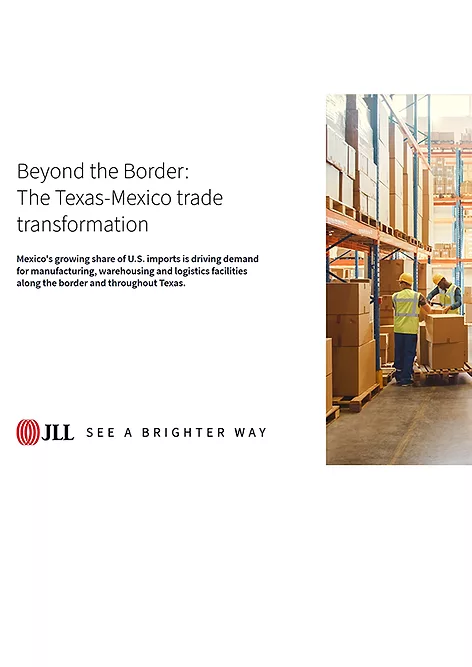
In a historic shift that's transforming continental commerce, Mexico surpassed China in 2023 to become America's largest import partner for the first time in two decades, with over $505.5 billion in trade value in 2024. This seismic change is driving unprecedented demand for industrial real estate along the Texas-Mexico border and throughout the Lone Star State.
The numbers tell a compelling story: Texas processes 67% of all U.S.-Mexico imports and 64% of exports, totaling $552.9 billion in goods traded annually. Border freight crossings have surged 89% since 2015, while industrial inventory has expanded dramatically across three key regions—Laredo, El Paso, and the Rio Grande Valley.
This transformation stems from converging forces: escalating China tariffs beginning in 2018, COVID-19-accelerated nearshoring strategies, and the modernized USMCA framework incentivizing regional manufacturing. Manufacturing leads cross-border trade, followed by automotive, with components crossing the border multiple times during assembly processes.
The infrastructure supporting this boom is equally impressive. Interstate 35 creates a 1,500-mile corridor from Laredo to near the Canadian border, while groundbreaking projects like the approved Green Corridor autonomous freight monorail between Laredo and Monterrey represent the next evolution in cross-border logistics.
Border markets offer compelling competitive advantages, like labor costs 16-19% below U.S. averages, younger demographics with median ages in the low 30s, and both lower cost of living and doing business than national averages.

Popular Stories





SupplyChainBrain 2026 ESG Guide: ESG — The Supply Chain’s Biggest Secret
VIEW THE LATEST ISSUECase Studies


Visit Our Sponsors |
|
|
| |
|
|
|
|
|
|
|
|
|
|
|
|
|
|
|
|
|
|
|
|
|
|
|
|
|
|
|
|