Korea Shipbuilding Buoyed by Australia Deal
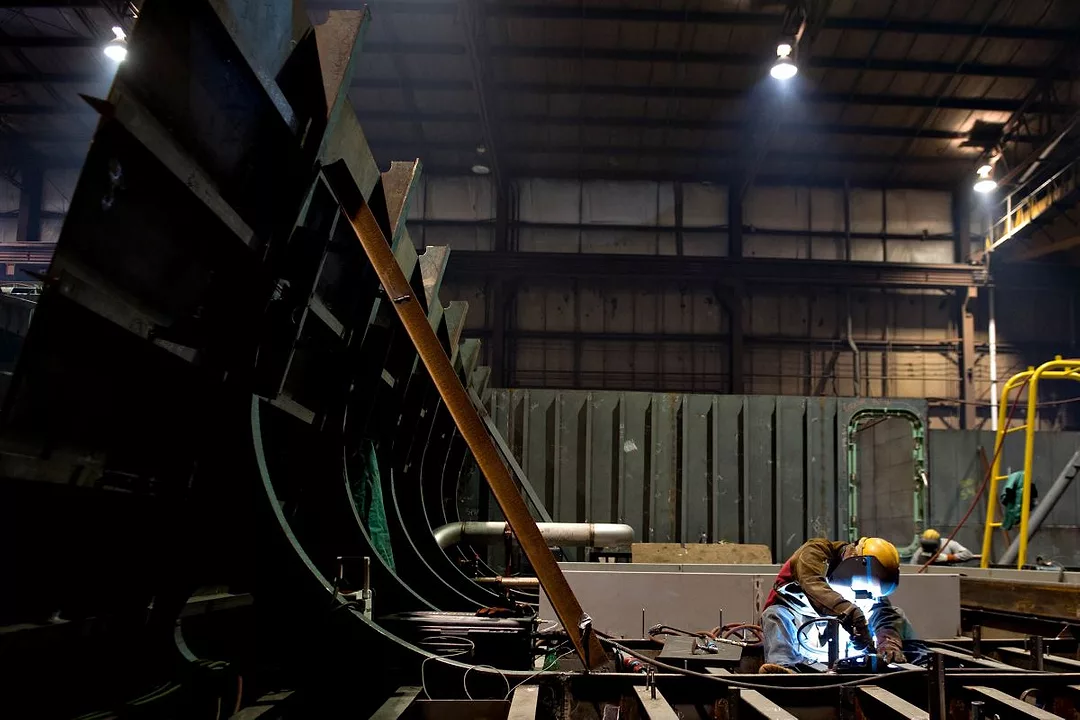
Photo: Bloomberg
South Korea’s global defense ambitions gained fresh momentum after Australia cleared Hanwha to double its stake in the nation’s largest shipbuilder, strengthening the conglomerate’s bid to capture rising global security spending.
Australia will allow a unit of South Korea’s top defense firm Hanwha Aerospace Co. to own 19.9% of shipbuilder Austal Ltd., Treasurer Jim Chalmers said after agreeing to a recommendation from the Foreign Investment Review Board.
“Hanwha would remain a minority shareholder under this proposal and cannot increase its shareholding above 19.9%,” Chalmers said in a statement on December 12. Prior to the decision Hanwha owned 9.9% of the firm, which is based in Henderson, Western Australia.
The approval hands Hanwha a major win, reinforcing its growing global role at a time when the U.S. is leaning more heavily on Seoul to strengthen its naval capabilities. In October, Washington and Seoul finalized a trade deal that includes $150 billion of shipbuilding cooperation as a key pillar of their investment program.
U.S. President Donald Trump’s shift in traditional security alliances and heightened global concern following Russia’s invasion of Ukraine have been driving a new commitment to defense spending across the Asia-Pacific region. That’s helping put a spotlight on Asian contractors that are able to deliver weapons faster and cheaper than their rivals.
The Australia-listed shipbuilder’s American operations could prove advantageous for Hanwha, as it tries to strengthen its strategic partnerships during the defense boom. Hanwha Ocean Co. acquired a Philadelphia shipyard in a $100 million takeover in 2024. Hanwha unsuccessfully tried to purchase Austal in the same year and then announced in March of this year that it had bought a 9.9% stake in the firm and wanted to raise that to 19.9%.
“We respect the Australian government’s decision and remain committed to working closely together to support a mutually beneficial future, including for our U.S. business,” Hanwha said in a statement on December 12.
Austal, Australia’s biggest shipbuilder, has substantial operations in the U.S. that sell ships to the Navy and Coast Guard. Its American unit is based in Mobile, Alabama, with service centers in San Diego and a technology center in Charlottesville, Virginia, according to the firm’s website. Almost 80% of its revenue is from the U.S., data compiled by Bloomberg shows.
Austal said it would closely review the opportunities and risks associated with the partnership and board position requests that Hanwha has previously said it would make once it receives approval.
“With the clarity provided by this decision, the board and management are firmly focused on delivering value for all Austal shareholders,” said chief executive officer Paddy Gregg.
Austal shares fell as much as 7.5% in Sydney trading on December 12. Hanwha Aerospace shares have rallied 183% this year and are among the top leaders on a Bloomberg gauge of global defense stocks.
Austal also builds vessels for the Royal Australian Navy, and would likely be heavily involved in both the construction of new frigates based off a Japanese design and also the construction of the ‘Aukus’ nuclear powered submarines.
Austal’s Gregg told local media in November that his firm was in talks with Japan’s Mitsubishi Heavy Industries Ltd and hoped to be able to collaborate on that project. Australia has selected Mitsubishi’s Mogami frigate for its navy, with eight of the ships planned to be built in Australia.
The decision by Chalmers comes despite opposition to the bid, with a local media report saying that the Japanese government was worried about the possibility of technology leakage.
After China, Korea and Japan are the world’s largest shipbuilding nations and their firms compete in many areas, including increasingly on naval ships. While they are both key U.S. security allies, their bilateral ties have had rocky periods in recent decades.
According to Chalmers, the decision ensures there are protections for Australia’s strategic shipbuilder and the government’s sovereign interests in Austal. If the proposal goes ahead, it would be subject to a number of strict conditions relating to governance including limits on Hanwha’s access to and the storage of sensitive information, he said.
Austal said that it has not yet been formally advised of these conditions or of the approval itself.
Popular Stories




100 Great Supply Chain Partners 2026: The Secret to Supply Chain Success
VIEW THE LATEST ISSUECase Studies


Visit Our Sponsors |
|
|
|
|
|
|
|
|
|
|
|
|
|
|
|
|
|
|
|
|
|
|
|
|
|
|
|
|
|
|
|
|
|
|
|
|
|
|
|
|
|
|
|
|
|
|
|
|
|
|
|