
Robots Evolve on the Modern Warehouse Floor
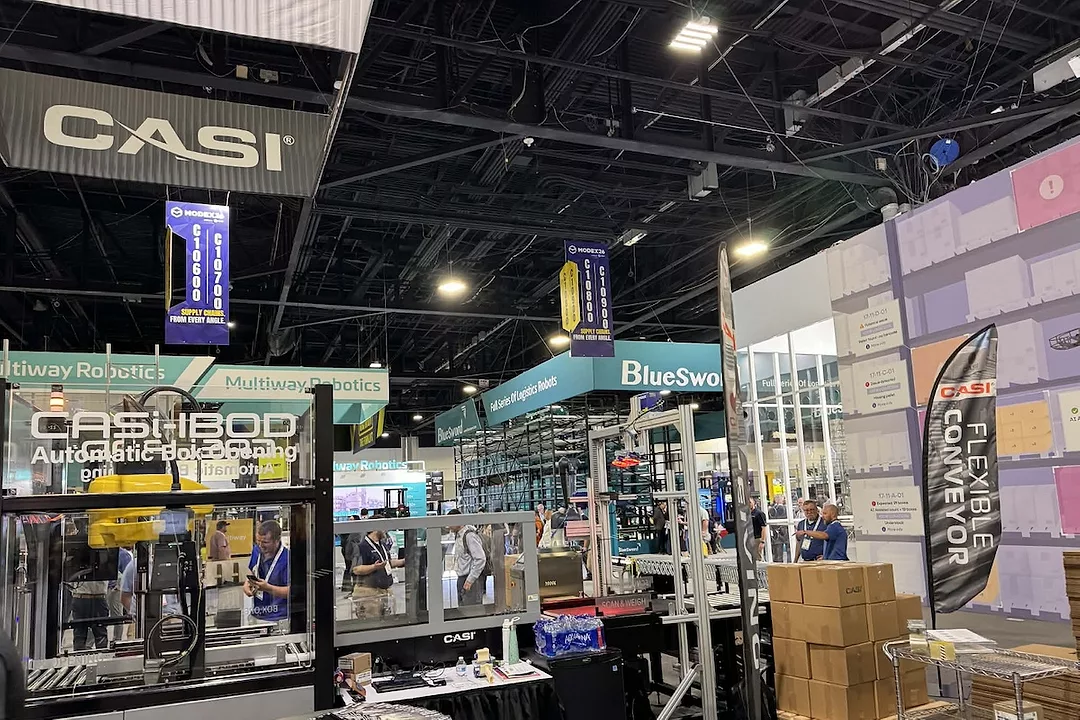
The convention floor at MODEX 2026. Photo: SCB File Photo
Although automation today is seen as ubiquitous within the warehouse environment, that hasn't always been the case.
"Eighteen years ago, to people on the floor it meant that jobs were getting replaced," said Chris Siebenmorgen, principal solutions partner with warehouse technology company Siggins, while speaking at MODEX 2026 in Atlanta, Georgia, on April 14. Now, he noted, the technology is widely used as a supplement to human labor, and in many cases, as a means to help prevent worker burnout.
Getting to that place has seen automation in the warehouse evolve well past its origins, with robots that can pick and sort individual items, autonomously navigate sprawling distribution centers, haul pallets, restock shelves, and even collaborate side by side with human workers on complex fulfillment tasks.
As the technology has evolved, so too has the need to ensure the safety of workers themselves.
"Fundamentally, we're looking to protect employees, inventory, and of course, operations," said Marc Rousseau, VP of national accounts with warehouse safety solution provider Damotech. That priority has especially become a focus as warehouses have grown larger, faster and more complex, with more robots, higher throughput, and more opportunities for something to go wrong.
With few signs of either the development of the technology or the pace of automation in warehouses slowing down, the pressure to strike the perfect balance has never been greater. And, as attendees at this year's show can only be too aware, safety has become one of the chief factors that determine how far and how fast warehouse automation can go.
Popular Stories





SupplyChainBrain 2026 ESG Guide: ESG — The Supply Chain’s Biggest Secret
VIEW THE LATEST ISSUECase Studies


Visit Our Sponsors |
|
|
| |
|
|
|
|
|
|
|
|
|
|
|
|
|
|
|
|
|
|
|
|
|
|
|
|
|
|
|
|