.webp?height=100&t=1783959879&width=150 "014_how_ai_is_transforming_the_transportation_back_office_v1-(540p).jpg")
Pricier Condoms Show War Is Impacting Cost of Nearly Everything
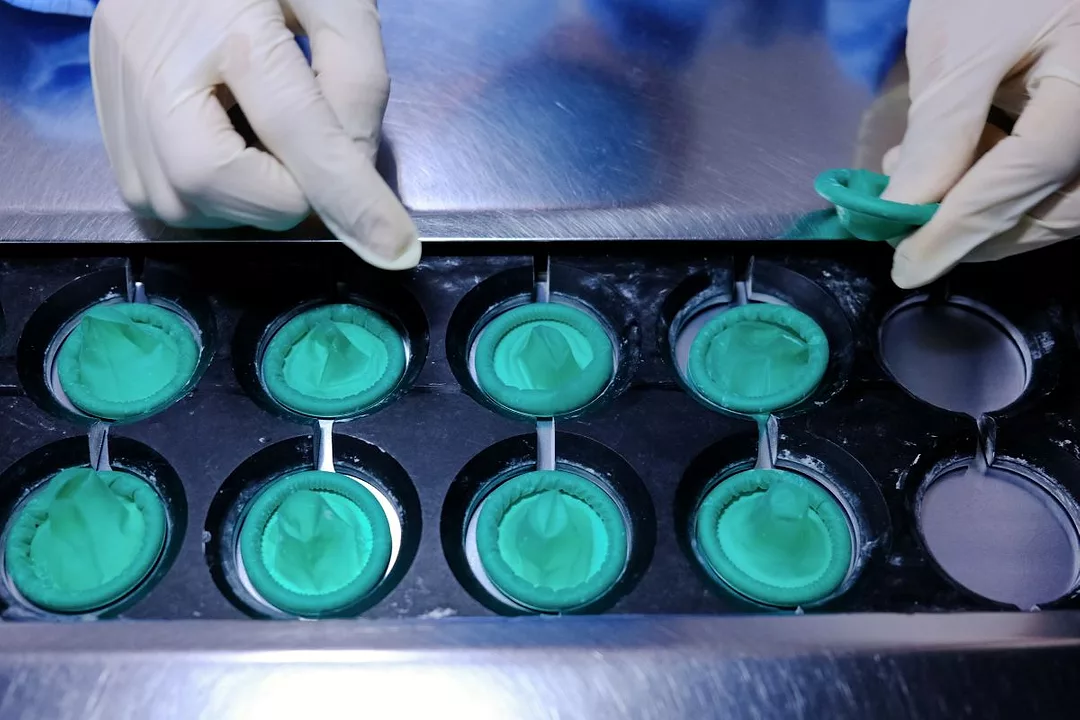
Condoms on the production line at a Karex Bhd. facility in Port Klang, Selangor, Malaysia. Photographer: Samsul Said/Bloomberg
The fallout across industries from the Iran war has now hit condoms.
Karex Bhd., which makes one out of every five condoms worldwide, is preparing to raise its prices by as much as 30% as the continuing conflict destabilizes supply chains and drives up expenses, Chief Executive Officer Goh Miah Kiat said in an interview with Bloomberg News.
The surge in condom costs underscores how the Middle East war, which has already upended energy markets and raised prices for food to fertilizers, is disrupting virtually every aspect of life for consumers.
The Malaysian company churns out about five billion condoms a year for brands such as Durex as well as its own labels, including ONE Condoms and Carex. It owns U.K.-based Pasante Healthcare Ltd., which supplies condoms to the U.K.’s National Health Service, and provides private-label products to retailers including Tesco Plc and Boots.
The condom price hike will take place within the next few months, Goh said. “We have been in the process of adjusting prices with most of our customers, and this is definitely one of the biggest price adjustments we’ve done in a very long time,” he said.
Production costs for the world’s largest condom maker have climbed by about 25% to 30% since the war started, as shortages of oil-derived chemicals and higher raw material prices rippled through the supply chain, Goh said. The disruptions are also pushing up the cost of condom wrappers and lubricants, he said.
Karex, whose product lineup includes glow-in-the dark and nasi lemak-flavored condoms, has enough raw materials to keep production running for the next two to three months, but beyond that the outlook is cloudy, as the continuing supply of key ingredients is uncertain if the war continues, Goh said. Shares traded in Kuala Lumpur surged 14% on April 22, the biggest intraday advance since October 2025, before paring gains.
Goh did not rule out further price increases. “We cannot confirm in the future there will be no longer any more pricing adjustment,” he said.
The company relies on a range of petrochemical-linked materials — such as ammonia used to preserve latex, ethanol for packaging and printing, and silicone oil to lubricate each condom, he said. Since the start of the war, the cost of silicone oil has jumped about 30%, and nitrile latex prices have doubled, while natural rubber prices have climbed by a third since January.
Finding substitutes isn’t straightforward given strict regulatory requirements for medical products such as condoms, Goh said.
Rival producers in regions such as India are grappling with even deeper supply-chain disruptions, Goh said. Furthermore, the pullback of USAID donor support for health agencies to buy condoms has meant organizations are turning to the commercial market, creating more buyers, he said.
For now, higher prices aren’t expected to dent demand because the market for condoms is virtually inflation-proof, Goh said.
“In bad times, the need to use condoms is even more because you’re uncertain with your future, whether you’d still have a job next year,” he said. “If you have a baby right now, you’ll have one more mouth to feed.”
Popular Stories

.webp?height=100&t=1784001702&width=150 "013_what's_really_needed_for_'lights-out'_capability_v1-(540p).png")


SupplyChainBrain 2026 ESG Guide: ESG — The Supply Chain’s Biggest Secret
VIEW THE LATEST ISSUECase Studies


Visit Our Sponsors |