
Oil Tanker Pricing Feud Embroils a Centuries-Old London Market

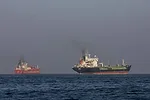
Photo: Bloomberg
A legal claim from one of the world’s largest oil traders is throwing a spotlight on an arcane but critical corner of global finance — the multibillion-dollar freight market and the 282-year-old City of London institution that sits at the heart of it.
Mercuria Energy Group Ltd. is suing the Baltic Exchange, Bloomberg reported on April 30, alleging that it has suffered losses in the hundreds of millions of dollars as a result of distortions in a key benchmark for the cost of shipping oil from the Middle East to China.
The case is the latest example of how oil traders and shippers are struggling to adjust to the disruption wrought by the near-closure of the Strait of Hormuz, with executives and lawyers already predicting a slew of legal disputes.
“It’s not just a case of the physical molecules getting held up. It’s about the cascading effect on the market at large. When that happens, there’s no surprise that we’re seeing derivatives disputes and cases against indexes,” said Sumeet Malhotra, who leads the commodities and international trade practice for law firm Watson Farley & Williams.
It’s also a fresh reminder of the key role that a small number of historic London entities play in setting prices critical to vast global industries — just a few years after a legal battle over the London Metal Exchange’s decision to cancel billions of dollars in nickel contracts in 2022. The Baltic Exchange, which traces its history back to 1744, is a central part of the global shipping industry as the venue where rates are set for the tankers and massive bulk carriers that handle the world’s commodity trade.
At the heart of the dispute is the rate for hiring a tanker to ship oil from the Middle East to China, which for years has been calculated based on the cost of shipping oil from Saudi Arabia’s Ras Tanura port. Crucially, it is located inside the Persian Gulf, and can only be accessed via the Strait of Hormuz.
Each day, shipbrokers convened by the Baltic Exchange submit their assessments of the price, which are used to create a rate known as TD3C. That rate is then used across the global oil industry as a benchmark to set the rate of tanker contracts, as well as to underpin a multibilllion-dollar derivatives market.
The Baltic Exchange, which is now owned by Singapore Exchange Ltd., stirred controversy in March when it told brokers that the TD3C rate should continue to be calculated based on the cost of shipping oil from Ras Tanura — even though shipments had all but ceased due to the war.
The TD3C rate soared as a result, rising to as much as $600,000 a day compared to more typical rates between $40,000 and $100,000.
For traders and shipowners who have contracts and derivatives positions linked to the index, it has caused turmoil. In one example, Norwegian shipping company Hunter Group ASA said last month that a customer had paid it $8.3 million less than it was due for ship charters during the month of March. The customer involved was Mercuria, and it was refusing to pay charter rates that were pegged to TD3C, according to a person familiar with the matter.
Spokespeople for the Baltic Exchange, Mercuria and Hunter Group declined to comment. Singapore Exchange denied the allegations that the Baltic Exchange hasn’t met its statutory and contractual obligations with regard to the benchmark in a statement on May 3.
“The Baltic produces its benchmarks in accordance with established and robust governance frameworks, methodologies and oversight processes,” it said. “SGX Group notes that the Baltic has issued a separate statement affirming its full confidence in its processes, its belief that the claim from Mercuria to be without merit, and that it will defend it to the fullest extent.”
Extreme Volatility
In its claim, Mercuria argues that the decision to keep the rate based on the cost of shipping through Hormuz has distorted the market.
Traffic through the strait has “essentially ceased,” and those shipments that do take place “require the payment of illegal tolls to sanctioned entities,” it says.
The Baltic Exchange’s decision has resulted in “ongoing extreme volatility in the pricing of TD3C, which no longer accurately or reliably represents the underlying market it is intended to measure, and ongoing distortion and disruption to the shipping and freight derivatives markets reliant on the TD3C index,” according to Mercuria.
Still, the trading house’s claim that the TD3C route is “incapable of lawful passage” stands in contrast to comments from its co-founder and chief executive officer Marco Dunand last week, when he told a conference that Mercuria had managed to move ships out of the Persian Gulf.
“There’s various ways to do it and I’d rather not comment on that,” he told the FT Commodities Global Summit in Lausanne.
In its claim, Mercuria argues that the Baltic Exchange should have either suspended the TD3C benchmark or used economically comparable routes that are still operating to determine it — for example, the rate for shipping from an Omani port outside the Gulf to China, or from West Africa to China.
The Baltic Exchange’s rules give it the power to change or suspend an index due to “a sudden change in circumstances or markets resulting in it being impossible to produce a viable Ocean Bulk benchmark.”
Still, when it consulted members last week on whether it should suspend the TD3C benchmark or add ports outside the Gulf in the event of an escalation or extension of the conflict, 55% of respondents opposed any changes.
“There was consistent feedback on maintaining continuity and stability, emphasizing that the existing benchmarks continue to be usable,” the Baltic Exchange said in a summary of the consultation. Some respondents argued that any changes would disadvantage anyone who had entered into trading positions based on the guidance the Baltic Exchange had given in March.
Hundreds of Millions
Mercuria is asking the High Court in London to force the Baltic Exchange to either suspend TD3C or to determine it based on other routes where trade has continued — including retrospectively “for the prior periods for which it has been improperly determined.”
It has not put a monetary value on its claim, asking only for “such further or other declaratory relief as the court considers appropriate.” But it says it and its affiliates have already incurred losses on physical and derivative freight contracts tied to TD3C that “are presently estimated to be in the hundreds of millions of US dollars,” and that it is exposed to potential “very significant future losses.”
The case “raises significant issues of importance to market participants in the shipping, derivatives and commodities markets,” Mercuria says, arguing that financial instruments that reference the TD3C benchmark are worth billions of dollars.
The case is unlikely to be the last dispute caused by the disruptions to commodity trade through the Strait of Hormuz. The cancellation of nickel trades by the LME spurred a wave of lawsuits from furious investors, with the exchange ultimately succeeding in its argument that its rules gave it wide discretion to make decisions about the market in a crisis.
“We’ve been approached by a number of clients complaining of indices failing to reflect what the underlying market was,” said Malhotra of WFW. “We’ve seen this in the past, when indexes haven’t reacted fast enough to abrupt market conditions. It happened in 2008 and we also saw this more recently when nickel prices spiked and the LME froze trading.”
Popular Stories




SupplyChainBrain 2026 ESG Guide: ESG — The Supply Chain’s Biggest Secret
VIEW THE LATEST ISSUECase Studies


Visit Our Sponsors |
|
|
|
|
|
|
|
|
|
|
|
|
|
|
|
|
|
|
|
|
|
|
| |
|
|
|
|
|
|
|
|
|
|
|
|
|
|
|