.webp?height=100&t=1783959879&width=150 "014_how_ai_is_transforming_the_transportation_back_office_v1-(540p).jpg")
Germany, Canada to Sign Major LNG Deal as Europe Seeks Energy Security
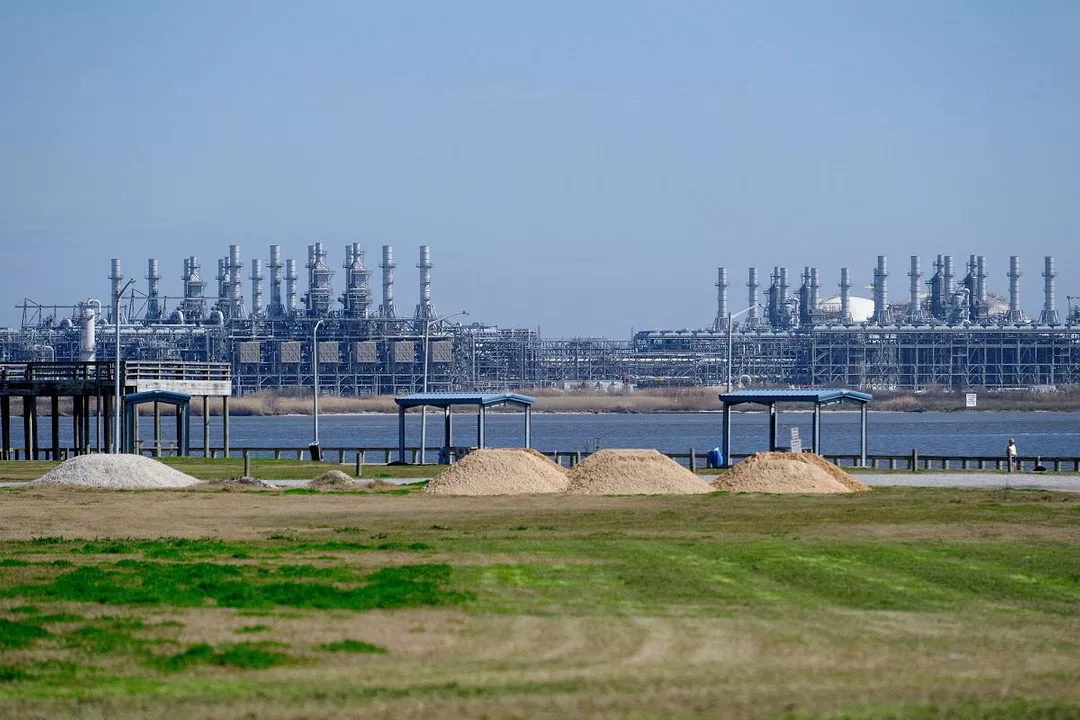
Liquefied natural gas (LNG) export terminal in Cameron, Louisiana. Photographer: Callaghan O'Hare/Bloomberg
Canada has reached a deal to supply Germany with liquefied natural gas from a planned facility on the west coast, a boost for Prime Minister Mark Carney, who wants to double the country’s exports to non-U.S. markets.
The gas would come from the Ksi Lisims LNG project, a proposed C$10 billion ($7.2 billion) export plant in northwestern British Columbia, near the Alaska panhandle.
Under the terms, Germany will agree to buy as much as 1 million metric tons a year of LNG from Canada. While those volumes represent only about 1% of Germany’s natural gas imports last year, it’s a significant step in how Europe’s largest economy manages its energy needs.
The deal will be announced May 27 by Canadian Energy Minister Tim Hodgson, according to people familiar with the matter, speaking on condition they not be identified because the matter is still private.
Recent high-level visits between Canada and Germany have accelerated as both countries look for broader realignments in the Trump era. The two sides have deepened cooperation on critical minerals, energy and defense.
The LNG deal is a step forward for the leaders of both countries, who have talked about energy deals but have been hamstrung by Canada’s failure to build the necessary infrastructure. Canada has enormous natural gas reserves, especially in the western provinces, but sends most of its production to the U.S. through pipelines. The country didn’t have an LNG export facility on the west coast until about a year ago, with the startup of the first phase of LNG Canada, which is backed by Shell Plc and other energy companies.
Germany, as Europe’s largest economy and its industrial powerhouse, has been buffeted by a series of energy crises — first with Russia’s assault on Ukraine and more recently by the war in the Middle East. The buyer of the gas would be SEFE, according to the people. SEFE is a former Gazprom PJSC unit nationalized by the German government after the invasion of Ukraine.
The super-chilled fuel currently accounts for about 13% of total gas imports into Germany, with roughly 94% sourced from the U.S., causing officials to push the state-owned companies to diversify their portfolios. Chancellor Friedrich Merz had set his sights on the Middle East earlier this year, before the Iran war laid bare the fragility of those flows.
Earlier this year, SEFE signed an 8-year LNG sales and purchase agreement with Argentina’s Southern Energy and also announced a tender for 10-year shipments, while Uniper signed agreements in India.
The agreement “is a powerful and very positive symbol of German diversification away from Russia, and potentially from the U.S.,” Susanne Nies, senior energy researcher at think tank Helmholtz-Zentrum Berlin, said in an email.
The group behind Ksi Lisims hasn’t yet reached a final investment decision to start construction. But the project has already received regulatory approval, and its investors want to build a facility capable of producing 12 million metric tons a year of LNG.
Ksi Lisims LNG is backed by Blackstone Inc.-funded Western LNG, as well as Rockies LNG Partners and the Nisga’a Nation, an Indigenous group that owns the development land.
Officials with SEFE, Western LNG and the Canadian government declined to comment. Representatives for Rockies LNG Partners and the Nisga’a Nation didn’t respond to requests for comment. Germany’s Economy Ministry didn’t comment on the deal when contacted over the phone and by email.
Hodgson, speaking in a recent interview with Bloomberg News, said European nations are actively looking for a reliable supply of gas to replace flows from Russia and the Middle East, which have been disrupted by war.
Asked whether west coast LNG could be shipped from Canada to Europe through the Panama Canal, Hodgson said there are multiple options.
“Some ships will go through Panama, some will go around, some they’ll just trade” to other buyers, in return for LNG cargoes that are closer to Europe, he said.
European countries don’t want to become overly reliant on American gas, the minister said — partly because of trade tensions with the Trump administration but also because they want the security that comes with having a range of suppliers.
“We can be that alternative,” Hodgson said. “We can be that reliable supplier who will not use energy for coercion.” That could eventually take the form of LNG being shipped via Canada’s east coast or through Hudson Bay in the north, but in the near term, “we have huge increases in supply coming off the west coast, which are music to their ears.”
Ultimately, it makes sense for Canada and Europe to become closer energy partners at a time when global superpowers are looking to use trade as a tool of geopolitical coercion, Hodgson said.
“They’re looking around and saying, how do we create energy security?” he said. “Where can we find a supplier who shares our values? And they look around and they don’t see a lot of choices.”
Speaking at a news conference on May 26, British Columbia Premier David Eby said the deal “is about how we can work together to deepen those trading relationships around the world — in this case with Germany. And it really reflects what is possible when we work together and the role that British Columbia is going to play in building this economy.”
Popular Stories


.webp?height=100&t=1784001702&width=150 "013_what's_really_needed_for_'lights-out'_capability_v1-(540p).png")

SupplyChainBrain 2026 ESG Guide: ESG — The Supply Chain’s Biggest Secret
VIEW THE LATEST ISSUECase Studies


Visit Our Sponsors |