The Supply Chain Is Full, But You Can Gain Capacity Without Adding Cost

If you build it, the trucks will come...or will they? The delivery, or execution, part of the supply chain is becoming more of a challenge for manufacturers and distributors who face the complexity of balancing customer demand with optimum inventory levels and delivery patterns.
Just-in-time delivery, auto-replenishment and other supply chain strategies were created to reduce inventories, while improving customer response and on-time delivery rates. JIT depends upon logistics that include transportation, warehousing and strategies for handling potential supply chain uncertainties. Given today's capacity issues and growing transportation challenges, are these kinds of initiatives still achievable?
AMR estimates that lead-time variability has increased between 25 and 75 percent, making it more difficult to plan ahead. In fact, shippers relying on JIT distribution are starting to allocate inventory based upon criticality, value, and risk of disruption-and to stockpile inventory to ensure the ability to meet demand.
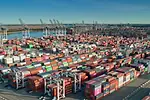
Yet consumer demand continues to rise and supply is having a hard time keeping up. The Morgan Stanley index shows the ratio of truckload demand versus supply to be 10:1, double the ratio of 2003. Import is at an all-time high and key ports have a significant backup of ships. Unfortunately, due to the driver shortage there are not enough trucks to haul the freight out.
Gone are the days when capacity seemed infinite-when shippers were in control, drivers were plentiful, and vigorous competition worked to keep freight rates down. In the early 2000s, as fuel and insurance costs continued to rise, fuel surcharges became commonplace and only larger carriers could tender bids without imposing surcharges. Thousands of small and mid-sized carriers went out of business as a result. Today, fuel surcharges are the norm.
With increased demand, the driver shortage is at an all-time high, largely due to low wages, stress, poor quality of life and the new Hours-of-Service (HOS) mandate. According to the American Transportation Authority (ATA), the current driver shortage is 20,000 and driver turnover rate is at 120 percent. ATA expects the shortage to reach 111,000 by 2014. According to the U.S. Department of Transportation, about 21 percent of drivers are scheduled to retire over the next decade, which will also reduce the already dwindling driver pool.
The convergence of fuel price volatility, increasing rates, truck labor shortages, hours-of-service constraints, tight capacity and increased security concerns is having a major impact on even the best-planned transportation strategies. Control has shifted from shippers to carriers, who are now trying to keep a lid on capacity and raising rates in the face of rising costs for virtually everything used to haul freight-fuel, drivers, equipment and highway infrastructure.
Instead of battling over the lowest rate bids, more carriers are now choosing their freight and preferred lanes and 8 to 12 percent of shipments being tendered to primary carriers are being turned down daily. In response, shippers are taking steps to make their freight more appealing by reducing driver wait time, paying higher rates and shifting more freight to dedicated lanes.
Industry analysts are encouraging shippers to collaborate with their transportation partners and share early forecasts in exchange for guaranteed capacity. These programs can be costly for shippers since carriers may be required to turn down other profitable business during capacity surges. As a result, some carriers are charging as much as twice their normal rates for this guarantee and catering to larger shippers, making it much more difficult for smaller shippers to find the capacity they need at a price they can afford.
How can shippers and carriers deal with these challenges in the near term to ensure long-term success and profitability? One solution is Yield Management (YM), a strategy designed to get more efficiency out of existing assets without incurring additional expense. By employing the following guidelines, companies can begin to implement YM to increase capacity and improve profitability without increasing overall costs.
Re-Evaluate Overall Transportation Strategies. Business logistics rose 2.9 percent to $936bn in 2003. Trucking, which represents more than 50 percent of total logistics costs, rose by $20bn to $482bn (intercity and local). Meanwhile, shippers are moving 5 to 15 percent more product per year and business inventories are up over 5 percent. It's time for companies to re-evaluate their transportation strategy and apply "smart" technology to increase profitability, ensure on-time deliveries and improve customer service levels.
Take Steps to Retain Good Drivers. Increasing driver pay and providing routes that permit drivers to lead higher quality lifestyles makes good business sense. Today's transportation technology allows companies to develop profitable route plans that consider driver lifestyles. Advanced applications can also help minimize the impact of HOS regulations, reduce idle times, and eliminate empty backhauls.
Focus on 'The Last Mile' of the Supply Chain. Successful execution of on-time delivery relies heavily on the critical "last mile" of the supply chain. In a recent eyefortransport study of Fortune 500 companies ("Views on the Supply Chain and Logistics Landscape for 2005/2006"), tight carrier capacity is ranked as the "biggest supply chain issue." An overwhelming 97 percent of respondents said that their companies are planning to deploy better technologies to address supply chain problems.
Transportation Execution
WMS and TMS solutions enable better supply chain management only up to the warehouse dock. Equally important is technology that takes supply chain execution through to the "last mile," providing total visibility and control of orders from the time they leave the shipping dock until they are delivered to customers. It is here that execution is the most vulnerable-where unpredictable conditions can mean the difference between on-time delivery and revenue for carriers and shippers, or delays, added costs and strained customer relations.
A new generation of technology-transportation execution-is available that extends current TMS capabilities and addresses the needs of the "last mile." An advanced transportation execution solution (TES) should include the following capabilities:
1. Optimization of Pre-Day Route Plans that:
• Increases on-time delivery and customer satisfaction
• Reduces unnecessary miles and idle times
• Maximizes vehicle and driver utilization to eliminate empty backhauls
• Leverages unique business rules and alerts you to potential and actual violations, then helps you adapt
• Incorporates optimization models that consider real-world events, route and driver behaviors.
2. Flexible Event Management: Typically only 40 to 60 percent of requirements are known at the time pre-day route plans are developed. Make sure the solution has the flexibility to adapt to real-world events that take place during execution. It should go beyond capturing real-time (e.g., current) location and delivery information and dynamically provide insights into the future. It should also be able to forecast the relative location and financial performance of your entire fleet for any moment into the future.
3. Broad and Deep Functionality:
• "Predictive" modeling to dynamically re-forecast the relative location of your fleet at any moment in the future.
• Ability to perform "what-if" scenarios to identify the current and future impact of possible business decisions before they are made.
• Real-time and predictive analytics, providing visibility into the past, current and future performance of your fleet, and on-the-fly cost revenue analysis.
• Transportation execution metrics that can be leveraged between shippers and carriers and integrated into over-all performance scorecard strategies.
4. Low-Risk, Rapid Implementation: Look for a low-risk solution that can be deployed quickly without disrupting current business processes, IT resources or infrastructure. Given today's advanced technologies, lengthy, costly implementations are unnecessary. Many industry analysts advise seeking out technology solutions that can be provided in a lower-cost "on-demand" model, which can be rapidly deployed in a hosted environment on a subscription basis.
Finally, look for a solution that:
• Will allow you to realize productivity gains quickly and provide rapid return on investment.
• Is intuitive, and easy for non-technical personnel to learn and use without excessive training.
• Is platform-independent and built on open architecture and industry standards, so it can be easily integrated into existing information systems (e.g., WMS, TMS) and communications protocols (e.g., wireless networks).
Clearly, the time has never been more urgent for shippers and carriers to collaborate for mutual benefit. With capacity so tight, demand increasing, driver shortages worsening and transportation costs soaring, control has shifted from shippers to carriers, who can now be selective in the freight they carry and can penalize shippers for long wait times, unattractive lanes and port congestion.
Many shippers have begun to collaborate with their carriers for guaranteed capacity regardless of the rate, and are taking steps to make their freight more desirable. At the same time they are monitoring the performance of carriers to ensure these partnerships are both reliable and cost-effective. Strategies such as yield management are also helping shippers and carriers to increase capacity and asset utilization without increasing overall costs. And the final critical step is to invest in technology that focuses on transportation execution geared towards increasing profitability, on-time delivery and high customer services levels, while increasing overall capacity.
Cheryl Sullivan is the director of marketing for Mobitrac Inc., a Chicago-based developer of transportation execution software. For more information, visit www.mobitrac.com.
Popular Stories




100 Great Supply Chain Partners 2026: The Secret to Supply Chain Success
VIEW THE LATEST ISSUECase Studies


Visit Our Sponsors |
|
|
|
|
|
|
|
|
|
|
|
|
|
|
|
|
|
|
|
|
|
|
|
|
|
|
|
|
|
|
|
|
|
|
|
|
|
|
|
|
|
|
|
|
|
|
|
|
|
|
|