I gave Amazon.com a key to go into my house and drop off packages when I'm not around. After two weeks, it turns out letting strangers in has been the least troubling part of the experience.
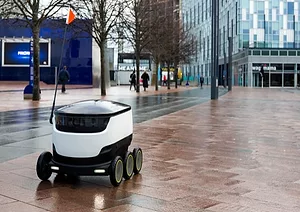
In something of a reversal for San Francisco, a city that has served as a petri dish for disruptive innovations in recent years, lawmakers last week passed strict regulations to reduce the number of delivery robots that technology startups have introduced to the city’s sidewalks.
At Deutsche Post-DHL’s 2017 "Innovation Day" at its Bonn, Germany, Innovation Center, the winners of a series of technology "challenges" introduced new products, including autonomous warehouse robots, an online platform for package drop-offs and an internet of things (IoT) approach to online shopping, among other new logistics offerings.
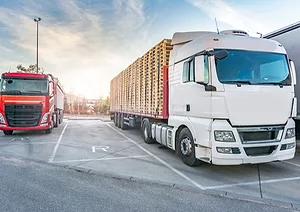
I’ve been driving big trucks since shortly after my 21st birthday in 1980 and I always figured I’d be able to stay on the road until retirement. Now I’m not so sure. Alphabet, Amazon, Apple, Daimler, Tesla, Uber, Ford and Toyota are all investing billions of dollars in driverless vehicles.
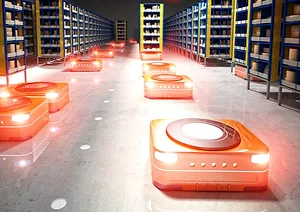
A few years ago, Amazon.com Inc. triggered a robot arms race when it purchased a company called Kiva Systems, maker of automated warehouse robots. Now its would-be rivals are landing bigger and bigger cash injections to try to compete with the e-commerce giant.
The singularly defining moment in Artificial Intelligence (AI) — even bigger than when IBM's Deep Blue beat chess master Garry Kasparov — happened back in in 2011 when the unbeatable Jeopardy! Champion Ken Jennings was finally taken down by IBM's new supercomputer, Watson.
Every retail company has to cope with the changes mandated by operating in an omnichannel world, and seasonality confronts every one of them with pressures they don't see the rest of the year. But for companies in the retail hardware space, e-commerce and seasonal business peaks carry their own special challenges.
The new purported norm created by Amazon's two-day shipping hits two key groups of stakeholders — consumers and supply chain service and equipment providers — differently. How the latter respond is critically important to business success.