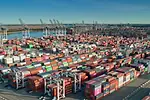
The Hong Kong Customs and Excise Department (C&ED) reports that RFID-based container locks can effectively improve the security, convenience and visibility of the customs process for cargo entering the airport.
In the last year the headlines have been full of news about global supply chains and the disasters affecting them. From the Thai floods to the Japanese tsunami, to the tornadoes in Wichita and the Nylon-12 plant explosion in Germany, several fundamental truths about global supply chains have been made more apparent.
"Where and how should the forecast organization report?" That's the number-one question that Lora Cecere, partner with the Altimeter Group, is asked as an analyst. Her answer: "It needs to report to an organization that's neutral."
What began as a trickle of stories about challenges to China's supposed economic dominance has become a steady flow. It began with revelations of working conditions at Chinese factories. Soon we were reading about rising wages in the industrial sector - great for Chinese workers, but sure to make the country a less attractive source of cheap manufacturing for the West. Then there was the recent slowdown in China's foreign direct investment, along with the nation's struggle to create an economy that's geared more toward domestic consumption in the service of a growing middle class. Meanwhile, serious questions persist about the stability of China's banking system. And just last week, we learned that China's trade surplus with the U.S. is rapidly shrinking, as the country wrestles with the consequences of a stronger yuan.
There are many opportunities for logistics providers to enter the refrigerated transportation market in Africa, but while the continent needs better perishable supply chain services and "farm-to-fork" integration, barriers remain high.
A "V"-shaped business cycle is one that is characterized by a large market contraction, followed by a sharp and equally large expansion. Indeed, some companies during the Great Recession saw double-digit sales declines followed by commensurate increases. "It almost feels like you're on a roller coaster," says Marianne K. Gatten, director of strategic planning and business development with Emerson. "You're taking that first hill, scared of what's going to happen next." Managing the sales and operations planning (S&OP) process in such an environment can be extremely difficult.