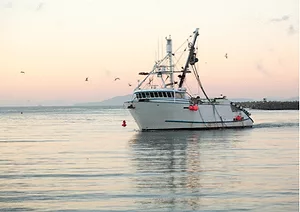
The United States Agency for International Development's Oceans and Fisheries Partnership (USAID Oceans) and Inmarsat have advanced communication technology to improve fisheries catch documentation and traceability.
Less than five years ago, the idea of a "cargo community" at an airport was little more than an attempt by various cargo executives to know all the names up and down the supply chain. What each member of the supply chain did, however, was largely a mystery.
The New York Institute of Technology (NYIT) is partnering with X-wave Innovations Inc. (XII), a research and development firm specializing in the defense, homeland security, transportation and energy fields, to develop an embedded sensor system for the National Aeronautics and Space Administration (NASA). The solution is capable of measuring the levels of temperature, pressure and strain on various rocket propulsion engine components.
In logistics, the best known blockchain pilot program involved Maersk and IBM. It centered on creating a digital distributed ledger to create a single electronic place where all the myriad documents related to a shipment could be housed.
A growing number of companies are paying to track in real time everything from truckloads of pork chops to shipping containers full of exercise equipment.
Emerging technologies on Gartner Inc.'s "Hype Cycle for Emerging Technologies 2017" reveal three megatrends that will enable businesses to survive and thrive in the digital economy over the next five to 10 years.
Even if the craze for Bitcoin and Ethereum abates, the power of the "blockchain" tech behind those currencies is very real. Here's how businesses are trying to harness it - and why they can't afford to ignore it.
It was the late 1990s, and entrepreneurs Steven Abramson and Sidney Rosenblatt were pitching an electronics giant on their new flat-screen technology. It didn't go well.
Wal-Mart and a group of food giants are teaming up with IBM to explore how to apply blockchain technology, also known as distributed ledger tech, to their food supply chains.
As populations grow and emerging markets industrialize, companies are facing a serious long-term challenge: how to meet surging consumer demand while minimizing environmental damage and sustaining the planet's natural resources.