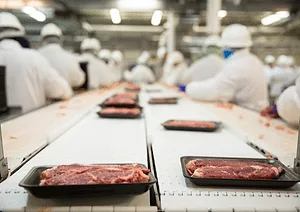
Nearly half of businesses operating in Britain's food supply chain say European Union workers are thinking about leaving because of uncertainty around Brexit, a recent industry survey showed.
If you ask the manufacturing and chemical sectors what their greatest blessing has been in recent years, the answer will generally be the plethora of natural gas that has been made accessible to them - and how this has decreased their cost of doing of business.
Hidden within the salt flats high in the Andes mountains of South America are vast deposits of the lithium that Elon Musk may need for his electric-car revolution. But extracting the mineral from brine ponds created by Orocobre Ltd. has proved more difficult than expected.
Bayer - already struggling with falling consumer health sales - is also contending with a recall. It has been retrieving more than a million cartons of its Alka-Seltzer Original.
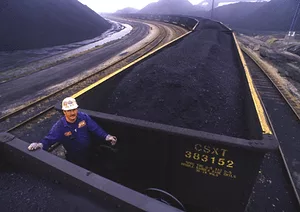
The freight-train ride from Chicago to Colesburg, Tenn., usually takes a few days. Earlier this month, though, the ride was 18 days, 13 hours and 57 minutes, logs show.
As populations grow and emerging markets industrialize, companies are facing a serious long-term challenge: how to meet surging consumer demand while minimizing environmental damage and sustaining the planet's natural resources.
Manufacturing workers are retiring in droves, with an estimated 2.7 million jobs being vacated by 2025. At the same time, the growth and advancement of the industry is expected to create an additional 700,000 jobs for skilled manufacturing employees over the next decade. As a result, manufacturers are scrambling to fill this knowledge and skills deficit with the next generation of workers - millennials.
A global shortage of hepatitis B vaccine has developed as both Merck & Co. and GlaxoSmithKline deal with manufacturing issues, leading health agencies in England to ration use to those most at risk.