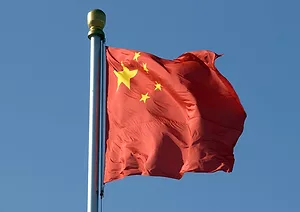
Chinese and Indian consumers are living well and eating well. And that could spark a global crisis. The consumer boom in China and India will touch off global inflation and could lead to food and water riots if investment, policy and technology don't keep pace.
Analyst Insight: After traveling around the globe for the last three years, talking about supply chain risk management, facilitating workshops, educating companies and developing a graduate level class covering the subject, I'm thoroughly convinced this new concept is becoming the new discipline of supply chain excellence. So much so that APICS, the premier society for Operations Management professionals, has developed a first-of-its-kind certificate in supply chain risk management to help identify, assess, mitigate and manage risk. - Gregory L. Schlegel, Adjunct Professor, Supply Chain Risk Management, Lehigh University, Graduate Program
Analyst Insight: Highly regulated industries"”such as pharmaceuticals, aerospace, food, and chemicals"”typically implement traceability and serialization capabilities to meet regulatory requirements, quality, and recall purposes. These same capabilities can be useful in reducing theft within the supply chain. But it takes more than just technology. It requires a community that can share that information effectively and collaborate with law enforcement at national, state and local levels. -- Bill McBeath, Chief Research Officer, ChainLink Research
Recent issues in the European food supply have resulted in supply chains making the news for all the wrong reasons. Consumers have been shocked at revelations that products labeled as beef also contained significant quantities of horsemeat, up to 100 percent in some cases. More than a month after the Food Safety Authority in Ireland published its findings of traces of horse DNA in burgers, we are still seeing daily announcements of new product withdrawals by retailers across Europe.
Federal contractors are going to be hearing the words "supply chain" a lot over the next 18 months. Having a certifiably secure supply chain will eliminate a potential mark against your selection as a source, just as having the appropriate contract vehicles eliminates friction.
According to a new survey of 600 executives from Deloitte "” "The Ripple Effect: How Manufacturing and Retail Executives View the Growing Challenge of Supply Chain Risk" "” global executives are increasingly concerned about the growing risks to their supply chains and costly negative impacts such as margin erosion and inability to keep up with demand.
American International Group (AIG) has introduced a new product under its NextGen Protection family to address requirements of transportation and logistics industry. Over £73 million has been awarded from Round 2 of the Advanced Manufacturing Supply Chain Initiative (AMSCI) to 12 national supply chain projects, and a further £140 million will be invested by business.
Analyst Insight: Software has become extremely effective in tracking and tracing the smallest detail. In actuality, enterprise software vendors have incorporated recall management and best practices into their software. Organizations often lack the necessary policies and procedures to facilitate reverse logistics processes, but software is not one of the deficiencies. -- Keean Persaud, Managing Director, Eval-Source
Analyst Insight: Supply chain has often been an afterthought for pharmaceutical manufacturers. The patent cliff, increasing reliance on generics, and price pressure from payers all create considerable margin pressures on pharma companies as well. This forces them to pay closer attention to operational efficiencies, including the supply chain. However, less noticed is the impact that evidence-based medicine and outcome-driven payment strategies have, compelling pharmaceutical manufacturers to more closely manage their entire end-to-end chain, especially on the downstream side. - Bill McBeath, Chief Research Officer, ChainLink Research