The widespread adoption of autonomous vehicles (AVs) could eliminate the more than 30,000 annual U.S. road fatalities, improve travel time by as much as 40 percent, recover up to 80 billion hours lost to commuting and congestion, and reduce fuel consumption by as much as 40 percent.
Speaking at this year's International Union of Marine Insurance conference in Berlin, Simon Williams, chairman of IUMI's offshore energy committee, reported continuous growth in the sector with 2015 capacity reaching around $7bn, although he cautioned that $5.5bn was more realistic.
From coal to cars to coffee, consumption levels are breaking records, and the acceleration of resource depletion, pollution and climate change may come with underappreciated social and environmental costs, according to the Worldwatch Institute.
Dana Martin, product manager of Elementum, offers an overview of risk management, and how far companies have come in integrating the discipline with their global supply chains.
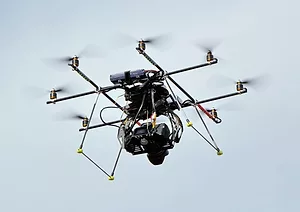
To inspect the blades of the more than 270,000 wind turbines operating globally, technicians have traditionally relied on binoculars and field scopes from the ground, or have scaled the turbines with the help of ropes or cables. Today, unmanned aerial vehicles are providing a safer option, with the benefit of higher-resolution imaging. Cumulative global revenue for wind turbine UAV sales and inspection services is expected to reach nearly $6bn by 2024, according to a Navigant Research report.
Large cargo losses are having a significant impact on the marine insurance sector, says Nick Derrick, chairman of International Union of Marine Insurance's cargo committee. He spoke in Berlin, at IUMI's annual conference.
While large businesses have resumed international trade at levels seen before the financial crisis, small and medium-sized enterprises (SMEs) have not fared as well. For these firms - the backbone of economies everywhere - growth is impeded by the limited availability of bank loans to finance trade.
Jim Preuninger, chief executive officer of Amber Road, outlines the challenges that companies face, when they seek to integrate product design with sourcing. Their success or failure promise to have a significant impact on the supply chain, he says.