• Advertise
  • Contact Us
  • Supplier Directory
  • SCB YouTube
  • About Us
  • Login
  • Subscribe
  • Logout
  • My Profile
  • LOGISTICS
    • Air Cargo
    • All Logistics
    • Facility Location Planning
    • Freight Forwarding/Customs Brokerage
    • Global Gateways
    • Global Logistics
    • Last Mile Delivery
    • Logistics Outsourcing
    • LTL/Truckload Services
    • Ocean Transportation
    • Parcel & Express
    • Rail & Intermodal
    • Reverse Logistics
    • Service Parts Management
    • Transportation & Distribution
  • TECHNOLOGY
    • All Technology
    • Artificial Intelligence
    • Cloud & On-Demand Systems
    • Data Management (Big Data/IoT/Blockchain)
    • ERP & Enterprise Systems
    • Forecasting & Demand Planning
    • Global Trade Management
    • Inventory Planning/ Optimization
    • Product Lifecycle Management
    • Robotics
    • Sales & Operations Planning
    • SC Finance & Revenue Management
    • SC Planning & Optimization
    • Supply Chain Visibility
    • Transportation Management
  • GENERAL SCM
    • Business Strategy Alignment
    • Customer Relationship Management
    • Education & Professional Development
    • Global Supply Chain Management
    • Global Trade & Economics
    • Green Energy
    • HR & Labor Management
    • Quality & Metrics
    • Regulation & Compliance
    • Sourcing/Procurement/SRM
    • SC Security & Risk Mgmt
    • Supply Chains in Crisis
    • Sustainability & Corporate Social Responsibility
  • WAREHOUSING
    • All Warehouse Services
    • Conveyors & Sortation
    • Lift Trucks & AGVs
    • Order Management & Fulfillment
    • Packaging
    • RFID, Barcode, Mobility & Voice
    • Warehouse Automation
    • Warehouse Management Systems
  • INDUSTRIES
    • Aerospace & Defense
    • Apparel
    • Automotive
    • Chemicals & Energy
    • Consumer Packaged Goods
    • E-Commerce/Omni-Channel
    • Food & Beverage
    • Healthcare
    • High-Tech/Electronics
    • Industrial Manufacturing
    • Pharmaceutical/Biotech
    • Retail
  • THINK TANK
  • WEBINARS
    • On-Demand Webinars
    • Upcoming Webinars
    • Webinar Library
  • PODCASTS
  • WHITEPAPERS
  • VIDEOS
Home » Blogs » Think Tank » Four Ways AMRs Help to Meet Consumer Demand

Think Tank
Think Tank RSS FeedRSS

Four Ways AMRs Help to Meet Consumer Demand

autonomous mobile robot
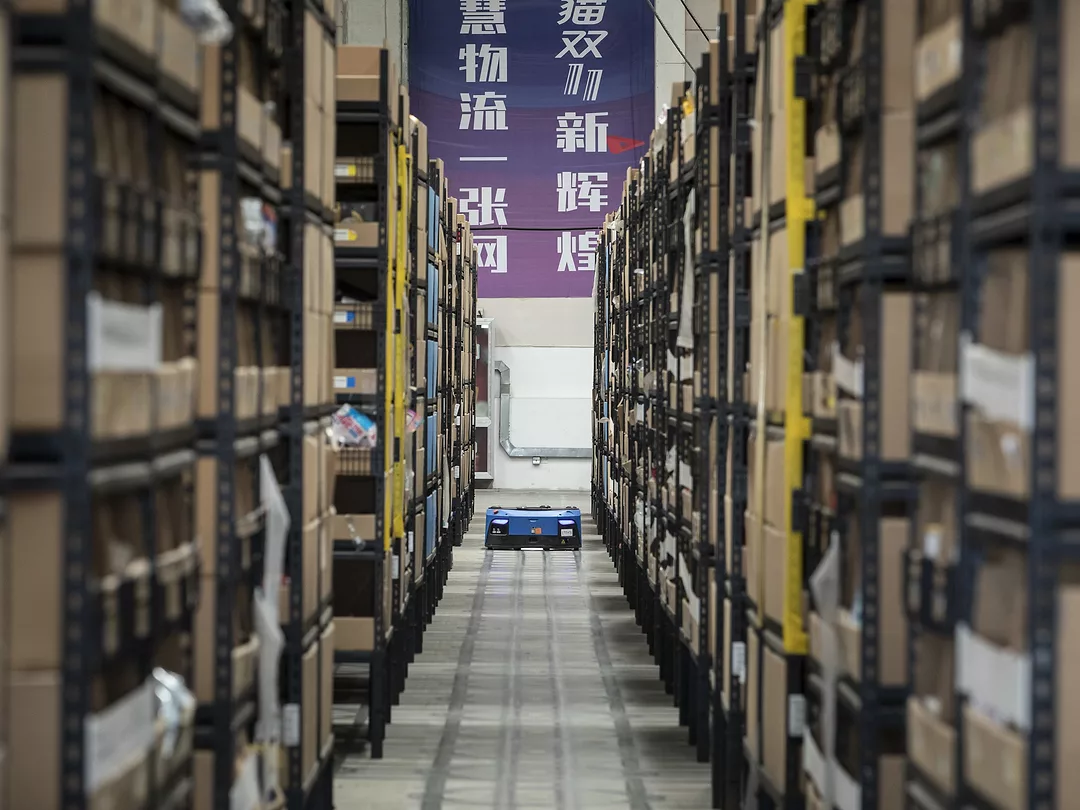
An autonomous robot moves along aisles of merchandise. Photo: Bloomberg.
September 23, 2021
Jeff Christensen, SCB Contributor

For months, a near-constant state of peak demand has left retailers, manufacturers and distributors struggling to adapt to the new pace of consumer spending.

As the Delta variant of COVID-19 now surges across the world, companies that fail to act quickly and decisively are at higher risk for extended catastrophic results. Supply chains need to be resilient in order to effectively and successfully support customers through evolving complexities and demands.

The key to tackling these issues is to build as much predictability into supply chains as possible. Manufacturing and distribution facilities are increasingly turning to mobile automation solutions to solve for this.

Autonomous mobile robots (AMRs) are one of the mobile automation solutions that are helping companies build predictability into their processes and remain flexible in the face of ever-changing circumstances. AMR solutions can enable companies to avoid operational disruptions by quickly identifying and addressing optimizations in workflows, while also ensuring a resilient supply chain by quickly and effectively adapting to the unknown. Here’s how.

Improving accuracy and efficiency. AMRs not only maximize efficiency but also accuracy. While human error is inevitable in any task, AMRs can safely work 24/7 without taking a break. AMRs can carry out the routine, repetitive and more dangerous tasks, greatly reducing human error and improving overall speed and precision when compared to manual forklifts. It also leaves room for employees to focus on higher-value initiatives that require decision-making and critical thinking, making the most of complementary strengths.

Optimizing labor. By automating repetitive, hazardous tasks through mobile automation, human workers can be reassigned to more cognitive, value-add opportunities that require decision making, creativity and human input. This not only helps in making a safer environment, but it can boost employee retention with the human workers assigned to more rewarding and satisfying roles. 

Increasing flexibility. The faster a company can adjust to changes, the faster they can reduce risk, absorb shock and create new opportunities. There will always be evolving variables at play, which is why companies need to focus on becoming more resilient through flexible material handling automation solutions.

Flexibility in automation is crucial. An AMR can navigate using entirely on-board technology, without any external maps or landmarks required. AMRs sense the environment around them in real time, navigating based on the inputs gathered through on-board technology. Changes can be made quickly and easily by facility personnel without sacrificing downtime to rebuild within the facility. The mobile robots can easily be assigned to a new route, different shift or different facility altogether. Further, analytics software will identify issues today and help with continuous optimization over time.

Keeping pace with demand. While building optimization and predictability, AMRs are also helping manufacturers and distribution facilities boost productivity. Today, peak season is no longer on a set schedule that can be planned for, and overwhelming consumer demand and customization has added another layer to the already strained supply chain.

This shift in consumer habits that evolved throughout the pandemic led to unprecedented demand in consumer goods and a record number of customers facing shipping delays and shortages.

Adopting AMRs into manufacturing and distribution facilities helps keep pace with the increase in consumer demand, including the increase in customization. The level of customization consumers want requires specialized options that can confound production processes, add another level of complexity to the supply chain, and impact inventory and lead times. Now more than ever, manufacturers and distribution facilities need automation solutions to ensure throughput is not stifled by order complexity. 

Moving away from a manual lift truck environment to an automated environment helps meet evolving demands of the consumer. The adaptability of automated tow tractors, pallet trucks and lift trucks enable operators to adjust routes while production is running to meet the level of customization, without sacrificing any downtime when adjustments need to be made. This increase in productivity and output is critical to overcoming the challenges brought on by supply chain disruptions, ensuring productivity and safety while meeting consumer demand.

Deploying mobile automation solutions like AMRs within a factory, warehouse or distribution center helps companies avoid potential risks, such as downtime, errors, additional costs or safety incidents while achieving their day-to-day goals. Coupled with analytics software, these solutions help operations identify where bottlenecks occur and where improvements can be made for continuous optimization over time, driving long-term initiatives with the ability to adjust to changing demands and challenges.

Jeff Christensen is vice president of product at Seegrid.

RELATED CONTENT

RELATED VIDEOS

Subscribe to our Daily Newsletter!

Timely, incisive articles delivered directly to your inbox.

Featured Product

Popular Stories

  • A GLEAMING TUNNEL OF LIGHTS CURVES AWAY INTO A HORN

    Gartner: Top 25 Supply Chain Organizations Are Embracing AI

    Global Logistics
  • HANDS TYPE ON A KEYBOARD UNDER A SUPER IMPOSED DIGITIZED MAP OF THE WORLD, ALONG WITH IMAGES OF A SHIP, A SHOPPING CART AND OTHER SYMBOLS OF INTERNATIONAL LOGISTICS

    Five Demand-Forecasting Mistakes Supply Chain Leaders Are Rethinking

    Technology
  • TWO WORKERS IN HI-VIS VESTS AND HARDHATS CONSULT A BANK OF COMPUTER SCREENS

    How a Poor Hiring Process Leads to High Turnover in Supply Chain

    HR & Labor Management
  • The outside of Oracle Corporation's corporate headquarters located in Silicon Valley. Photo: iStock.com/Sundry Photography

    Oracle Cuts 21,000 Jobs, More to Come From AI

    Technology
  • 037_a_roadmap_for_the_ai_journey_v1-(540p).png

    Watch: A Roadmap for the AI Journey

    Artificial Intelligence

Digital Edition

2026 esg cover main scb q2 2026 cover

SupplyChainBrain 2026 ESG Guide: ESG — The Supply Chain’s Biggest Secret

VIEW THE LATEST ISSUE

Case Studies

  • Recycled Tagging Fasteners: Small Changes Make a Big Impact

  • A GRAPHIC SHOWING MULTIPLE FORMS OF SHIPPING, WITH A HUMAN STANDING AT THE CENTER, TOUCHING A SYMBOLIC MAP OF THE WORLD

    Enhancing High-Value Electronics Shipment Security with Tive's Real-Time Tracking

  • A GRAPHIC OF INTERLACING HONEYCOMBED ELEMENTS REPRESENTING GLOBAL BUSINESS TRANSACTIONS

    Moving Robots Site-to-Site

  • JLL Finds Perfect Warehouse Location, Leading to $15M Grant for Startup

  • Robots Speed Fulfillment to Help Apparel Company Scale for Growth

Visit Our Sponsors

4flow Arkieva Blue Yonder
Carton Cloud CoEnterprise Dassault
Duravant E2Open General Logistics Systems
Hy-Tek iGPS Korber
Lyngsoe Procurability Quinyx
SAP Sikick Systech
S&P Global Mobility TADA TransImpact
US Bank Werner Enterprises WSI
  • More From SCB
    • Featured Content
    • Video Library
    • Think Tank Blog
    • SupplyChainBrain Podcast
    • Whitepapers
    • On-Demand Webinars
    • Upcoming Webinars
  • Digital Offerings
    • Digital Issue
    • Subscribe
    • Manage Email Preferences
    • Newsletters
  • Resources
    • Events Calendar
    • 2026 Event Coverage
    • SCB's Great Supply Chain Partners
    • Supplier Directory
    • Case Study Showcase
    • Supply Chain Innovation Awards
    • 100 Great Partners Form
  • SCB Corporate
    • Advertise on SCB.COM
    • About Us
    • Privacy Policy
    • Contact Us
    • Data Sharing Opt-Out

All content copyright ©2026 Keller International Publishing Corp All rights reserved. No reproduction, transmission or display is permitted without the written permissions of Keller International Publishing Corp

Design, CMS, Hosting & Web Development :: ePublishing