• Advertise
  • Contact Us
  • Supplier Directory
  • SCB YouTube
  • About Us
  • Login
  • Subscribe
  • Logout
  • My Profile
  • LOGISTICS
    • Air Cargo
    • All Logistics
    • Facility Location Planning
    • Freight Forwarding/Customs Brokerage
    • Global Gateways
    • Global Logistics
    • Last Mile Delivery
    • Logistics Outsourcing
    • LTL/Truckload Services
    • Ocean Transportation
    • Parcel & Express
    • Rail & Intermodal
    • Reverse Logistics
    • Service Parts Management
    • Transportation & Distribution
  • TECHNOLOGY
    • All Technology
    • Artificial Intelligence
    • Cloud & On-Demand Systems
    • Data Management (Big Data/IoT/Blockchain)
    • ERP & Enterprise Systems
    • Forecasting & Demand Planning
    • Global Trade Management
    • Inventory Planning/ Optimization
    • Product Lifecycle Management
    • Robotics
    • Sales & Operations Planning
    • SC Finance & Revenue Management
    • SC Planning & Optimization
    • Supply Chain Visibility
    • Transportation Management
  • GENERAL SCM
    • Business Strategy Alignment
    • Customer Relationship Management
    • Education & Professional Development
    • Global Supply Chain Management
    • Global Trade & Economics
    • Green Energy
    • HR & Labor Management
    • Quality & Metrics
    • Regulation & Compliance
    • Sourcing/Procurement/SRM
    • SC Security & Risk Mgmt
    • Supply Chains in Crisis
    • Sustainability & Corporate Social Responsibility
  • WAREHOUSING
    • All Warehouse Services
    • Conveyors & Sortation
    • Lift Trucks & AGVs
    • Order Management & Fulfillment
    • Packaging
    • RFID, Barcode, Mobility & Voice
    • Warehouse Automation
    • Warehouse Management Systems
  • INDUSTRIES
    • Aerospace & Defense
    • Apparel
    • Automotive
    • Chemicals & Energy
    • Consumer Packaged Goods
    • E-Commerce/Omni-Channel
    • Food & Beverage
    • Healthcare
    • High-Tech/Electronics
    • Industrial Manufacturing
    • Pharmaceutical/Biotech
    • Retail
  • THINK TANK
  • WEBINARS
    • On-Demand Webinars
    • Upcoming Webinars
    • Webinar Library
  • PODCASTS
  • WHITEPAPERS
  • VIDEOS
Home » Blogs » Think Tank » Industry 5.0: The Future of Unified Manufacturing

Think Tank
Think Tank RSS FeedRSS

Industry 5.0: The Future of Unified Manufacturing

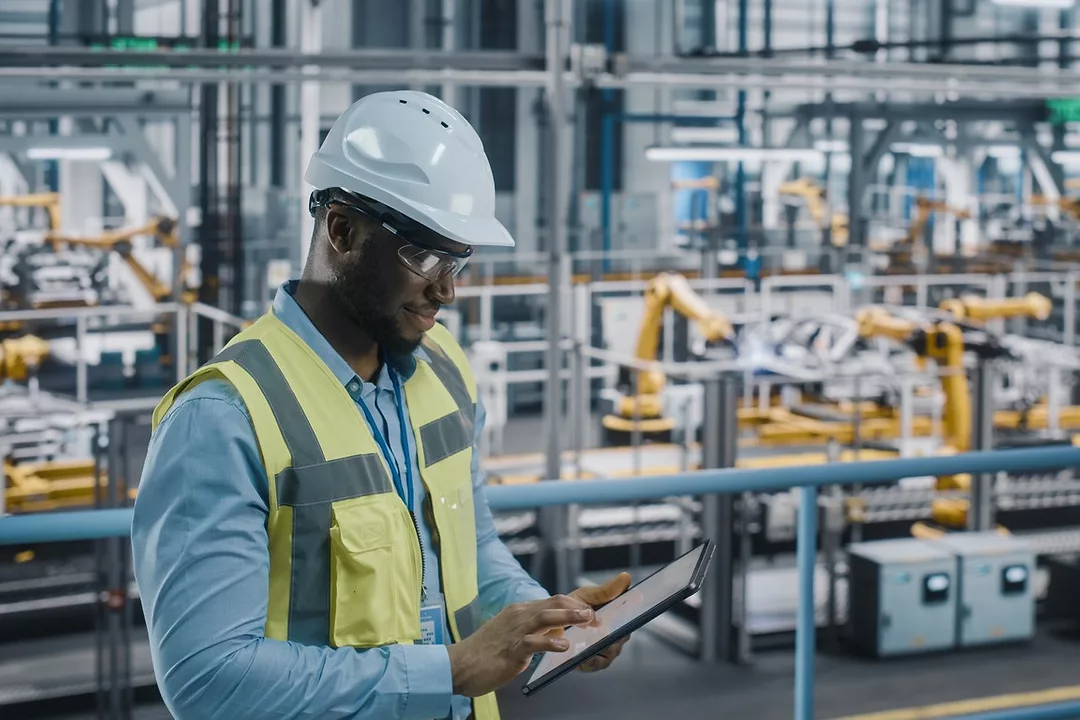
A WORKER CONSULTS A CLIPBOARD IN A FACTORY

Photo: iStock.com/gorodenkoff

April 21, 2023
Helena Jochberger, SCB Contributor

From global events highlighting weaknesses in the supply chain to the impact of climate change, classical manufacturing concepts are being disrupted across the board. It’s a turning point for the industry.

Supply chains are increasingly relying on automation, driven by intelligent analytics and cognitive computing. Dubbed Industry 5.0, it’s the next stage of the digital, environmental and human transformation of global manufacturing. 

Some companies, however, are still working to become paperless, and feel overwhelmed by the undertaking that lies before them. And those that have begun their digital journey might be unsure of how to move forward, and need support with the next steps. 

What’s needed is a data-driven organization, in which decisions are based on facts rather than intuition alone. Data insights help manufactures to achieve business objectives, create more efficiencies across the supply chain, introduce innovation and, ultimately, bring costs down.

Among the challenges that manufactures face today is the prospect of “zombie data.” 

It gives rise to multiple problems, including:

  • Initiatives that aren’t aligned with business goals or the organization's overall vision;
  • Data that’s not viewed as a core priority across the organization, leading to a lack of alignment across teams;
  • Data silos across people, processes and machines, which make accessing, integrating and sharing of relevant data difficult, and
  • Employees’ lack of access to the required data skill sets or appropriate specialists.

Eighty percent of all data programs fail because organizational readiness is not in place. Aside from even having the correct technology, businesses need to address the human side, with a structured vision and roadmap that considers perspectives company-wide, leading to an aligned sense of purpose, diversity of thought and creativity. 

Active participation in the roadmap should be encouraged with clear objectives. An effective data strategy begins with a shared outcomes-based vision. A data-driven manufacturer acts as a unified organization, with the ability to quickly adapt to new market realities.

The key difference between Industry 4.0 and 5.0 is the call for putting people and the environment back into the manufacturing equation, and ensuring that humans and machines work together for a greener and digitized future. 

Automation gives rise to concerns about taking jobs away from humans. The reality is it that it makes conditions safer for people, and allows them to utilize their talents in more creative spaces such as research and development, innovation and design. The result is often improved attraction and retention of talent, as employees feel they have a career with purpose, with a greater focus on leadership abilities.

Having a data-driven organization doesn’t just optimize operations; it allows for adjustments in real time and proactive responses. In this regard, five technology drivers are here to stay: 

  • The alignment of business with information and operational technology. This is key to effective stakeholder outcomes.
  • Better connections. All machines will need to be linked for accessing and sharing data. 
  • The factory cloud. Production and planning will move to the cloud, to support quicker response times, greater agility and collaboration.
  • The data-driven factory. Manufacturers can make more informed decisions on draw on advanced machine learning. 
  • Information and operational technology security. A downside to connectivity is greater vulnerability to cyber-attacks. Prioritizing and investing in prevention will be crucial.

Industry 5.0 is a game changer, not just in the way manufactures apply technology, but also in the pivoting of their priorities to include more planet-focused initiatives. To determine these goals and begin setting benchmarks, manufacturers should consider where their operations are in achieving sustainable growth, where costs need to be reduced, which product-quality improvements are most appropriate, and what moves the needle to best support sustainability goals and the transition to net-zero carbon emissions.

The key benefits of a becoming a data-driven manufacturer are many. They include more insightful and supportive data in real time to enable innovation, operations that respond proactively to change, measurable results with transparent practices and processes, and the ability to retain and attract new talent.

Industry 5.0 is rapidly arriving. How ready is your company to make the transition?

Helena Jochberger is vice president and global industry lead for manufacturing with CGI.


Data Management (Big Data/IoT/Blockchain) Quality & Metrics Industrial Manufacturing

RELATED CONTENT

RELATED VIDEOS

Subscribe to our Daily Newsletter!

Timely, incisive articles delivered directly to your inbox.

Featured Product

Popular Stories

  • 005_veteran_winemaker_gallo_embarks_on_an_ai_journey_v2-(540p).jpg

    Watch: Veteran Winemaker Gallo Embarks on an AI Journey

    Artificial Intelligence
  • SCB_Q326_Made4Net_Top5_THUMB.jpg

    Five Costly WMS Selection Mistakes Warehouse Leaders Keep Making

    Logistics
  • A UNIFORMED OFFICER STANDS NEAR A HIGHWAY WITH TRUCKS ON IT

    U.S. Customs Ramps Up AI Investment in Push to Sharpen Enforcement

    Artificial Intelligence
  • A MAP OF THE STRAIT OF HORMUZ SHOWING DOZENS OF BLUE DOTS DISTRIBUTED THROUGHOUT THE WATERWAY

    Traffic Flows Through Hormuz Despite Shock Ship Attack

    Global Gateways
  • On Demand Webinar 4flow Thu Jun 25 2026.png

    How Mars uses 4flow's AI platform for Logistics optimization

    Webinars

Digital Edition

2026 esg cover main scb q2 2026 cover

SupplyChainBrain 2026 ESG Guide: ESG — The Supply Chain’s Biggest Secret

VIEW THE LATEST ISSUE

Case Studies

  • Recycled Tagging Fasteners: Small Changes Make a Big Impact

  • A GRAPHIC SHOWING MULTIPLE FORMS OF SHIPPING, WITH A HUMAN STANDING AT THE CENTER, TOUCHING A SYMBOLIC MAP OF THE WORLD

    Enhancing High-Value Electronics Shipment Security with Tive's Real-Time Tracking

  • A GRAPHIC OF INTERLACING HONEYCOMBED ELEMENTS REPRESENTING GLOBAL BUSINESS TRANSACTIONS

    Moving Robots Site-to-Site

  • JLL Finds Perfect Warehouse Location, Leading to $15M Grant for Startup

  • Robots Speed Fulfillment to Help Apparel Company Scale for Growth

Visit Our Sponsors

4flow Arkieva Blue Yonder
Carton Cloud CoEnterprise Dassault
Duravant E2Open EPG
General Logistics Systems GEP Hy-Tek
iGPS Korber Lyngsoe
Procurability Quinyx SAP
Sikick Staples Systech
S&P Global Mobility TADA Tive
TransImpact US Bank Werner Enterprises
WSI
  • More From SCB
    • Featured Content
    • Video Library
    • Think Tank Blog
    • SupplyChainBrain Podcast
    • Whitepapers
    • On-Demand Webinars
    • Upcoming Webinars
  • Digital Offerings
    • Digital Issue
    • Subscribe
    • Manage Email Preferences
    • Newsletters
  • Resources
    • Events Calendar
    • 2026 Event Coverage
    • SCB's Great Supply Chain Partners
    • Supplier Directory
    • Case Study Showcase
    • Supply Chain Innovation Awards
    • 100 Great Partners Form
  • SCB Corporate
    • Advertise on SCB.COM
    • About Us
    • Privacy Policy
    • Contact Us
    • Data Sharing Opt-Out

All content copyright ©2026 Keller International Publishing Corp All rights reserved. No reproduction, transmission or display is permitted without the written permissions of Keller International Publishing Corp

Design, CMS, Hosting & Web Development :: ePublishing