
• Advertise
  • Contact Us
  • Supplier Directory
  • SCB YouTube
  • About Us
  • Login
  • Subscribe
  • Logout
  • My Profile
  • LOGISTICS
    • Air Cargo
    • All Logistics
    • Facility Location Planning
    • Freight Forwarding/Customs Brokerage
    • Global Gateways
    • Global Logistics
    • Last Mile Delivery
    • Logistics Outsourcing
    • LTL/Truckload Services
    • Ocean Transportation
    • Parcel & Express
    • Rail & Intermodal
    • Reverse Logistics
    • Service Parts Management
    • Transportation & Distribution
  • TECHNOLOGY
    • All Technology
    • Artificial Intelligence
    • Cloud & On-Demand Systems
    • Data Management (Big Data/IoT/Blockchain)
    • ERP & Enterprise Systems
    • Forecasting & Demand Planning
    • Global Trade Management
    • Inventory Planning/ Optimization
    • Product Lifecycle Management
    • Robotics
    • Sales & Operations Planning
    • SC Finance & Revenue Management
    • SC Planning & Optimization
    • Supply Chain Visibility
    • Transportation Management
  • GENERAL SCM
    • Business Strategy Alignment
    • Customer Relationship Management
    • Education & Professional Development
    • Global Supply Chain Management
    • Global Trade & Economics
    • Green Energy
    • HR & Labor Management
    • Quality & Metrics
    • Regulation & Compliance
    • Sourcing/Procurement/SRM
    • SC Security & Risk Mgmt
    • Supply Chains in Crisis
    • Sustainability & Corporate Social Responsibility
  • WAREHOUSING
    • All Warehouse Services
    • Conveyors & Sortation
    • Lift Trucks & AGVs
    • Order Management & Fulfillment
    • Packaging
    • RFID, Barcode, Mobility & Voice
    • Warehouse Automation
    • Warehouse Management Systems
  • INDUSTRIES
    • Aerospace & Defense
    • Apparel
    • Automotive
    • Chemicals & Energy
    • Consumer Packaged Goods
    • E-Commerce/Omni-Channel
    • Food & Beverage
    • Healthcare
    • High-Tech/Electronics
    • Industrial Manufacturing
    • Pharmaceutical/Biotech
    • Retail
  • THINK TANK
  • WEBINARS
    • On-Demand Webinars
    • Upcoming Webinars
    • Webinar Library
  • PODCASTS
  • WHITEPAPERS
  • VIDEOS
Home » Blogs » Think Tank » How Additive Manufacturing Is Scaling Innovation in Critical Industries

Think Tank
Think Tank RSS FeedRSS

How Additive Manufacturing Is Scaling Innovation in Critical Industries

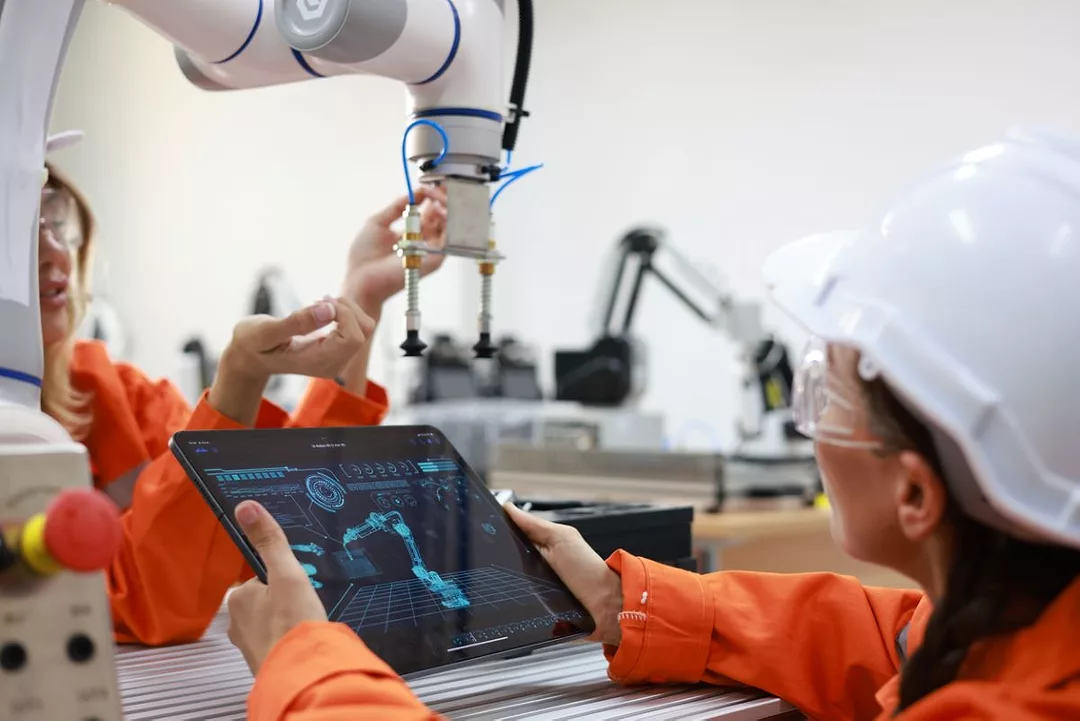
TWO WORKERS IN ORANGE JUMPSUITS AND PROTECTIVE GOGGLES MANIPULATE A ROBOTIC ARM WHILE ONE OBSERVES A COMPUTER TABLET'S SCREEN.jpg

Photo: iStock/onuma Inthapong

August 8, 2025
Matt Schmidt, SCB Contributor

Additive manufacturing has long been seen as a go-to for prototyping. But today, it’s something far more integral: It's a driver of scalable innovation and, increasingly, a viable method for production.

As the global additive manufacturing market grows toward an estimated $125 billion by 2034, manufacturers across sectors are rethinking how they develop, iterate and produce new products. And, importantly, how quickly they can do it.

From design to delivery, additive is reshaping the pace and flexibility of advanced manufacturing.

Additive is fueling innovation on two fronts. On the front end, the continued evolution of materials and reduction in price points are making industrial-grade prototyping faster and more accessible than ever. Engineers are testing new geometries and material properties with less risk and at significantly lower cost, enabling quicker iteration and smarter design.

On the back end, additive is gaining ground as a production method. Improved part quality, performance and consistency make it a fit for real-world applications, especially in high-mix, low-volume environments where traditional manufacturing methods become inefficient or cost-prohibitive. The result is a seamless path from prototype to production, often within the same digital workflow.

It's common in our business for engineers who initially used additive for a quick prototype to come back weeks later to order hundreds more of the same part. What started as a test unit becomes production reality with the same CAD file — no tooling required.

Adoption in Critical Industries

Additive’s rise has been especially pronounced in mission-critical industries. A clear reflection of this trend can be seen in recent growth patterns: Some of the fastest-growing additive categories over the last five years include aerospace, space, military, auto, electric vehicles and consumer.

These industries are adopting additive to move faster and solve technical and supply chain challenges that legacy processes can’t keep up with. In defense, additive enables the creation of geometrically complex components for next-generation platforms. 

In food production, it reduces costly downtime by enabling on-demand printing of line changeover components. In energy and industrial equipment, it’s is used to build corrosion-resistant parts that withstand extreme operating conditions.

The shared thread across these examples: agility and innovation under pressure.

What’s Fueling the Shift?

Several factors are accelerating the transition of additive from niche to necessary:

  • Advanced materials. Heat-resistant polymers, composite resins, and conductive elastomers are pushing additive into new applications.
  • Advanced software. Advances specific to additive manufacturing processes and workflow help sustain consistent production.
  • Lower entry costs. The cost to produce functional parts, at both high and low volumes, has dropped, making additive accessible even for mid-sized operations.
  • Faster lead times. Instead of waiting weeks for tooling or machining, teams can move from design to part in days.
  • Smarter sourcing decisions. Engineering and procurement teams are more fluent in additive, experimenting with new materials and adjusting specifications with real-time feedback.
  • Consistent quality of additive parts. Quality has increased with consumer education and how to specify additive process details for repeatability in production.

Making It Scalable

Additive’s growth is also being driven by advances in software and digital infrastructure, which are essential to scaling its use across teams and supply chains. Artificial intelligence-enabled platforms are helping engineers analyze CAD files, assess manufacturability and match jobs with the right suppliers based on material, process or certification requirements. These tools streamline sourcing and compress procurement cycles without sacrificing quality or traceability.

For organizations that manage thousands of parts across globally distributed teams, that digital backbone is essential to making additive a fast and scalable solution

Additive manufacturing is no longer experimental. It’s a core part of how innovation happens, new products are validated, complex parts are produced and supply chains adapt under pressure.

Organizations that embrace additive as infrastructure, not just as an experimental tool, will be positioned to lead in the decade ahead. They’ll move faster, localize smarter and respond more effectively to whatever comes next.

Matt Schmidt is a senior additive manufacturing solutions engineer at Xometry.

Aerospace & Defense Automotive Food & Beverage Industrial Manufacturing

RELATED CONTENT

RELATED VIDEOS

Subscribe to our Daily Newsletter!

Timely, incisive articles delivered directly to your inbox.

Featured Product

Popular Stories

  • A pair of hands reaches towards a cluster of icons showing global logistics network distribution and transportation

    CSCMP's State of Logistics Report: Get Used to the Fog

    Logistics
  • Ebook_TransformingSupplyChain_thumbnail.jpg

    Transforming Your Supply Chain From Cost Center to Growth Driver

    Forecasting & Demand Planning
  • TWO WORKERS DISCUSS DATA SHOWN ON COMPUTER SCREENS

    Gartner: Gap in SC AI Talent Cannot Be Closed by Hiring Alone

    Artificial Intelligence
  • GOVERNANCE SCRUTINY RISK MANAGEMENT ASSESSMENT iStock-champpixs-1465316262.jpg

    Supply Chain Resilience Is Now a Board Governance Imperative

    Supply Chain Finance & Revenue Management
  • 015_bringing_the_loading_dock_up_to_speed_v1 (540p).png

    Watch: Bringing the Loading Dock Up to Speed

    HR & Labor Management

Digital Edition

2026 esg cover main scb q2 2026 cover

SupplyChainBrain 2026 ESG Guide: ESG — The Supply Chain’s Biggest Secret

VIEW THE LATEST ISSUE

Case Studies

  • Recycled Tagging Fasteners: Small Changes Make a Big Impact

  • A GRAPHIC SHOWING MULTIPLE FORMS OF SHIPPING, WITH A HUMAN STANDING AT THE CENTER, TOUCHING A SYMBOLIC MAP OF THE WORLD

    Enhancing High-Value Electronics Shipment Security with Tive's Real-Time Tracking

  • A GRAPHIC OF INTERLACING HONEYCOMBED ELEMENTS REPRESENTING GLOBAL BUSINESS TRANSACTIONS

    Moving Robots Site-to-Site

  • JLL Finds Perfect Warehouse Location, Leading to $15M Grant for Startup

  • Robots Speed Fulfillment to Help Apparel Company Scale for Growth

Visit Our Sponsors

4flow Arkieva Blue Yonder
Carton Cloud CoEnterprise Dassault
Duravant E2Open General Logistics Systems
Hy-Tek iGPS Korber
Lyngsoe Procurability Quinyx
SAP Sikick Systech
S&P Global Mobility TADA TransImpact
US Bank Werner Enterprises WSI
  • More From SCB
    • Featured Content
    • Video Library
    • Think Tank Blog
    • SupplyChainBrain Podcast
    • Whitepapers
    • On-Demand Webinars
    • Upcoming Webinars
  • Digital Offerings
    • Digital Issue
    • Subscribe
    • Manage Email Preferences
    • Newsletters
  • Resources
    • Events Calendar
    • 2026 Event Coverage
    • SCB's Great Supply Chain Partners
    • Supplier Directory
    • Case Study Showcase
    • Supply Chain Innovation Awards
    • 100 Great Partners Form
  • SCB Corporate
    • Advertise on SCB.COM
    • About Us
    • Privacy Policy
    • Contact Us
    • Data Sharing Opt-Out

All content copyright ©2026 Keller International Publishing Corp All rights reserved. No reproduction, transmission or display is permitted without the written permissions of Keller International Publishing Corp

Design, CMS, Hosting & Web Development :: ePublishing