RSS
RSS

Chief executive officers continue to prioritize growth, while cost efficiency remains the main lever they’re using to protect business performance. At the same time, 65% of CEOs in supply chain-centric enterprises say artificial intelligence will define the next business era. Yet, three in four believe their current operating model isn’t fit for an AI-dominated future.
That readiness gap was a clear theme in conversations at the Gartner Supply Chain Symposium/Xpo this week. It’s where many supply chain strategies will either accelerate or stall.
For chief supply chain officers, the immediate temptation is to treat AI as an internal productivity play. That’s understandable, with early AI deployments already meeting or exceeding expectations. The bigger strategic shift, though, is that AI can make it easier for supply chains to work across a wider ecosystem of partners, opening paths to growth that a single enterprise would struggle to build alone.
Traditional supply chain networks are often built around bilateral, hub-and-spoke relationships between one enterprise and its individual trading partners — suppliers, customers and service providers. An ecosystem is different. It connects multiple partners around a shared purpose, with value created not only through one-to-one transactions, but through multiparty coordination, shared data and more dynamic combinations of capabilities.
AI is already helping some organizations outperform others in how they operate across partner networks. Among higher AI-maturity organizations surveyed by Gartner, nearly half rate themselves as “above expectations” in their use of ecosystem partnerships, compared with only 11% among lower AI-maturity organizations.
That’s why Gartner predicts that by 2029, AI will have realized ecosystem partnership potential and led to new ecosystem relationship roles being created in 40% of supply chains.
The key for CSCOs is that while the complexity of connecting increasing numbers of partners can be managed by the increasing capabilities that AI brings, dedicated roles will be needed to explore and engage with more partners. AI will enable partnerships; people will build relationships,
The supply chains that respond well will move from an inside-out mindset, where the organization mainly optimizes its own assets, to an outside-in culture that looks first at what can be achieved with partners.
The technology piece is becoming clearer. AI-enabled orchestration platforms can support shared visibility, continuous access to partner data and faster coordination across logistics providers, suppliers and channel partners.
In practice, as global disruptions impact one region, using visibility across the partner ecosystem from logistics providers and suppliers, a manufacturer can move an order for a critical part from one impacted supplier to another supplier in their ecosystem to ensure that the disruption doesn’t lead to missed orders. In this case, AI helps organizations see sooner and respond faster. It reduces friction in the transaction layer of the relationship.
However, the value of an ecosystem isn’t solely in exchanging data. Next-generation ecosystems being formed with the support of AI rely on deeper relationships, more flexible partner portfolios and measures tied to business performance and capability creation (Figure 1).
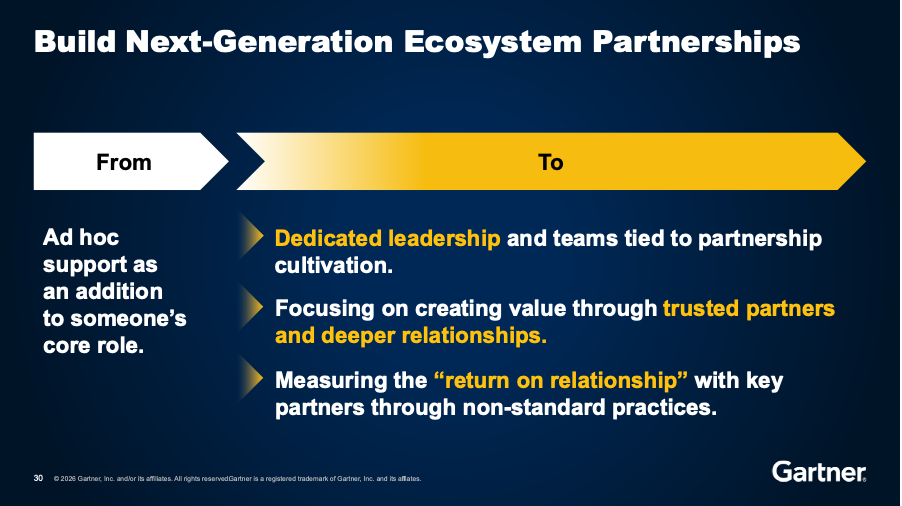
Figure 1: The success of next gen ecosystem partnerships hinges largely on the leaders and supply chain teams dedicated to building trusted relationships and deeper partnerships.
In organizations with more mature digital supply chains, strategic alliances teams and dedicated partnership leadership roles are emerging. The mandate for these roles reaches well beyond supplier management to orchestrating collaboration across a broader set of external players, including non-trading partners such as universities, non-profits, investors, technology providers and even competitors where they’re working toward shared industry goals.
A meaningful measure of success for these partnerships is “return on relationship” — the business value created beyond transactions through shared growth, capability creation, resilience and sustained strategic advantage over time. It also underscores the enduring human value in supply chains to build trust, align incentives and sustain strong relationships.
For CSCOs looking to make the shift, the near-term agenda is straightforward:
- Prepare the organization for ecosystem success with common data-sharing platforms and preintegrated assets. Build the digital and process foundations that enable AI to support real-time interoperability, so partners can share information, coordinate decisions, and move faster together.
- Assign executive ownership for strategic ecosystem relationships. Establish clear ownership and accountability among leaders who have the influence to orchestrate collaboration across multiple organizations, not simply functional leaders managing them as an extension of an existing role.
- Treat ecosystem capability as part of the operating model for growth. As supply chains move from a build-or-buy model to a build/buy/partner mindset, ecosystems become a way to expand access to channels, capabilities, scalability, and ultimately revenue growth.
AI’s biggest supply chain impact will come from enabling organizations to create value in new ways, such as through ecosystems of partners.
The supply chains that lead in the years ahead will be those that treat ecosystem capability as a strategic advantage, combining AI-enabled coordination with the human leadership, trust and governance required to turn a network of partners into a true engine of growth, resilience and competitive differentiation.
Simon Bailey is a vice president analyst in Gartner’s Supply Chain Practice.