• Advertise
  • Contact Us
  • Supplier Directory
  • SCB YouTube
  • About Us
  • Login
  • Subscribe
  • Logout
  • My Profile
  • LOGISTICS
    • Air Cargo
    • All Logistics
    • Facility Location Planning
    • Freight Forwarding/Customs Brokerage
    • Global Gateways
    • Global Logistics
    • Last Mile Delivery
    • Logistics Outsourcing
    • LTL/Truckload Services
    • Ocean Transportation
    • Parcel & Express
    • Rail & Intermodal
    • Reverse Logistics
    • Service Parts Management
    • Transportation & Distribution
  • TECHNOLOGY
    • All Technology
    • Artificial Intelligence
    • Cloud & On-Demand Systems
    • Data Management (Big Data/IoT/Blockchain)
    • ERP & Enterprise Systems
    • Forecasting & Demand Planning
    • Global Trade Management
    • Inventory Planning/ Optimization
    • Product Lifecycle Management
    • Robotics
    • Sales & Operations Planning
    • SC Finance & Revenue Management
    • SC Planning & Optimization
    • Supply Chain Visibility
    • Transportation Management
  • GENERAL SCM
    • Business Strategy Alignment
    • Customer Relationship Management
    • Education & Professional Development
    • Global Supply Chain Management
    • Global Trade & Economics
    • Green Energy
    • HR & Labor Management
    • Quality & Metrics
    • Regulation & Compliance
    • Sourcing/Procurement/SRM
    • SC Security & Risk Mgmt
    • Supply Chains in Crisis
    • Sustainability & Corporate Social Responsibility
  • WAREHOUSING
    • All Warehouse Services
    • Conveyors & Sortation
    • Lift Trucks & AGVs
    • Order Management & Fulfillment
    • Packaging
    • RFID, Barcode, Mobility & Voice
    • Warehouse Automation
    • Warehouse Management Systems
  • INDUSTRIES
    • Aerospace & Defense
    • Apparel
    • Automotive
    • Chemicals & Energy
    • Consumer Packaged Goods
    • E-Commerce/Omni-Channel
    • Food & Beverage
    • Healthcare
    • High-Tech/Electronics
    • Industrial Manufacturing
    • Pharmaceutical/Biotech
    • Retail
  • THINK TANK
  • WEBINARS
    • On-Demand Webinars
    • Upcoming Webinars
    • Webinar Library
  • PODCASTS
  • WHITEPAPERS
  • VIDEOS
Home » Blogs » Think Tank » Why Reshoring Alone Won’t Secure Military Supply Chains

Think Tank
Think Tank RSS FeedRSS

Why Reshoring Alone Won’t Secure Military Supply Chains

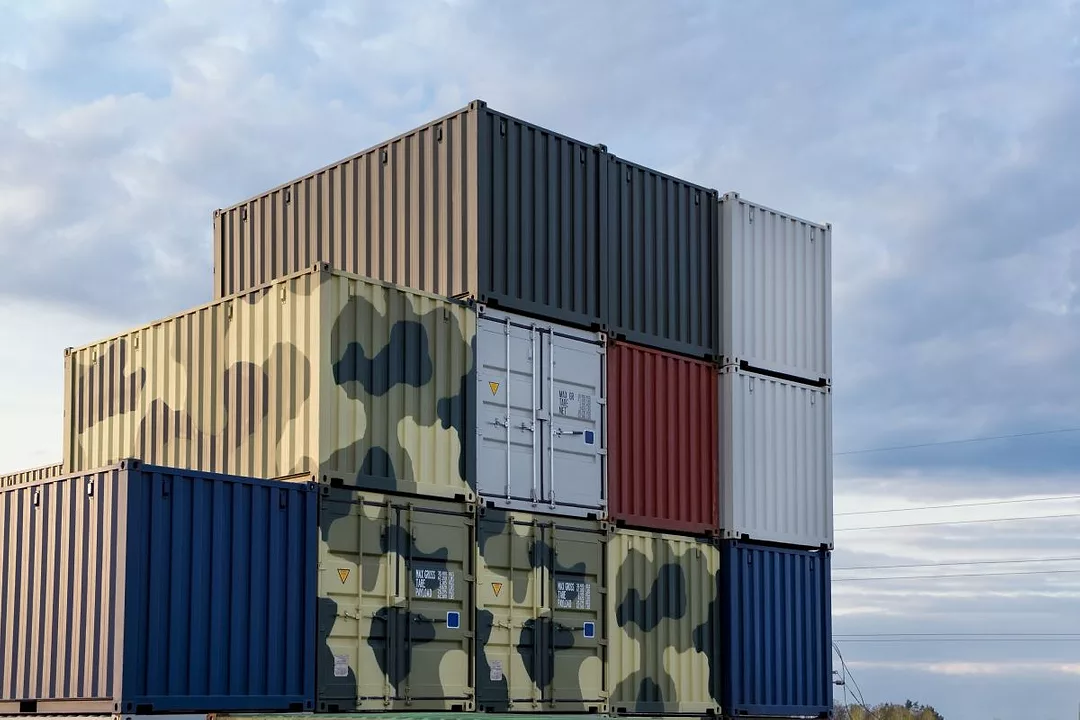
A STACK OF CONTAINERS CONTAINS FOUR PAINTED IN MILITARY CAMOUFLAGE

Photo: iStock/Roman Mykhalchuk

August 26, 2026
Roger Brereton, SCB Contributor

The conversation around sovereign defense capability usually starts with headline platforms such as the F-35 Lightning II or next-generation vehicle programs. Yet the resilience of those systems depends on thousands of specialist components and subassemblies sourced throughout the industrial base.

A large part of the resilience sits much further down the supply chain. By the time a vehicle reaches the front line, its real-world performance has already been determined by Tier 2 and Tier 3 suppliers. 

Yet across the U.S. defense sector, the focus has been on the risks tied to foreign dependency in critical technologies and raw materials, especially where supply chains can be disrupted by geopolitics, capacity limits or even economic pressure. 

That concern spans everything from rare earth minerals and advanced electronics to semiconductors and propulsion systems. As a result, it’s driving a stronger push for domestic manufacturing, supplier diversification, and more resilient defense supply chains.

Beneath the Surface

In defense procurement, sovereign capability is often reduced to where a platform is finally assembled. However, operational sovereignty is much broader than that. 

What really matters is whether the U.S. can maintain, repair, upgrade and sustain equipment without being exposed to fragile overseas supply chains when conditions are uncertain.

OEMs lead the headline programs, and it’s supported by smaller specialist manufacturers that quietly keep everything working. They bring the engineering depth, the process knowledge and the flexibility to adapt when requirements change — and in defense, they often do.

That becomes especially clear in mobility platforms. Steering and suspension systems are pushed hard in service with heavy loads, rough terrain, constant vibration and harsh environments. When something fails there, it stops being a manufacturing issue and becomes an operational one very quickly.

This is why the wider defense industry is placing renewed emphasis on resilient industrial participation and trusted supplier ecosystems. For instance, NATO’s updated Defense Production Action Plan calls for expanded industrial capacity, stronger defense-critical supply chains, and closer cooperation across allied manufacturing networks. 

Reshoring and Nearshoring 

Conversations around U.S. defense manufacturing have historically featured around the need to reshore, yet in practice, many critical capabilities cannot simply be rebuilt domestically overnight.

Some suppliers have spent decades developing specialist engineering expertise, tightly controlled manufacturing processes and highly specific application knowledge that is extremely difficult to replicate quickly elsewhere.

It’s essential, therefore, to strengthen domestic capability where it matters most, while building more resilient supply chains with trusted allies and nearshore partners. Just look at the after effects of the COVID-19 pandemic, which made it pretty clear how fragile highly fragmented global sourcing can be. Since then, geopolitical tensions, rising NATO demand, and stretched industrial capacity have all pushed the U.S. further toward building more regional and resilient supply chains.

For example, the U.S. has doubled down on domestic semiconductor investment through the CHIPS and Science Act, while defense programs, like the F-35 Lightning II, still depend on a highly international supplier network across the U.S., U.K., Italy, Australia, Canada and others. 

Here, resilience here isn’t about doing everything at home; it’s about having trusted partners across a stable, allied industrial ecosystem that meet strict U.S. operational, compliance and security requirements. 

Not Just Procurement Exercises

One of the biggest misconceptions in defense manufacturing is that resilience can simply be procured through contracts. Whereas supply chains are built over time through relationships, engineering trust and shared operational understanding, often across multiple countries and tiers of suppliers. 

The most successful defense programs tend to involve long-standing collaboration between OEMs and specialist suppliers. That’s because defense manufacturing has always worked differently to mainstream automotive production, for example. 

Volumes are lower, requirements evolve constantly and platforms often stay in service for decades. OEMs end up leaning heavily on specialist suppliers who can react quickly, tweak designs and stick around long after the first production run is finished. 

A lot of this work happens out of sight. The supply chain isn’t fully transparent end-to-end, so Tier 2 and Tier 3 suppliers often do essential work without much recognition, sometimes even within the industry itself.

That dynamic is easier to see in programs like the F-35, where a broad network of U.S. and allied suppliers is more visible than in most defense platforms. After all, what looks like a single aircraft or vehicle is actually the end result of a long, layered supply chain stretching far beyond the prime contractor. 

Reshoring and nearshoring both have a role to play in strengthening resilience, but the bigger picture is that capability still comes down to what sits underneath those final assembly lines.

At the end of the day, it’s about whether the wider ecosystem — especially Tier 2 and Tier 3 suppliers — is strong, flexible and connected enough to keep programs running reliably over time.

Roger Brereton is head of sales at Pailton Engineering Ltd.

Regulation & Compliance Sourcing/Procurement/SRM Supply Chain Security & Risk Mgmt Aerospace & Defense

RELATED CONTENT

RELATED VIDEOS

Subscribe to our Daily Newsletter!

Timely, incisive articles delivered directly to your inbox.

Featured Product

Popular Stories

  • Stacks of multi-colored shipping containers arranged in rows at a port, with rows of blue and grey shipping cranes lining the background along the coastline

    Port of Savannah Approved for New 3.5M TEU Terminal

    Global Gateways
  • An overhead view of a port, with stacks of containers and vehicles moving through rows

    Podcast | AI in Supply Chain Planning: Impact, Promise and Limits

    Artificial Intelligence
  • An overhead view of a shipping port stacked with containers, with stylized lines forming a grid connecting ships and berths

    Beyond De Minimis: Why Importers Need Defensible Shipment Data

    Parcel & Express
  • On Demand Webinar Oliver Wight Wed Oct 14 2026 2p ET.png

    AI in IBP: From Data to Decisions

    Webinars
  • SCB_Q426_SAP_FSR_THUMB_2.jpg

    An AI Playbook for Your Journey to Autonomous Planning

    Global Logistics

Digital Edition

Scb q3 26 cover

100 Great Supply Chain Partners 2026: The Secret to Supply Chain Success

VIEW THE LATEST ISSUE

Case Studies

  • Recycled Tagging Fasteners: Small Changes Make a Big Impact

  • A GRAPHIC SHOWING MULTIPLE FORMS OF SHIPPING, WITH A HUMAN STANDING AT THE CENTER, TOUCHING A SYMBOLIC MAP OF THE WORLD

    Enhancing High-Value Electronics Shipment Security with Tive's Real-Time Tracking

  • A GRAPHIC OF INTERLACING HONEYCOMBED ELEMENTS REPRESENTING GLOBAL BUSINESS TRANSACTIONS

    Moving Robots Site-to-Site

  • JLL Finds Perfect Warehouse Location, Leading to $15M Grant for Startup

  • Robots Speed Fulfillment to Help Apparel Company Scale for Growth

Visit Our Sponsors

4flow Amazon Freight Anaplan
Arkieva AutoStore Blue Yonder
Canadian National Railway Company Carton Cloud CoEnterprise
Dassault Descartes Dexory
Duravant E2Open EPG
General Logistics Systems GEP Hy-Tek
iGPS Knapp Korber
Lyngsoe Odyssey Logistics OMP
PeakAI Procurability Quinyx
SAP Sikick Staples
S&P Global Mobility Systech TADA
Tive TransImpact US Bank
Werner WSI
  • More From SCB
    • Featured Content
    • Video Library
    • Think Tank Blog
    • SupplyChainBrain Podcast
    • Whitepapers
    • On-Demand Webinars
    • Upcoming Webinars
  • Digital Offerings
    • Digital Issue
    • Subscribe
    • Manage Email Preferences
    • Newsletters
  • Resources
    • Events Calendar
    • 2026 Event Coverage
    • SCB's Great Supply Chain Partners
    • Supplier Directory
    • Case Study Showcase
    • Supply Chain Innovation Awards
    • 100 Great Partners Form
  • SCB Corporate
    • Advertise on SCB.COM
    • About Us
    • Privacy Policy
    • Contact Us
    • Data Sharing Opt-Out

All content copyright ©2026 Keller International Publishing Corp All rights reserved. No reproduction, transmission or display is permitted without the written permissions of Keller International Publishing Corp

Design, CMS, Hosting & Web Development :: ePublishing