These Asian Chocolatiers Are Spicing Up the Global Sweets Scene
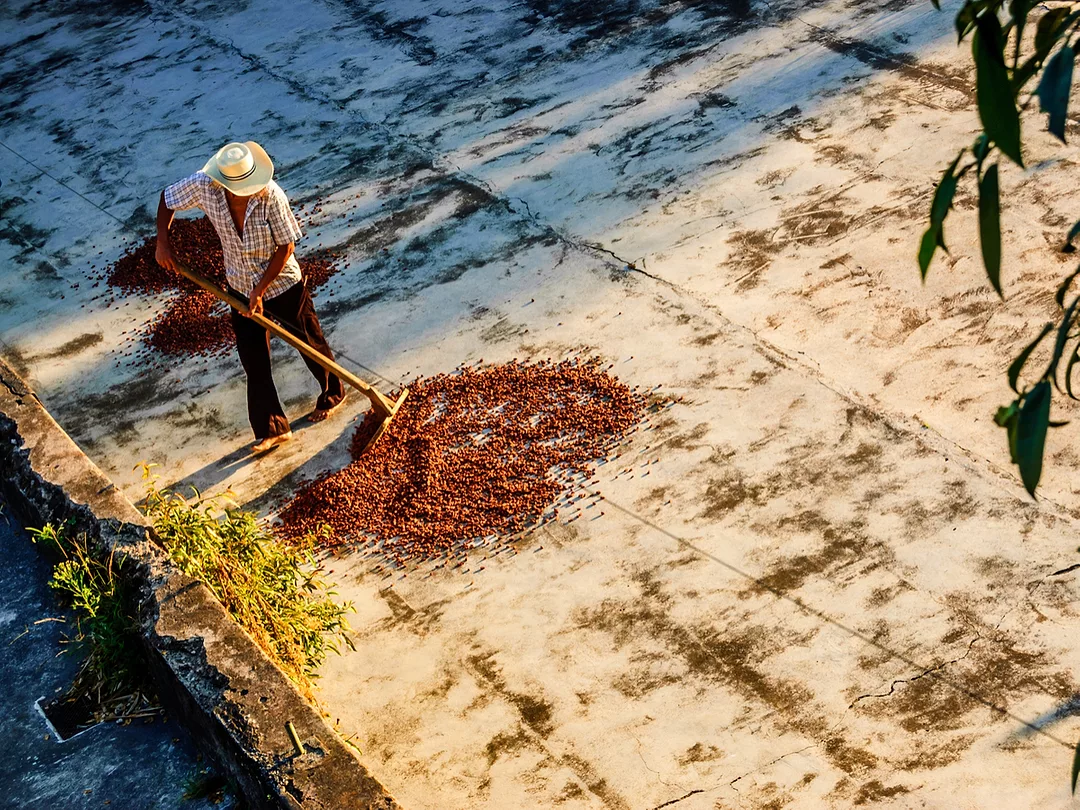
Soy sauce and noodle soups aren’t the most natural flavor pairings for chocolate, but a rising crop of artisanal chocolate makers are daring to try — and succeeding — in the unlikeliest of places.
In Ho Chi Minh City, artisans are creating world-class chocolate bars and adding a splash of spices for a “pho” confection. Chocolate-makers in the Philippines are mixing soy sauce with their sweets, while in Indonesia chocolatiers are producing cocoa with a “tobacco aftertaste.”
Nearly all these chocolatiers identify as bean-to-bar, or single-origin confectionery factories, sourcing locally from small cocoa farms and then roasting and fermenting the beans to perfection. While concocting their own regional flavors, these chocolate makers have much in common: They are risk-taking pioneers.
“The whole chocolate scene in Southeast Asia is very new,” says Vincent Mourou, who gave up an advertising agency career in San Francisco about nine years ago to make chocolate in Vietnam. “We turned many heads. Vietnam didn’t do chocolate.”
Indeed, they have their work cut out for them in tropical climes, where chocolate melts as fast as ice on hot humid days. But perhaps the tougher challenge is wooing domestic consumers, who are not known as the biggest fans of the cocoa treat. Asians eat much less than North Americans and Europeans, who devour more than half of the world’s chocolate every year — 5.4 million tons of confectionery, compared to the Asia Pacific’s mere 867,000 tons, according to Euromonitor International.
Here’s a look at the growing crop of artisans gaining local followings as they garner gourmet awards from London and Paris and slowly win over chocolate lovers worldwide.
Marou Faiseurs de Chocolat, Vietnam
Marou’s cacao beans are distinctly Vietnamese, coming from a half-dozen provinces in locations ranging from the Mekong Delta, with its sediment soil, to the red volcanic earth of the Central Highlands’ Lam Dong province. The different soil types give each single bean a distinct flavor, while the blended, finished chocolate, wrapped by hand in art deco designed paper, bursts with notes of fruit and spices.
Most intriguing is its pho chocolate, a distinctly Vietnamese communion of dark chocolate with star anise, cardamom, coriander, fennel, cloves, cinnamon, and pepper — a classic melange in the country’s famous soup, without the beef. The inspiration for the sweet concoction came from a pho vendor near the chocolate factory who was grilling fresh spices for her soup noodle dishes.
The Ho Chi Minh City-based company exports in small quantities to around 20 countries, mostly in Western Europe, North America, and North Asia. It has garnered global honors, from the Salon du Chocolat in Paris to the annual Academy of Chocolate Awards.
“Any chocolate that is made not using bulk West African cacao is, almost by definition, a specialty product,” ex-banker and Marou co-founder Sam Maruta says. “The emergence of tiny craft chocolate makers using scarce local cacao resources, as we do, is a very niche phenomenon.” The bars carry the price to match, up to $6.50 a bar. The company pays cacao farmers $4,100 a ton, almost double the market price.
Marou’s founders were looking for an adventure when they hit upon the idea of tapping Vietnam’s small but dedicated cacao farmers to create a global chocolate brand. They had no consultants and no road maps for making chocolate in the country’s sweltering climate. They built their own cracker, which splits the beans, and their own winnower, which separates the cracked shells from the cacao nibs.
The two founders turned Maruta’s home kitchen into something of a chocolate laboratory; they created 55 batches from February 2011 to October of that year before creating their version of the perfect chocolate. “We kept a journal for each batch test — almost like a science experiment but with chocolate,” Mourou recalls. “Between batch tests, we would change only one variable at a time.”
They made their first sale in late 2011 and now are producing six tons of chocolate a month, a figure they expect to reach 10 tons a month next year. The company forecasts 30 percent to 50 percent sales growth this year.
“People at first thought we were crazy, giving up our careers to go into chocolate-making and doing it here,” says Mourou, who studied neuroscience in college. He’s standing in a grove of Mekong Delta cacao trees, which in turn are shaded from the intense sun by coconut palms. (Fun fact: His father, French scientist Gerard Albert Mourou, was awarded a Nobel Prize in physics last year.)
Their answer to the sweltering heat? Lots of air-conditioning, eight-foot high dehumidifiers, and a meticulously timed route to Ho Chi Minh City’s Tan Son Nhat International Airport for the completed bars. They insist their chocolate, packed tightly in four-layer cardboard boxes, is the last pickup of the day and will make it onto the plane in about three hours. (Large orders go by ship in refrigerated containers.)
Krakakoa, Indonesia
Krakakoa Chief Executive Officer Sabrina Mustopo, a former McKinsey analyst focused on climate change and agribusiness, says she founded her six-year-old company to help Indonesian farmers find a bigger domestic market for their cacao beans. “We looked at the macroeconomic trends, and there is a very strong correlation between [gross domestic product] and per capita consumption of chocolate.” Indonesia’s growing middle class and an expanding economy provides farmers with a new and lucrative market.
Krakakoa works with small-plot farmers in Lampung province, about 250 kilometers northeast of Jakarta, training them to plant and harvest the beans sustainably and then sell them to Krakakoa at an above-market price of $3,000 a ton, which ensures a good income for the farmers. The typical fermented beans they buy cost up to $4,200 per ton.
The first collection of $4 bars (an upscale price point for the country) was built around the idea of Indonesia as the “spice islands,” with flavors of sea salt, pepper, chili, cinnamon, and ginger. Their most popular product is a sugar-free, 100 percent dark chocolate bar made from Sumatra beans — which is deliciously bold and tart.
Chocolate Concierge, Malaysia
Ong Ning Geng taught 3D design at a university in Illinois before returning to his homeland in 2010 to make a quality chocolate from Malaysian ingredients. “It took me a couple of years to find out how to make it and then another couple of years to source for the right quality of beans,” he says, driven by curiosity to see what a high-quality, locally sourced product could be. He founded Chocolate Concierge in 2015.
Ning sources from local farms, including some operated by indigenous peoples from central Malaysia. He also jointly owns farms, so he can control the fermentation process, which imparts varying floral, fruity, nutty, or earthy flavor notes. Chocolate Concierge exports beans and chocolate in small quantities to Singapore, Thailand, and Vietnam.
“I love Malaysian produce,” says Ning on a visit to his cacao farm in Batang Kali, Selangor, an hour’s drive from Kuala Lumpur. Tiny flies, which pollinate the cacao fruit, swarm the trees, which were rehabilitated after being abandoned by farmers years ago. “I like things that have a connection with nature, what I can see and touch. In my mind, it’s also consuming more responsibly when we consume more locally.”
He ferments some of his cocoa longer than anyone in the world — 71 days vs. the standard six, he says, to give it a different taste profile — and creates flavors based on popular Malaysian nibbles such as tangy asam laksa (spicy noodle soup), sweet onde onde (glutinous rice balls), and cendol (an iced dessert with string-like green jelly) that appeal to the Malaysian palate.
The hope is that his $7 bars and $1 truffles can stoke a taste for a new local treat.
“If you wave a cocoa fruit in front of 20 Malaysians from different walks of life, more than half of them would say, ‘Hey, when I was growing up, I remember walking by a cocoa tree, or eating a cocoa fruit, or my neighbors or family were harvesting cocoa,’” says Ning. “But they have not made that same connection to what they know as cocoa and to what they know as chocolate.”
Theo and Philo, the Philippines
Philo Chua, owner of Theo and Philo Artisan Chocolates, left his job as a web developer in the U.S. in 2007 at the age of 28 to return home and take a crack at chocolate-making in the Philippines. He wanted to produce something world-class, without the palm oil or other additives typical of the region’s mass-produced candy. He researched chocolate on the internet, watched online instructional videos, and lurked in discussion threads to find people who could link him to cacao bean suppliers.
After three years of perfecting his recipe and setting up a small factory using his savings, he came out with the Philippines’ first bean-to-bar single origin chocolate bars in 2010.
He experimented by adding candied lime peel and whole peppercorns — a hit — and even ripe banana, whose flavor didn’t register well until he added caramel and sesame seeds to replicate the taste of a beloved fried-banana snack called turon. Indeed, his most popular flavors are inspired by Filipino dishes and snacks, including adobo (a salty, vinegary meat stew), calamansi (key lime), and salt-flecked green mangoes. Their $2 adobo milk chocolate bar, with hints of soy sauce, and a black sesame and cashew variety have won awards from European and U.S. chocolate institutes.
These distinctive flavors and word-of-mouth marketing helped propel his business into a multimillion-peso enterprise that now exports products to Japan and the U.S.
“We introduced something unique to the market, and we saw people responding to it. We want to experiment with more flavors that are iconically Filipino,” Chua says.
Popular Stories





100 Great Supply Chain Partners 2026: The Secret to Supply Chain Success
VIEW THE LATEST ISSUECase Studies


Visit Our Sponsors |
|
|
|
|
|
|
|
|
|
|
|
|
|
|
|
|
|
|
|
|
|
|
|
|
|
|
|
|
|
|
|
|
|
|
|
|
|
|
|
|
|
|
|
|
|
|
|
|
|
|
|