
Trump’s Throttling of Huawei Could Backfire on U.S. Tech
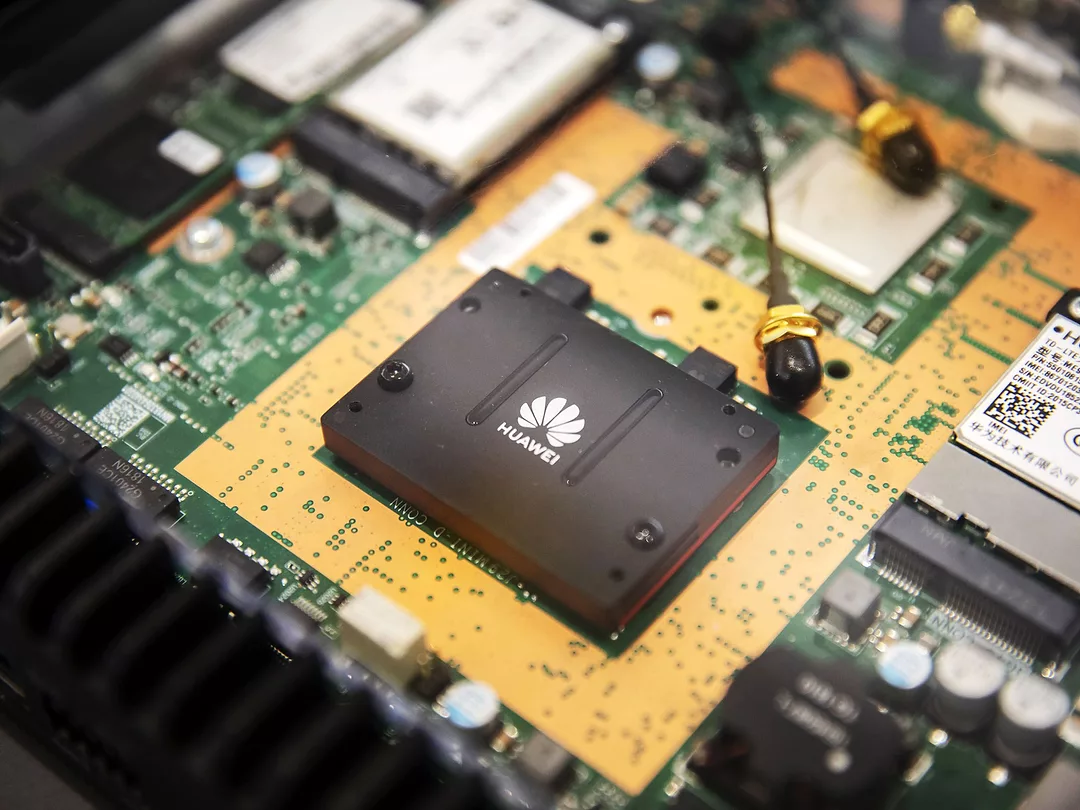
The Trump administration had widened its dragnet on Chinese companies barred from selling to the U.S. or buying components from American firms in a push to slow China’s technological advances.
After crippling Huawei Technologies Co., China’s biggest telecommunications company, the administration followed up by threatening to cut off U.S. components or software to five Chinese video surveillance firms.
But the plan might backfire, because U.S. companies are so inextricably involved in the global technology supply chain. Concerns over Washington’s punitive measures and possible retaliation by the Chinese rattled markets throughout last week, hammering chipmakers and Apple Inc.
It's 5G that embodies most of Washington’s fears — by powering a wealth of upcoming technologies from self-driving cars to advanced medical procedures, the new wireless standard is set to be the backbone of the modern economy. Until recently, it seemed like Huawei, the world's biggest purveyor of communications networking gear and the second-largest smartphone maker, was leading in supplying that infrastructure.
By cutting off the Chinese tech giant, the U.S. will only slow the expansion of 5G. That’s bad news for some of the most important U.S. companies, particularly component makers, that were banking on it for a major surge in orders starting this year.
Without China’s 5G network, consumers there won't buy new phones that contain chips from Qualcomm Inc. and Micron Technology Inc. They won't generate data that need to be crunched by processors made by Intel Corp., Nvidia Corp. and Advanced Micro Devices Inc. And there'll be no need for faster networking gear powered by chips from Broadcom Inc. and Xilinx Inc.
“I don’t think it’s good for the U.S. economy,” said Minyuan Zhao, an associate professor of management at the Wharton School at the University of Pennsylvania. “With its strong institutions, the U.S. has long been an assuring force in the global supply chain. People don’t always trust China, but they consider the U.S. a trustworthy partner, if not guardian, of the global economic system.”
If supply chains can be arbitrarily interrupted and that trust disappears, countries will start to develop individual systems and the result will be inferior and more expensive.
Washington’s efforts to contain the world’s second-largest economy accelerated about three years ago when Beijing first codified a broad ambition to take the lead in future technologies through its Made in China 2025 industrial policy. Coupled with a formal plan to dominate artificial intelligence by 2030, the plans showed the country's willingness to funnel billions of dollars into scientific research — a goal that spooked Washington bureaucrats worried that private U.S. enterprise and the military would be left in the dust.
Still, Chinese tech companies remain well behind their American counterparts in some key industries. The country still imports more semiconductors than oil and no Chinese company has caught up with Google or Microsoft Corp. in software yet. That makes the threat of withholding American technology from Huawei and its peers so disruptive.
In other areas, though, they're gaining headway quickly. Huawei is already the biggest provider of 4G networking and its gear is key to rolling out 5G networks in China, the biggest market for smartphones that will connect to it. U.S. companies are keen to tap into that pool, with its hundreds of millions of subscribers. China’s well-funded firms from Alibaba Group Holding Ltd. to Tencent Holdings Ltd. and startups like SenseTime are closing the gap on AI with an unparalleled trove of user information that privacy-focused Western rivals are afraid they'll never match; even consumer internet concerns like Tencent and Ant Financial Services Group are leading the way in social media innovation and mobile payments.
Companies like General Electric Co., Alphabet Inc. and Microsoft Corp. are worried that export controls being considered by Washington, related to technologies seen as essential to competitiveness, could actually impede them from competing in lucrative markets, while reducing America’s capacity to innovate.
In a written submission to the Department of Commerce, Microsoft warned that the proposed restrictions risked isolating the U.S. from international research collaborations and “could thwart U.S. interests.”
“Artificial intelligence is a very broad concept,” GE cautioned in its own submission. Defined too broadly export controls could sweep up things like medical imaging where algorithms are being used to scan for diseases and in toys, it said.
The crackdown on Huawei and other tech companies has spread from the U.S.-China trade war, which has been going on for months. Trump has targeted technology companies due to suspicion that Chinese firms help Beijing spy on foreign governments and steal U.S. intellectual property. It’s a risky move.
“The more that we continually conflate economic warfare with national security interests, then we start to look at everything as national security,” said Evanna Hu, CEO of Omelas, a security software firm based in Washington. “When you have a hammer, everything looks like a nail.”
So far U.S. chipmakers have probably suffered the most from Washington’s actions. Intel, Qualcomm, Xilinx and Broadcom have said they will cut off supplies to Huawei until further notice, according to people familiar with their actions. While their move hamstrings Huawei, it also means the companies will lose revenue.
China has threatened to retaliate.
“This is wrong behavior, so there will be a necessary response,’’ Zhang Ming, China’s envoy to the EU said in an interview in Brussels. Such a move could be devastating for Apple. Rising nationalistic, pro-Huawei sentiment could make Apple’s already troubled business in China more difficult, hobbling iPhone sales and disrupting the company’s supply chain, according to analysts.
Apple could lose nearly a third of its profit if China retaliated by banning its products, Goldman Sachs analysts estimated last week. But so far there isn’t any evidence that China is planning to do so. Dan Ives, an analyst at Wedbush Securities, said 3 to 5 percent of iPhone sales in China may disappear over the next 12 to 18 months because of the U.S. ban on Huawei.
As the global markets have begun to imagine a new Cold War-era between China and the U.S., President Donald Trump said last week that Huawei could “be included in some kind of trade deal” with China, without offering any details. The president also added that “Huawei is something that’s very dangerous. You look at what they’ve done from a security standpoint, from a military standpoint, it’s very dangerous.”
Popular Stories




100 Great Supply Chain Partners 2026: The Secret to Supply Chain Success
VIEW THE LATEST ISSUECase Studies


Visit Our Sponsors |
|
|
|
|
|
|
|
|
|
|
|
|
|
|
|
|
|
|
|
|
|
|
|
|
|
|
|
|
|
|
|
|
|
|
|
|
|
|
|
|
|
|
|
|
|
|
|
|
|
|
|