
Shortage of Safety Supplies Adds to Risks for U.S. Reopening
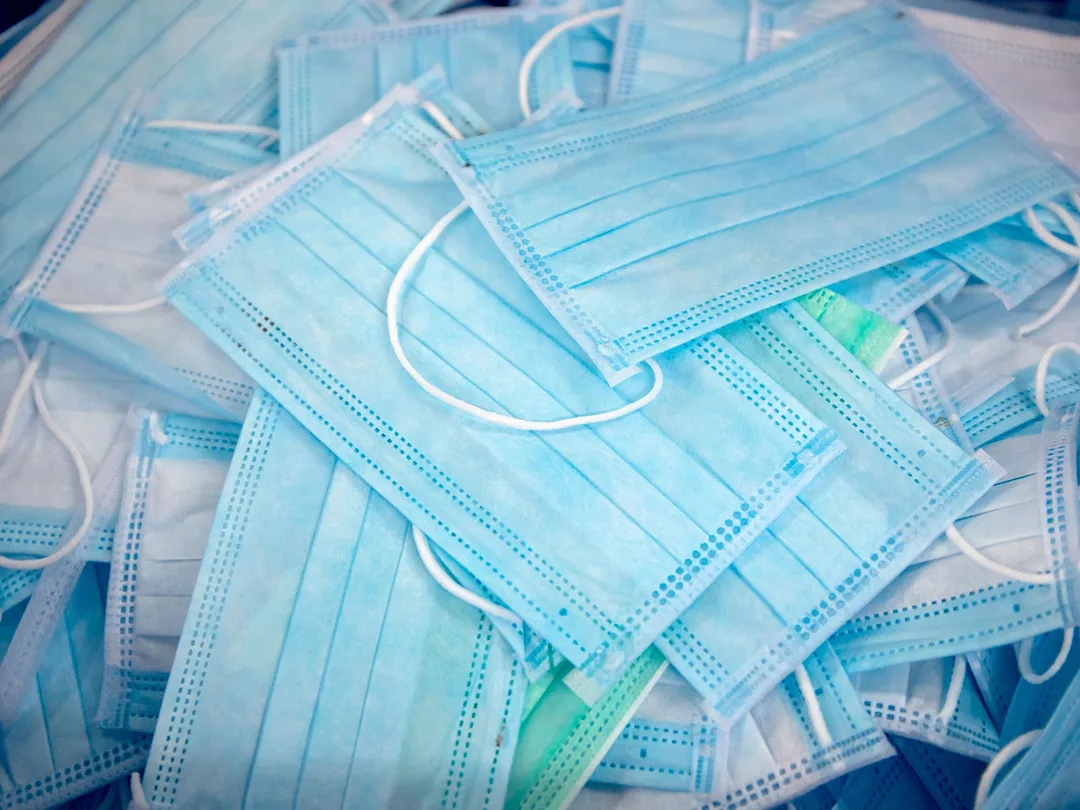
First came the dash to equip U.S. hospitals with protective gear when the coronavirus swept across the country. Now companies are scrambling to get a limited supply of masks, gloves and disinfectants they need to reopen.
For businesses already struggling from the pandemic, that means further constraints on time and costs. The shortages also present a conundrum as America’s economy restarts: If companies can’t get enough supplies, more people are at risk for the virus, adding to the prospect of another surge in cases that would leave the market even more short of protective equipment.
“It’s been challenging,” said Peter Elitzer, president of Peter Harris Clothes, a discount retailer that has reopened almost all of its 79 stores. “How do you find the masks? How do you find the sanitizer? How do you find the wipes? Forget it. To get the Clorox wipes is completely impossible.”
Elitzer shelled out $60 a gallon for hand sanitizer before tracking down a distiller that could produce it for $35 — still triple the usual price. Plastic barriers, masks and thermometers are selling at premiums, he said. The company had to furlough workers just to cover the $50,000 in added expenses.
Inventories will remain tight and short-term price spikes are expected for high-demand items as businesses crank back up just as doctors begin performing elective surgeries again, said D.G. Macpherson, chief executive officer of W.W. Grainger Inc., the largest U.S. distributor of industrial supplies. Hospitals also are rebuilding stockpiles ahead of a potential second wave of the virus later this year.
“Things are still challenged now in a number of categories,” Macpherson said in an interview. “It’s getting better, I would say. But there’s a long way to go.”
As manufacturers scurry to meet demand, bottlenecks are popping up. Honeywell International Inc. crammed a typical nine-month procedure into six weeks to open production sites for N95 masks in Rhode Island and Arizona. The company wants to add more capacity but is bumping up against a lack of the filter material that’s sandwiched between the inner and outer layers.
There’s no easy fix because there are only two manufacturers of the machines that produce the material, said Will Lange, chief of Honeywell’s personal protective equipment business.
Disposable gloves and hospital gowns are among the items with the biggest kinks in the supply chain, he said. Honeywell is looking to set up U.S. output of hospital gowns after beginning a production line in North Africa. The company doesn’t make gloves but procures them from third-party manufacturers and sells them, a task that’s become difficult after the World Health Organization put in an order for “multiple millions” of them, Lange said.
The tight market for those products could become critical if COVID-19 resurges. As it is, cases are accelerating in some states, with Texas and Florida reporting record numbers of new infections. This has led to concerns that reopenings may come at the cost of spreading the virus.
“I don’t think the supply chain is ready yet for a second wave of massive demand for PPE,” Lange said. “It’s probably going to take about nine months to get to a really good spot.”
Maryam Barnes, an orthodontist in the Dallas suburb of Allen, Texas, said she is paying exorbitant prices for masks, gowns, face shields and other supplies just as the number of patients she’s able to schedule has dropped by half because of social distancing.
“Disposable gowns — those are ridiculous,” Barnes said. They can cost as much as $20 each, whereas it used to be $20 to $30 for boxes of 50, she said.
‘Strange’ Activity
The top concerns among small-business owners are whether customers will return as they reopen and if there will be adequate supplies of hand sanitizer, disinfectants and face coverings, according to a survey in May by the National Federation of Independent Business.
The trade group, which represents about 300,000 small businesses, had urged members to begin accumulating those supplies about a month ago in anticipation of the reopening, said Holly Wade, director of research and policy analysis. There’s concern that larger companies with more buying power will have an edge in acquiring essential goods, squeezing small businesses even more on availability.
“There’s so much strange business activity that’s happening right now,” Wade said. “Even if they have a supply now, it’s unclear how long those will last and if they’ll be able to restock.”
H Town Restaurant Group, which has four locations in the Houston area, stocked up on about six weeks of supplies including masks, gloves and sanitizer and is purchasing more in case a second wave of the virus puts more pressure on the supply chain, said co-owner Tracy Vaught. The group is operating at a loss as it opens its restaurants at limited capacity, and the extra cost of protective gear for her 150 employees doesn’t help.
“It’s just what we have to do to be in business,” Vaught said. “It’s not negotiable.”
In Albany, New York, Elitzer of Peter Harris Clothes worked from his dining-room table during the lockdown to secure supplies. Locally made face coverings cost $8 apiece before he received a shipment from China at $1.45 each. He negotiated acrylic barriers down to $75 each from a local sign manufacturer, after initially paying as much as $175.
Other entrepreneurs are also proving resourceful in finding their own solutions. Steve Trollope, who co-owns a prenatal-imaging center in Reno, Nevada, resorted to making his own hand sanitizer from aloe and Everclear grain alcohol to provide for workers and the patients he attended throughout the pandemic.
“Early on, it was a real scramble. We were at the point of getting desperate to locate certain items,” said Trollope, who now can buy sanitizer again. “The supply chain seems to be mending itself.”
Grainger expects demand for plastic barriers, masks, disinfectants and other supplies related to COVID-19 to be elevated for the long term. Companies are adopting practices that won’t fade even if the virus eventually does, said Macpherson, the CEO.
“For the next few years, we’re going to be in a world where these types of products are going to be the norm for how we work,” he said. “Frankly, when we go into the grocery store, you ask yourself, ‘Why didn’t we always have this? Why did we let people sneeze on each other in the first place?’”
Popular Stories



.webp?height=100&t=1781496076&width=150 "015_bringing_the_loading_dock_up_to_speed_v1 (540p).png")

SupplyChainBrain 2026 ESG Guide: ESG — The Supply Chain’s Biggest Secret
VIEW THE LATEST ISSUECase Studies


Visit Our Sponsors |
|
|
| |
|
|
|
|
|
|
|
|
|
|
|
|
|
|
|
|
|
|
|
|
|
|
|
|
|
|
|
|