THINK TANK
Keys to Designing and Building Automation Projects

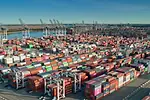
Photo: JE Dunn Construction
From mitigating labor shortages to modernizing the supply chain, the adoption of automation technology is accelerating to bridge gaps and keep large-scale facilities running effectively to meet modern demands.
It's important to remember that automation is not a one-size-fits-all magic fix. Industrial owners can't simply drop a robot into a building and expect all problems to disappear. Successful implementation begins with the early engagement of a construction partner.
Early Contractor Engagement is Key to Automation Success
As automation becomes more mainstream, construction managers have assumed a new, pivotal role. Companies seeking to incorporate some degree of automation into new facilities or renovations are increasingly turning to their construction management partner for expert guidance on the most effective way to embrace new technologies. That’s because construction firms are well positioned to play the role of “tech quarterback,” as they have unique perspective on the project, often being involved from the beginning with a strong understanding of the client's vision and purpose.
From the contractor’s perspective, when designing a new industrial facility with automation technology, three key questions must be asked. What product or task will the automation equipment be creating or performing? What speed must the facility operate at to remain efficient? How much automation does the client want to include? Providing an answer to these questions will put the facility on a path to success where the people, technology, and the facility will all flourish.
Visualize the End Goal
Begin with the end in mind. When designing a new industrial facility with automated components, it is critical to work backward by planning toward the end product, which can be a physical object or a portion of the process. For example, if your facility is primarily used for storage, automated storage and retrieval systems (AS/RS) would be an ideal fit.
From that point, a construction manager, alongside the design team, can begin to map out the best way to incorporate automation while prioritizing the most important aspect of any industrial facility: safety.
Robotics and automation remove human touches from production areas, which subsequently removes natural human safeguards. In particular, automation has a considerable impact on fire safety. Having more components powered by electricity increases the risk of fires. This risk can be mitigated through strategic design that promotes efficiency, and sprinkler systems modified accordingly. Both solutions become more complicated when dealing with larger facilities, making it necessary to involve a construction firm early in the planning process to ensure the space addresses safety concerns and meets fire codes.
The Tortoise or the Hare
The next essential planning point is speed, which can be a deciding factor in the success of any new facility. Taking AS/RS as an example once more, it is paramount to align the speed of the automation system with the output of the facility. Time is money, and having drivers wait in the loading bay for their trucks to be loaded is not efficient, or vice versa. Operating too fast could lead to inefficiencies, and inventory being stored in the wrong place. There is no need to invite error into the equation if you don’t have to. Automation technology is here to help us, not hinder operations.
Arriving at the speed that performs best for your facility can be achieved by analyzing how you plan to operate. If your facility requires transport and it only has the capacity for five trucks at a time for pickups and drop-offs, and those five bays are only full once in the morning and at night, you may not need to operate quickly to remain accurate, efficient, and on time.
When determining speed, it is also important to remember that higher speed entails increased cost and maintenance. Lifecycle costs should be considered when evaluating anticipated daily workloads. Design and construction teams can suggest ideas that create more budget-friendly operations that align with these considerations.
Leveling Automation Up or Down
As construction partners, the final question we pose to our clients is regarding the level of automation needed. Industrial facilities can be either semi-autonomous or fully automated. Addressing issues such as process and speed gives an idea of the amount and what kind of automation technology may be included in a new facility. But there are still other factors to consider.
There is no single solution that can be applied to every facility, because every project has different variables. Most clients' gut reaction is to request a facility close to fully autonomous, and that brings benefits for sure; most notably, the power to reduce the workforce needed and eliminate human error. With the current state of the labor market, this route can be appealing. Innovations can leave people in awe and excited about the game-changing potential they can bring to a facility. There’s no doubt that technology is abundant and becoming increasingly more accessible.
However, contractors often must sound a note of reason in order to help clients understand the pros and cons of fitting out new facilities with the latest and greatest new tech. For example, equipping a facility with these innovative solutions can be costly and require a significant level of maintenance in the long term. This can deter most from going 100% autonomous, and it is the design and construction team’s responsibility to the client to ensure they understand how technology can sap budget. When making this choice, it is important to remember that just because you don't have robotics in every nook and cranny doesn't mean you have an outdated building. Facilities can be semi-autonomous and state-of-the-art. Semi-autonomous facilities also leave flexibility for clients in the future if they need to expand.
The Many Hats of Construction Partners: Builders, Designers, and Technology Experts
If you have a clear understanding of the process, speed, and level of technology you desire, you can effectively develop a design plan tailored to your needs. These three crucial factors define how automation operates within industrial facilities. Looking forward, new technologies will continue to enter the fold. General contractors must embrace this new role as technology experts to better help clients navigate how and when to best utilize innovations of today, while ensuring facilities are equipped to be flexible for emerging technologies.
David Spence is senior project manager at JE Dunn Construction.
Popular Stories



100 Great Supply Chain Partners 2026: The Secret to Supply Chain Success
VIEW THE LATEST ISSUECase Studies


Visit Our Sponsors |
|
|
|
|
|
|
|
|
|
|
|
|
|
|
|
|
|
|
|
|
|
|
|
|
|
|
|
|
|
|
|
|
|
|
|
|
|
|
|
|
|
|
|
|
|
|
|
|
|
|
|