
• Advertise
  • Contact Us
  • Supplier Directory
  • SCB YouTube
  • About Us
  • Login
  • Subscribe
  • Logout
  • My Profile
  • LOGISTICS
    • Air Cargo
    • All Logistics
    • Facility Location Planning
    • Freight Forwarding/Customs Brokerage
    • Global Gateways
    • Global Logistics
    • Last Mile Delivery
    • Logistics Outsourcing
    • LTL/Truckload Services
    • Ocean Transportation
    • Parcel & Express
    • Rail & Intermodal
    • Reverse Logistics
    • Service Parts Management
    • Transportation & Distribution
  • TECHNOLOGY
    • All Technology
    • Artificial Intelligence
    • Cloud & On-Demand Systems
    • Data Management (Big Data/IoT/Blockchain)
    • ERP & Enterprise Systems
    • Forecasting & Demand Planning
    • Global Trade Management
    • Inventory Planning/ Optimization
    • Product Lifecycle Management
    • Robotics
    • Sales & Operations Planning
    • SC Finance & Revenue Management
    • SC Planning & Optimization
    • Supply Chain Visibility
    • Transportation Management
  • GENERAL SCM
    • Business Strategy Alignment
    • Customer Relationship Management
    • Education & Professional Development
    • Global Supply Chain Management
    • Global Trade & Economics
    • Green Energy
    • HR & Labor Management
    • Quality & Metrics
    • Regulation & Compliance
    • Sourcing/Procurement/SRM
    • SC Security & Risk Mgmt
    • Supply Chains in Crisis
    • Sustainability & Corporate Social Responsibility
  • WAREHOUSING
    • All Warehouse Services
    • Conveyors & Sortation
    • Lift Trucks & AGVs
    • Order Management & Fulfillment
    • Packaging
    • RFID, Barcode, Mobility & Voice
    • Warehouse Automation
    • Warehouse Management Systems
  • INDUSTRIES
    • Aerospace & Defense
    • Apparel
    • Automotive
    • Chemicals & Energy
    • Consumer Packaged Goods
    • E-Commerce/Omni-Channel
    • Food & Beverage
    • Healthcare
    • High-Tech/Electronics
    • Industrial Manufacturing
    • Pharmaceutical/Biotech
    • Retail
  • THINK TANK
  • WEBINARS
    • On-Demand Webinars
    • Upcoming Webinars
    • Webinar Library
  • PODCASTS
  • WHITEPAPERS
  • VIDEOS
Home » Why Manufacturers Are Failing in Their AI Initiatives
SCB FEATURE

Why Manufacturers Are Failing in Their AI Initiatives
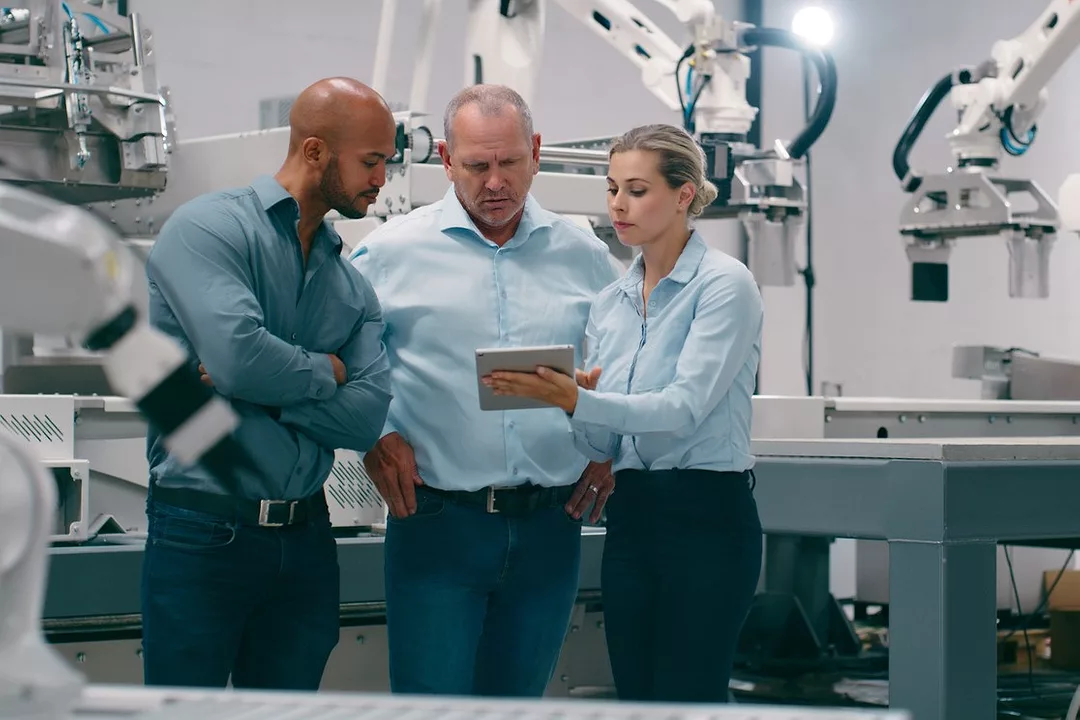
SEVERAL WORKERS CLUSTER AROUND A COMPUTER TABLET IN A ROOM FULL OF MANUFACTURING ROBOTS

Photo: iStock/Sean Anthony Eddy

October 7, 2024
Robert J. Bowman, SupplyChainBrain

Artificial intelligence has the power to transform manufacturing — but the industry’s current strategy for implementing it is “deeply flawed.”

That’s the contention of Matthew Hart, founder and chief executive officer of Soter Analytics, a maker of AI-driven wearable devices.

The market size for AI in manufacturing is expected to rocket from $3.2 billion in 2023 to $64.63 billion by 2030, according to a report by the consultancy and tech services firm SkyQuest Technology. Why, then, are only one in five generative AI projects deployed by manufacturers today considered to be a success?

Hart references the mining industry, in which he has extensive experience, as one sector struggling to fully embrace AI. A report by Deloitte cites multiple challenges within traditional mining companies, including poor testing methods for training AI models, a culture that’s resistant to innovation, a limited understanding of operational and financial returns, and a lack of advanced technology skills. The underlying problem, Hart says, is a massive amount of legacy technology and equipment that can’t be easily retrofitted to work with the latest AI innovations. Companies are attempting “to lug all of that into an AI solution that effectively automates some kind of decision-making.”

In theory, AI technology is just the thing for companies looking to streamline operations in line with demands for greater adaptability and efficiency. “What they find,” says Hart, “is that the scope just creeps and creeps. And legacy systems don’t do what they need them to do. So implementation [of AI] ends up being quite complicated.”

Legacy systems that don’t mesh well with AI include enterprise resource planning, material requirements planning and manufacturing execution systems. In addition, closed-circuit camera systems installed decades ago often have no way to transmit the data they’re collecting to a centralized depository. An expensive server upgrade might be required.

There’s the additional problem of AI itself not quite living up to the hype. GenAI continues to suffer from “hallucinations” and the dispensing of advice that’s just plain wrong. AI models have a way to go before they’re able to sort through massive stores of information, scraped from all over the internet, and extract proper answers on demand.

The very nature of machine learning, an essential aspect of AI, is that it improves with experience. But Hart says some of the data needed to train models remains trapped in legacy applications and can’t be formatted to be of use to modern systems.

Enthusiasm for AI can lead to overly optimistic expectations of functionality. Adopters believe the necessary data can be fed into the system for quick results. “Then the reality kicks in.”

Hart says managers make a mistake when they “turn this into a huge process. We’ve refused to be part of some projects where we can see that it’s just so complicated.” The very scale of the strategy ends up undermining the success of the initiative.

The better way to approach an AI implementation is to do it in phases, keeping humans in the loop along the way, Hart says. They’re still needed to make ultimate decisions about such issues as safety, quality, productivity and auditing.

Hart expects people to be remain relevant in manufacturing organizations for years to come. An AI application that relies on past data, no matter how well it’s trained, isn’t necessarily prepared to deal with events that haven’t happened before. That’s a strength of human creativity. “We’re really good at coming up with new systems.”

That said, Hart believes AI will play an increasingly vital role in multiple aspects of business operations, especially where high volumes of data are involved. Workplace safety compliance, requiring knowledge of thousands of ever-changing regulations, is one area that’s ripe for monitoring by AI. Another is equipment maintenance, for which GenAI combined with computer vision can process status data “at a scale that’s never been done before.” Automated systems are able to run multiple scenarios and workflows in parallel, leaving it to human engineers to determine the best path forward.

Looking to implement AI in manufacturing successfully? Start by use applications like ChatGPT to obtain “relatively decent answers, but at a very basic level,” Hart advises. “Then you can build GenAI workflows that replicate human ways of thinking.”

It’s equally important to be specific about the issue you’re trying solve with AI. “When you break it down to a small, specific problem,” Hart says, “you can build very high-quality solutions.”

    RELATED CONTENT

    RELATED VIDEOS

    Artificial Intelligence HR & Labor Management Quality & Metrics Industrial Manufacturing
    • Related Articles

      A New Report Reveals Why So Many AI Projects Are Failing to Launch in Supply Chains

      Nearly Half of U.K. Government Suppliers Are Failing on Slavery Reports

      Six Reasons Why Manufacturers Remain Reluctant to Let the Cloud Into Their Businesses

    • Related Directories

      ProcureAbility

    Robert J. Bowman, SupplyChainBrain

    Watch: A Roadmap for the AI Journey

    More from this author

    Subscribe to our Daily Newsletter!

    Timely, incisive articles delivered directly to your inbox.

    Featured Product

    Popular Stories

    • A GLEAMING TUNNEL OF LIGHTS CURVES AWAY INTO A HORN

      Gartner: Top 25 Supply Chain Organizations Are Embracing AI

      Global Logistics
    • HANDS TYPE ON A KEYBOARD UNDER A SUPER IMPOSED DIGITIZED MAP OF THE WORLD, ALONG WITH IMAGES OF A SHIP, A SHOPPING CART AND OTHER SYMBOLS OF INTERNATIONAL LOGISTICS

      Five Demand-Forecasting Mistakes Supply Chain Leaders Are Rethinking

      Technology
    • TWO WORKERS IN HI-VIS VESTS AND HARDHATS CONSULT A BANK OF COMPUTER SCREENS

      How a Poor Hiring Process Leads to High Turnover in Supply Chain

      HR & Labor Management
    • The outside of Oracle Corporation's corporate headquarters located in Silicon Valley. Photo: iStock.com/Sundry Photography

      Oracle Cuts 21,000 Jobs, More to Come From AI

      Technology
    • 037_a_roadmap_for_the_ai_journey_v1-(540p).png

      Watch: A Roadmap for the AI Journey

      Artificial Intelligence

    Digital Edition

    2026 esg cover main scb q2 2026 cover

    SupplyChainBrain 2026 ESG Guide: ESG — The Supply Chain’s Biggest Secret

    VIEW THE LATEST ISSUE

    Case Studies

    • Recycled Tagging Fasteners: Small Changes Make a Big Impact

    • A GRAPHIC SHOWING MULTIPLE FORMS OF SHIPPING, WITH A HUMAN STANDING AT THE CENTER, TOUCHING A SYMBOLIC MAP OF THE WORLD

      Enhancing High-Value Electronics Shipment Security with Tive's Real-Time Tracking

    • A GRAPHIC OF INTERLACING HONEYCOMBED ELEMENTS REPRESENTING GLOBAL BUSINESS TRANSACTIONS

      Moving Robots Site-to-Site

    • JLL Finds Perfect Warehouse Location, Leading to $15M Grant for Startup

    • Robots Speed Fulfillment to Help Apparel Company Scale for Growth

    Visit Our Sponsors

    4flow Arkieva Blue Yonder
    Carton Cloud CoEnterprise Dassault
    Duravant E2Open General Logistics Systems
    Hy-Tek iGPS Korber
    Lyngsoe Procurability Quinyx
    SAP Sikick Systech
    S&P Global Mobility TADA TransImpact
    US Bank Werner Enterprises WSI
    • More From SCB
      • Featured Content
      • Video Library
      • Think Tank Blog
      • SupplyChainBrain Podcast
      • Whitepapers
      • On-Demand Webinars
      • Upcoming Webinars
    • Digital Offerings
      • Digital Issue
      • Subscribe
      • Manage Email Preferences
      • Newsletters
    • Resources
      • Events Calendar
      • 2026 Event Coverage
      • SCB's Great Supply Chain Partners
      • Supplier Directory
      • Case Study Showcase
      • Supply Chain Innovation Awards
      • 100 Great Partners Form
    • SCB Corporate
      • Advertise on SCB.COM
      • About Us
      • Privacy Policy
      • Contact Us
      • Data Sharing Opt-Out

    All content copyright ©2026 Keller International Publishing Corp All rights reserved. No reproduction, transmission or display is permitted without the written permissions of Keller International Publishing Corp

    Design, CMS, Hosting & Web Development :: ePublishing