
SPECIAL REPORT
Reimagining Supply Chain Execution in the Age of AI
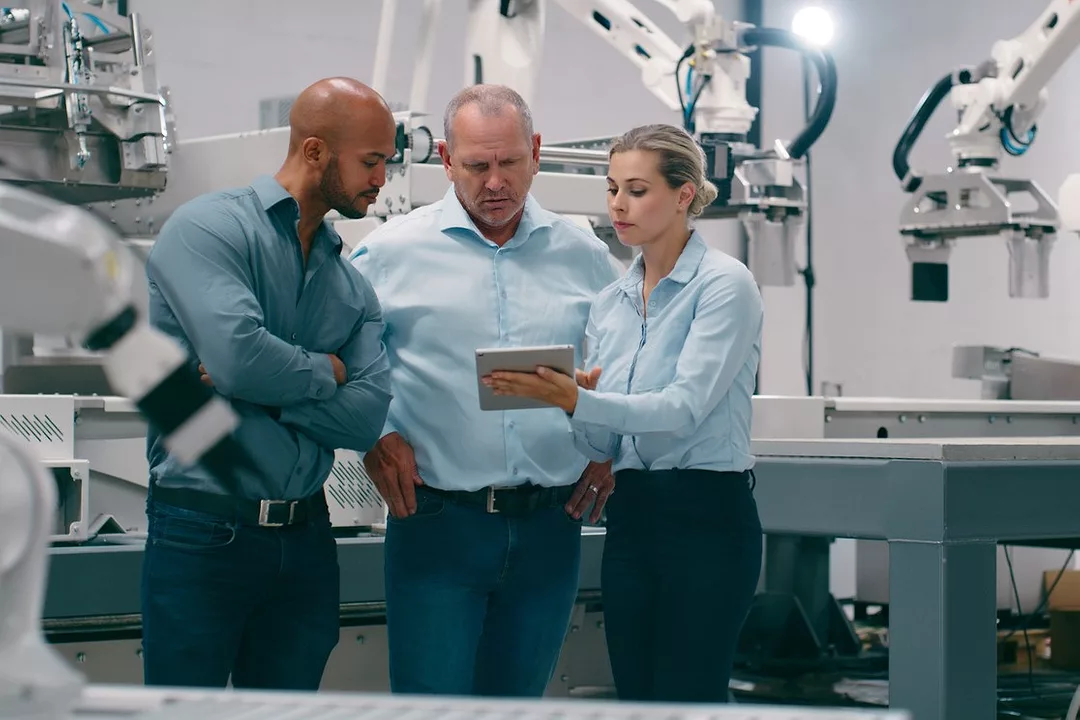
Photo: iStock/Sean Anthony Eddy
Artificial intelligence is set to transform the capabilities of supply chain execution systems (SCES). Using machine learning, natural language processing and other advanced technologies, SCES powered by AI can optimize operations in ways no prior technology has managed to do, including attracting and retaining the next generation of workers.
“It’s now a lot easier for someone to interact with the software, and even for the system to execute work on your behalf,” says Scott Gaston, managing director, principal, at St. Onge Company. “There’s still a lot of tedious tasks that people do manually in the warehouse environment, and this presents a chance to automate those. In a warehouse, things are dynamic and change quickly. Equipment breaks. Things go wrong. This allows you to adapt to that more quickly and with fewer resources.”
Gaston says there will be winners and losers, though. “At this point, not everything has AI integrated into it. Also, this is an inflexion point. Not every vendor will make it through. But, one way or another, there’s going to be a really big change.”
Following are five key ways in which AI is reshaping how companies can execute and optimize supply chain operations with SCES.
1 Knowledge Management
This is probably the most widely adopted capability of AI so far in the SCE space. Instead of a disparate set of out-of-date fact sheets buried in someone’s hard drive, or even a dog-eared physical manual gathering dust in the break room, businesses can build a sleek, up-to-date, virtual database that answers questions in an intuitive, natural way. Adopting AI-based knowledge management is a relatively low-risk way to get started. Initial interactions are relatively simple, but as stakeholders feed it more information, the system will be able to “learn” the quirks of operations and begin to give feedback on how, for example, the pick line is set up. Overall, AI-driven knowledge management makes it easier to capture institutional knowledge.
2 Natural Language Query
This is at the heart of knowledge management, because it allows users to ask for data analysis, or initiate any number of mission-critical tasks, without having to formulate a question in technical language. In addition, there’s the opportunity to move away from rigid, screen-based interactions, and take those capabilities out to the work floor, in the form of voice or visual prompts. Functionality is already growing at the sites of many early adopters.
3 Data Interpretation
Most technological advances of the last few decades have only increased the amount of available data, and the pressing challenge now is to turn it into useful information that can be acted upon. AI takes away the need for specialized knowledge, in order to formulate graphs and spreadsheets that make sense. With visualization software, users can drag and drop elements and watch them be incorporated into a comprehensive report. They can then update or change a single line of data and watch it percolate through an entire dataset in moments. Before, businesses had to hope that what they were looking for was in an existing report, or that they knew someone who could help dig into the data. Now, AI sifts and sorts huge amounts of data, recognizes patterns, and is capable of generating a visual picture or breaking things into a prioritized to-do list. In the process, companies get to the desired insights much more quickly. What’s more, the system is user-friendly, eliminating the anxieties that many feel when tackling large amounts of data.
4 Personalized Coaching
AI-powered SCES, utilizing large language models, gives supervisors the power to see worker performance at both granular and “big-picture” levels in real time. It has the capacity to recognize patterns and discover gaps that can be filled with training. It can identify, for example, when a worker is eligible for promotion, or another with consistently low performance levels needs to be moved to another job in the warehouse. This feedback loop is far more accelerated than before – no more performance sheet tacked to the wall. “AI might be your supervisor one day,” says Gaston, while acknowledging that this will require a high degree of trust in the system. “It might give recommendations, but it has to be possible to challenge it, too. Accountable reasoning is incredibly important.”
5 Agentic AI
In many ways, this is the most exciting element of AI, and a number of warehouse management system and enterprise resourcing planning vendors are scrambling to include this feature in their functionality. With this model, the user enters a question, and the AI figures out whom to communicate with and recommends concrete action — or even takes action itself (with prior permission). It then reviews how well it did, and adjusts its response next time accordingly. Say that a business encounters an unexpected surge in orders, or a piece of equipment goes down, and needs to quickly reallocate resources and labor. “That’s usually done by gut feeling and experience now,” says Gaston. “Agentic AI can walk you through what might otherwise be a tedious task with complex rules and lead you to a good outcome. It’s just a matter of time before there’s more and more of these.”
St. Onge: Supply Chain Strategy and AI Experts
St. Onge is a globally recognized supply chain strategy and logistics expert, helping companies across the U.S. and around the world become more profitable. The company’s expertise includes warehouse automation, facility planning, supply chain operations and, of course, the deployment of AI.
St. Onge is dedicated to helping customers meet the challenge of adopting AI, as well as understanding where this technological revolution will lead. The company aids in assessing which vendors have the capabilities that customers actually need, and that are scalable. St. Onge experts are all too aware that installing the wrong WMS, for example, or one that doesn’t incorporate AI capabilities, could leave them high and dry in a fiercely competitive market.
Resource Link: https://www.stonge.com/
Popular Stories




100 Great Supply Chain Partners 2026: The Secret to Supply Chain Success
VIEW THE LATEST ISSUECase Studies


Visit Our Sponsors |
|
|
|
|
|
|
|
|
|
|
|
|
|
|
|
|
|
|
|
|
|
|
|
|
|
|
|
|
|
|
|
|
|
|
|
|
|
|
|
|
|
|
|
|
|
|
|
|
|
|
|