
EXECUTIVE OPINION
Rethinking E-Commerce Fulfillment Automation in a Fast-Moving Market
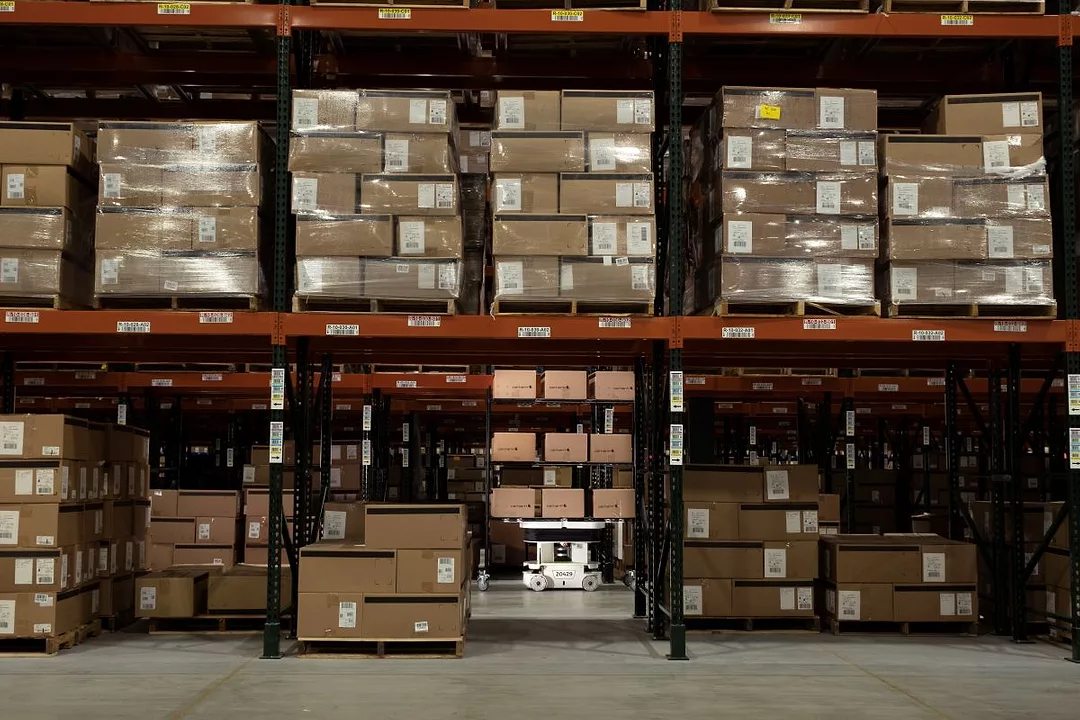
Photo: Locus Robotics
As e-commerce fulfillment is defined by speed, variability and constant change, it’s becoming clear that fixed infrastructure alone cannot keep up. The way we think about warehouse automation must shift from rigid, capital-intensive systems to flexible, scalable solutions that move at market speed.
Autonomous robots designed to augment humans and adapt to operational shifts are helping companies make that pivot. Beyond an embrace of new technology or the next shiny object, it’s about enabling a fulfillment model purpose-built for the demands of modern e-commerce: fast, flexible and scalable.
The Limitations of Fixed Automation
For years, fixed automation has been the backbone of high-volume e-commerce fulfillment. Conveyors, sortation systems, and enterprise automated storage and retrieval systems (AS/RS) are engineered for speed and precision, and in the right setting, they deliver impressive throughput, reduce labor costs and support tight service-level agreements.
But their strength is also their weakness. Fixed systems require massive capital investments, often in the tens of millions, a six-month build-and-deploy schedule, rigid infrastructure and a five-to10-year or more ROI payback. Any layout changes, product line expansions or volume spikes demand time-consuming reconfigurations. This creates a challenge for businesses facing unpredictable demand patterns, seasonal peaks, SKU proliferation and market volatility.
Fixed automation is also difficult and costly to scale. Adding capacity means expanding the physical footprint, which may not work in space-constrained environments, or extending racking upward, also often not feasible in terms of clearance height, and in extreme cases, the roof is raised higher. It also means halting production while changes are made. Ultimately, throughput is constrained not just by the mechanics of AS/RS, but by bottlenecks in transport mechanisms, picking stations and software integration.
In an environment where customer expectations shift quickly and SKU variety constantly increases, businesses need a more agile automation model.
How Mobile Robots Drive Agility
Autonomous mobile robots offer a flexible alternative. Rather than relying on fixed paths and hardwired infrastructure, AMRs navigate a warehouse dynamically. They can be deployed incrementally in weeks not months, scaled in response to demand, and rerouted based on real-time order priorities.
Unlike fixed systems, AMRs don’t require extensive facility retrofits, integrating with existing operations using both tote-to-person and person-to-goods (P2G) workflows. This allows gradual adoption without disrupting operations or making upfront bets on future volumes. Capex is also orders of magnitude lower, under $10 million in most cases, especially with the popular robots-as-a-service (RaaS) model, and ROI is often achieved in a year or less.
Powerful orchestration software intelligently coordinates fleets to optimize tasks, reduce walk time and balance throughput across zones. They can adjust on the fly to changes in order profiles or picking density, something fixed automation wasn’t built to do. Standard AMRs can also work in tandem with specialized high-reach robots that can grab bins high up in the racking.
AMRs also provide the ability to test and learn. Companies can start small, gather operational data and iteratively improve workflows before scaling further. This approach de-risks investments and makes it easier to demonstrate early ROI.
Key Requirements for Scalable Automation
While mobile robots offer clear flexibility, successful deployment still requires thoughtful planning. Companies should consider the following:
- Integration with core systems. AMRs must connect with warehouse execution, warehouse management and order management systems. Real-time data flow is essential for task prioritization and visibility.
- Dynamic slotting and replenishment logic. To maximize efficiency, SKUs must be slotted intelligently, and replenishment workflows must be responsive to real-time demand shifts.
- Fleet management and orchestration software. The intelligence is as important as the hardware. Vendors must provide software that can scale across shifts, zones and facilities.
- Human-robot collaboration. AMRs are designed to augment, not replace, human workers. Facilities should plan for clear safety protocols, intuitive user interfaces for human interaction, and change management to ease the transition.
- Space optimization. Unlike fixed automation, AMRs thrive in open, modular layouts. Facilities should evaluate aisle widths, docking areas and staging zones to maximize flow without unnecessary obstructions.
- Ongoing support and software updates. Mobile automation requires regular updates, performance tuning and support. The provider should offer lifecycle services that grow with the user’s business.
Measurable Gains From Mobile Automation
One of the most immediate gains is labor efficiency. By reducing unproductive walking time, AMRs allow pickers to focus on value-added tasks without increasing physical strain.
Productivity boosts of 2-3x in units picked per hour (UPH) and a 50% reduction in walking can be seen in a short period of time, and within months, a 50% reduction in order cycle time is often achieved. These high efficiency gains can offset labor shortages, support higher service levels and reduce the need for seasonal hiring surges.
Mobile robots also help improve order accuracy. Because robots follow programmed logic and work in concert with digital pick/pack systems, they reduce the likelihood of human error, improving customer satisfaction and reducing returns.
As demand grows, businesses can add more AMRs without major infrastructure changes. This modularity makes it easier to plan capital spending and respond to growth without overcommitting.
Finally, mobile automation supports better visibility. Many AMR systems come with dashboards that provide real-time insights into picking rates, zone performance, robot utilization and exception handling. This data can feed broader supply chain analytics initiatives and support continuous improvement.
Why Flexibility Is a Business Imperative Now
The world of fulfillment is no longer linear or predictable. Surging e-commerce growth, shorter delivery windows, and expanding product assortments have pushed fulfillment centers to their limit. What worked a decade ago — large-scale, fixed systems optimized for uniform demand — no longer fits today’s reality.
Instead, companies need more agile systems. Whether it’s absorbing a sudden holiday spike, responding to a promotion or a new product launch, automation must be ready to flex.
That’s why AMRs are gaining traction not just as a point solution, but as a foundational element of modern fulfillment design. When paired with the right orchestration software and change management, AMRs offer a rare blend of efficiency, flexibility and ROI.
With lower capex and expanding capabilities, AMRs are becoming essential. Businesses that adopt now will gain a competitive edge in labor savings, resilience and responsiveness.
Popular Stories





SupplyChainBrain 2026 ESG Guide: ESG — The Supply Chain’s Biggest Secret
VIEW THE LATEST ISSUECase Studies


Visit Our Sponsors |
|
|
| |
|
|
|
|
|
|
|
|
|
|
|
|
|
|
|
|
|
|
|
|
|
|
|
|
|
|
|
|