
U.S. to Impose Tariffs on Heavy Trucks, Kitchen Cabinets
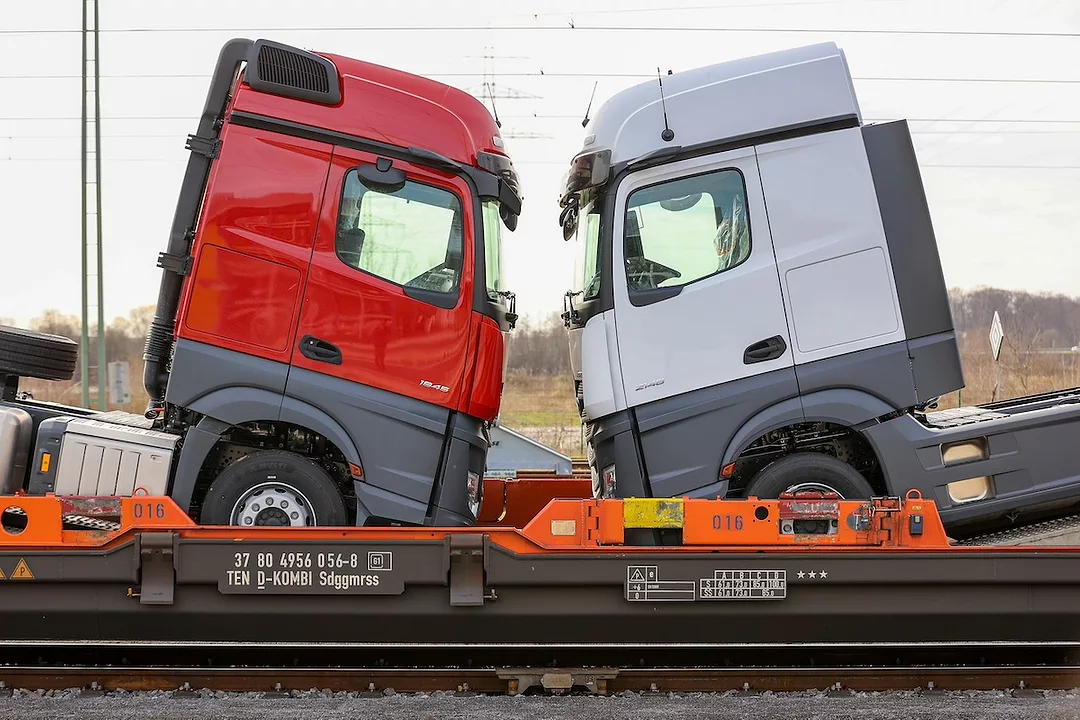
President Donald Trump announced new industry-specific tariffs targeting heavy trucks as well as kitchen cabinets, bathroom vanities and upholstered furniture, expanding a trade agenda aimed at bolstering domestic industries by hiking import taxes.
The 25% tariff on heavy trucks, 30% levy on upholstered furniture and 50% import fee on kitchen cabinets and bathroom vanities will begin on October 1, Trump said in social media posts on September 25.
“In order to protect our Great Heavy Truck Manufacturers from unfair outside competition, I will be imposing, as of October 1st, 2025, a 25% Tariff on all ‘Heavy (Big!) Trucks’ made in other parts of the World,” Trump wrote.
Trump’s tariff announcements — including a 100% tariff on branded or patented pharmaceuticals — follow a series of Commerce Department investigations into the imports, all advanced on national security grounds.
Neither the White House nor the Commerce Department has released details of the plans or how they would be implemented, with less than a week before the president’s target implementation date.
Probes conducted under Section 232 of the Trade Expansion Act allow the president to impose tariffs on goods that are deemed critical to national security, an authority Trump has turned to extensively to set the groundwork for levies on numerous sectors.
The industry-specific tariffs generally would come in addition to Trump’s country-based, so-called reciprocal tariffs, though some countries, including the European Union and Japan, have struck agreements to prevent the charges from stacking on top of one another.
The Commerce Department in April launched a trade probe on medium- and heavy-duty trucks and parts, claiming at the time that a “small number” of foreign suppliers had dominated US imports due to subsidies and “predatory trade practices.”
That investigation covered trucks weighing more than 10,000 pounds as well as parts and derivatives — vehicles that are meant to haul goods across North America as opposed to the lighter pickup trucks popular with consumers.
The new duties threaten an industry already squeezed by tariffs on steel and aluminum imports, as well as tighter environmental regulations that have driven down demand for heavy- and medium-duty vehicles. But advocates of the president’s planned heavy truck tariffs said they would help protect domestic manufacturing and the nation’s industrial base.
Trump’s planned tariffs on imported heavy trucks “are a huge win for American workers and great U.S. manufacturers,” such as Peterbilt, Kenworth, Daimler Truck Holding AG’s Freightliner brand and Volvo Group’s Mack Trucks Inc., said Nick Iacovella, with the Coalition for a Prosperous America. “This action will strengthen this vital sector and protect it from unfair foreign competition.”
Shares of Paccar Inc., which owns Peterbilt and Kenworth, were up 5.7% in after-hours trading.
International Motors, LLC — formerly known as Navistar — is most reliant on imports, with about 98% of its U.S. trucks coming from Mexico, followed by Daimler at about 83%. By contrast, Paccar and Volvo produce nearly all of their U.S. trucks in America.
About 245,000 medium- and heavy-duty trucks were imported to the U.S. last year, a trade flow worth more than $20 billion, according to Commerce Department data.
Trump had previously announced — without specifics — a forthcoming tariff on imported furniture, expected as part of his administration’s ongoing probe of foreign timber and lumber. Furniture retailers that could be affected by the tariffs include Wayfair Inc., Arhaus Inc., Williams-Sonoma Inc. and RH, which operates the chain formerly known as Restoration Hardware.
Trump’s planned tariff on imported cabinets, however, falls short of recommendations from some industry representatives and advocates on Capitol Hill who say home-state manufacturers are threatened by cheap foreign rivals. More than a dozen lawmakers had pushed the Commerce Department to implement tariffs of at least 60% on imported wood products, such as cabinets and vanities. Some have urged the administration to tariff cabinets at 100%.
According to the White House, the U.S. has been a net importer of lumber since 2016, as foreign imports increasingly help meet domestic demand. The White House alleged in March that many of those imports benefit from government subsidies and predatory trade practices, unfairly harming the competitiveness of domestic companies.
The new levies are part of an expanding pool of sectoral tariffs covering an increasing number of consumer goods — from mobile phones to the industrial machinery used to make them. The U.S. has already slapped tariffs on imported steel and aluminum, and a slew of other Section 232 investigations are still being conducted into foreign-made solar panels, commercial aircraft, semiconductors and critical minerals.
On September 24, the Trump administration publicized the start of two more probes into imports of robotics, industrial machinery and medical devices.
The sectoral tariffs offer potentially more durability than the country-level levies Trump imposed under the International Emergency Economic Powers Act, which are being challenged in federal court. The Supreme Court has agreed to consider a challenge to those tariffs, after two lower courts have already declared them illegal.
Popular Stories




100 Great Supply Chain Partners 2026: The Secret to Supply Chain Success
VIEW THE LATEST ISSUECase Studies


Visit Our Sponsors |
|
|
|
|
|
|
|
|
|
|
|
|
|
|
|
|
|
|
|
|
|
|
|
|
|
|
|
|
|
|
|
|
|
|
|
|
|
|
|
|
|
|
|
|
|
|
|
|
|
|
|