.webp?height=100&t=1784835632&width=150 "LSG26_LTAgentEdgeImage_DB-1313-1 (1).png")
Ship with Radioactive Zinc Dust Stuck Near Philippines Port
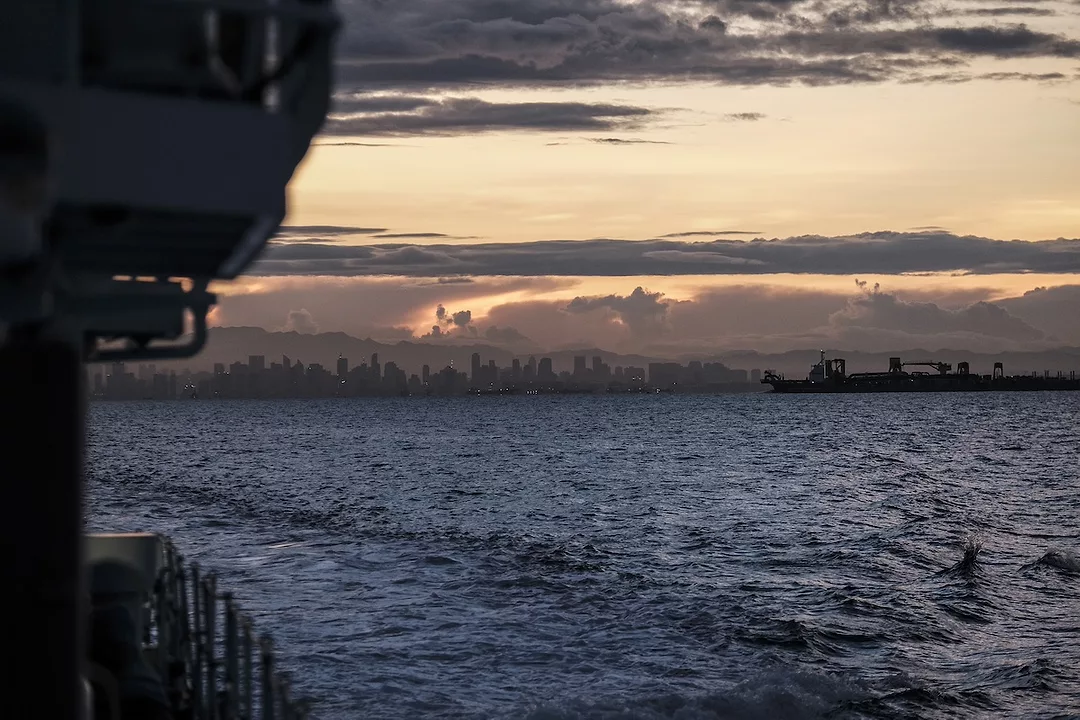
A ship with 23 containers of radioactive zinc dust is stuck off the coast in the Philippines, unable to unload because there’s no site that has agreed to entomb the offending material, according to a top official.
Port authorities aren’t allowing the ship, which arrived from Indonesia, to offload in Manila unless there’s a local government that’s willing to take custody of the cargo for temporary storage or disposal, Carlo Arcilla, director of the Philippine Nuclear Research Institute, said on October 28.
“These containers aren’t a danger to the public because there’s very little radiation outside the containers,” Arcilla said in a phone interview. The ship crew aren’t sick, he added.
Even so, the situation adds new complexity to the growing issue of radioactive materials found in various parts of Southeast Asia. An Indonesian investigation in September uncovered cesium-137 at a metal-processing hub that supplies materials for construction and manufacturing in a western Java industrial park. Separately, it also flagged the containers of zinc powder from the Philippines at a Jakarta port. Indonesia halted imports of scrap metal earlier in October.
Cesium-137 is an artificial radionuclide used in medical devices and gauges, and is also one of the by-products of nuclear fission processes in reactors and weapons testing. Exposure to the isotope can raise the risk of cancer, according to the U.S. Centers for Disease Control and Prevention.
A probe was first initiated after the U.S. Food and Drug Administration in August reported the detection of trace amounts of the radioactive material in frozen shrimp shipments from one of Indonesia’s largest prawn companies, leading to recalls by companies such as Walmart.
The shipment now stuck off the coast in Manila contains zinc powder contaminated with cesium-137 that was exported to Indonesia by Zannwann International Trading Corp., a Chinese trading firm with offices in the Philippines, Arcilla said. It was returned to Manila following the detection of cesium-137, he said.
Zannwann didn’t immediately respond to requests for comment. The Philippine Ports Authority referred queries to the Bureau of Customs, which didn’t respond.
The Philippine Nuclear Research Institute official said the zinc dust was sourced from Philippine steelmaker SteelAsia Manufacturing Corp. and another steel firm, and that radioactivity was only detected at SteelAsia’s scrap recycling plant located in Batangas province, south of the capital.
Zinc dust has a wide range of industrial and chemical uses because it resists corrosion.
But SteelAsia has said it has no connection to the zinc powder and the containers didn’t originate from it. Nevertheless, the company, Philippines’ top steelmaker, has voluntarily suspended operations at its plant out of caution.
The priority now, Arcilla said, is to look for a site to dispose of or entomb the 23 containers and remove the radioactive materials in SteelAsia’s facility and Zannwann’s warehouse, which he said could be “substantial.”
There have been no incidents of radioactivity being detected in previous Zannwann shipments to Indonesia, Arcilla said. He couldn’t say whether the latest shipment from the Philippines is linked to the cesium-137 contamination in Indonesia.
Popular Stories
.webp?height=100&t=1784574541&width=150 "025_supply_chain_changes_that_aren't_getting_enough_attention_v1-(540p).png")
.webp?height=100&t=1784491177&width=150 "030_ai_in_the_warehouse-_real_use_cases_v1-(540p).png")

SupplyChainBrain 2026 ESG Guide: ESG — The Supply Chain’s Biggest Secret
VIEW THE LATEST ISSUECase Studies


Visit Our Sponsors |