
SPECIAL REPORT
Why Logistics Leaders are Turning to Goods-to-Person Automation
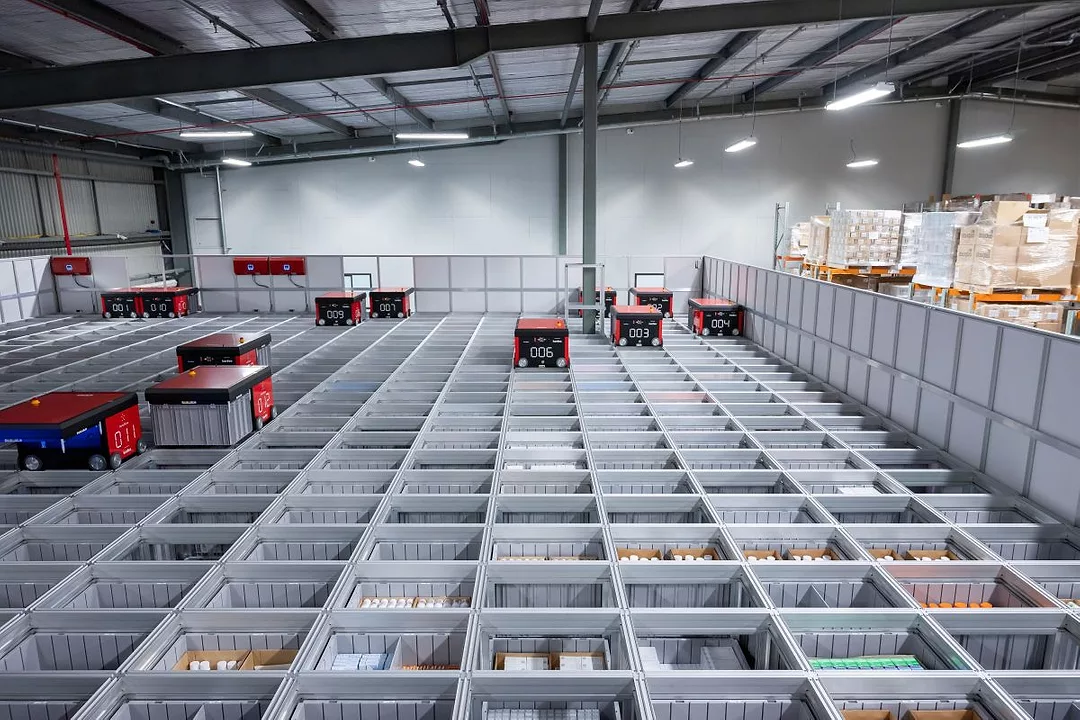
In an era where speed, accuracy, and efficiency are the lifeblood of retail, the logistics industry is undergoing significant change. At the heart of this is goods-to-person (GTP) automation, a technology that could change not just the warehouse floor, but the economics and possibilities of fulfillment itself.
A Shift in Fulfillment
Goods-to-person automation flips traditional warehouse processes on their head. Instead of people walking miles every day to pick merchandise from sprawling shelves, automated shuttles or robots bring items directly to operators.
“It’s really about simplifying how you manage people,” says Kardex vice-president of sales and consulting TJ Fanning.
With goods-to-person automation, Fanning explains, you no longer have to train employees to drive fork trucks and can instead consolidate them into one large work zone where a single supervisor can oversee everything, rather than spreading people out across a million-square-foot warehouse facility and forcing employees to walk from slot to slot themselves.
Paying someone to navigate a massive warehouse floor to look for a single item is also inherently a non-value-adding activity, says Kardex strategic sales manager Brian Quigley. To address that, GTP automates the repetitive, difficult and wasteful tasks, allowing workers to do what they do best: picking and packing.
“It takes all the walking, all the hunting and all the guessing out of the process,” Quigley says.
Beyond Speed: Unlocking Space
The benefits of GTP automation go well beyond worker efficiency, offering a means to improve space utilization as well. While traditional warehouses necessitate wide aisles and racks spaced far apart for forklifts and human traffic, goods-to-person consolidates storage space.
That means going from traditional eight-foot-high racks to denser racks that can be stacked as high as 20-25 feet, since they can be accessed by automated machinery rather than human workers. The result is more inventory stored in less space, which can be critical as industrial real estate becomes increasingly expensive and scarce.
“It allows you to cube out your entire pick space,” says Quigley. “It really gets the most out of the lease for your building.”
Data-Driven Warehousing
The data implications of GTP are profound. As Fanning notes, “data is all about how expensive it is to capture it, not to store it.” To wit: In GTP systems, workers can pick at rates upwards of 300-plus picks an hour, compared to the 60–90-pick rate that’s typical in manual setups. With that higher throughput, it makes the cost of investing in cameras, sensors and advanced tracking much more palatable, since a single camera is now capturing three to 10 times more picking data.
This level of automation enables continuous, real-time inventory optimization, where items are tracked and reallocated within the system, which maximizes storage density and accessibility, while no longer making it so a facility is dependent on sporadic human cycle counts. Warehouses can then gain sharper visibility into their inventory, as well as higher accuracy, and quicker detection of anomalies or errors.
As Kardex senior design consultant Gabe Collins points out, warehouses with manual setups that are much more spread out also can’t conduct cycle counts as frequently, which increases the chances of missing picks, and adds more variables that can drive inaccuracies.
“The data that we have in a warehouse is only as good as how accurate the data is,” Collins adds.
Worker Wellbeing and Retention
Beyond operational metrics, GTP automation is changing the nature of warehouse work itself. While efficiency is a prized asset in a warehouse environment, “an efficient worker is not always necessarily a healthy worker,” says Quigley.
Traditional fulfillment jobs can involve hours of walking, repetitive heavy lifting, and awkward reaching, all of which are directly associated with workplace injuries and burnout. But GTP automation helps bring manageable loads directly to ergonomic picking stations.
“Instead of picking a 30-pound case, operators are just picking a single six-ounce item,” says Collins. And not only does this lessen physical strain and injury risk, it standardizes workflows so that almost anyone can do the job, regardless of height or strength.
By simplifying tasks and reducing movement, workers not only suffer fewer injuries, they also find more satisfaction and engagement in their roles, leading to higher retention and a more experienced, productive labor force.
Redefining the Value of Labor
When an operator no longer spends more than two-thirds of their day walking back-and-forth across a warehouse, it opens their days up to any number of other valuable tasks, including order customization, double-checking for quality control, and carefully packing out boxes to ensure that products aren’t damaged.
“This really enables people to have a much simpler job,” says Fanning. “We see accuracy improve, and it means more value to the end customer.”
A downstream effect of that is that workers no longer need to log overtime to meet goals and can “leave the building and have a life outside of their job,” says Quigley. Additionally, with more efficient picking processes, a facility doesn’t need to invest in temporary labor during peak seasons, which translates directly into cost savings and fewer errors. Ultimately, warehouses become cleaner, less cluttered and more organized.
Real-World Rollout
Today, market pressures driven by rising customer expectations, surging SKU counts, real estate scarcity and labor shortages are making adoption of GTP solutions less of a luxury and more of a necessity for survival.
“New buildings are only getting more expensive,” says Quigley. “Getting the most out of your existing building is imperative if you're going to stay in business.”
That also doesn’t mean that warehouses should simply expand their square footage to account for higher inventory, warns Collins, since that only creates more walking time for operators. What’s more important is using the space you have in the most efficient way possible, he concludes.
Many companies have found new, novel ways to implement GTP automation at the customer level too. Home Depot, for example, uses carousel-style systems in stores to deliver products like wires and carpet directly to the customer’s level. Apparel manufacturers have also slashed order turnaround times, creating opportunities for new, fast-moving offerings such as same-day embroidery.
Automating to Gain Control
In a world of modern retail that’s becoming more competitive by the day, the winners in fulfillment will be those who can increase their SKU assortment, improve their product density, and deliver faster, more accurate service, all without ballooning costs. The hope is that GTP automation can provide a blueprint for exactly that.
Today, automation is no longer a privilege reserved for large retailers; it’s quickly becoming the baseline for anyone hoping to compete in today’s fast-changing logistics landscape. Whereas industry expos once hosted a mere handful of automation vendors, “today, there are hundreds,” Quigley points out.
“Automation — and goods-to-person in particular — has really reached a point where it's here, and you need it now,” he adds.
Resource Link: https://www.kardex.com/en-us/products/autostore/autostore-system
Popular Stories


.webp?height=100&t=1781237049&width=150 "016_ai_and_data_transformation_in_distribution_v1-(540p).png")


SupplyChainBrain 2026 ESG Guide: ESG — The Supply Chain’s Biggest Secret
VIEW THE LATEST ISSUECase Studies


Visit Our Sponsors |
|
|
| |
|
|
|
|
|
|
|
|
|
|
|
|
|
|
|
|
|
|
|
|
|
|
|
|
|
|
|
|